Israeli-U.S. relations have advanced with the announcement of a strategic partnership in artificial intelligence, scientific research, and biotechnology. This initiative is part of the U.S.-led Pax Silica program, which aims to foster collaboration among countries engaged in advanced technology fields.
Dr. Tal Pavel, an Israeli internet and computer expert, contextualized this partnership within the framework of global technological competition, particularly focusing on China. He noted that the formation of this initiative represents a significant extension of Israel’s involvement in the Pax Silica initiative, which was launched by the United States in December 2022.
The strategic partnership was formalized last week in a joint declaration signed in Jerusalem. This makes Israel the first nation to enter into such a cooperation framework under the Pax Silica initiative, which aims to create networks of technological collaboration in areas including artificial intelligence, advanced computing, energy, and space.
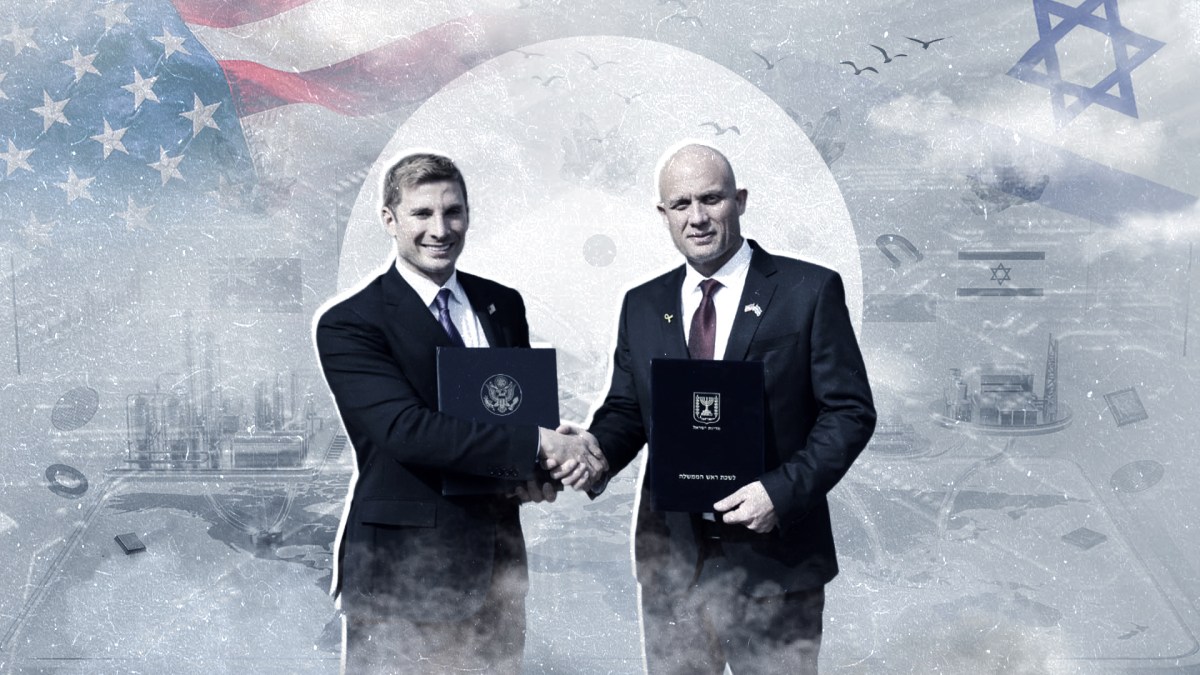
The declaration was signed by Erez Eskil, head of Israel’s National Artificial Intelligence Authority, and Jacob Helberg, U.S. Under Secretary of State for Economic Affairs. They were joined by Gideon Sa’ar, Israel’s Foreign Minister, and Mike Huckabee, U.S. Ambassador to Israel, during the signing ceremony.
This agreement establishes a structured framework for research and development, computing infrastructure, biotechnology, and emerging technologies. According to the joint statement, the partnership aims to better coordinate governmental efforts with both academic and industrial sectors, ultimately bridging the gap between scientific research and advanced technological applications.
Gideon Sa’ar emphasized that the partnership illustrates an expansion of existing collaboration between Israel and the United States. He described it as part of a broader strategy to enhance the bilateral partnership, underlining the evolving nature of their cooperation.
Eskil pointed out that joining Pax Silica and signing the joint declaration reflects a long-term vision which includes investment in infrastructure, human capital development, and enhanced collaboration with universities and tech companies. He remarked that artificial intelligence is increasingly intertwined with economic policy and national security considerations.
Pavel added that this partnership comes on the heels of stricter U.S. policies concerning the export of advanced technologies. He recounted that one of the final decisions by former President Joe Biden’s administration involved imposing restrictions on the export of artificial intelligence chips to maintain U.S. technological superiority in response to China’s advancements. He noted that these restrictions had placed Israel in a “middle category,” limiting access for its companies to certain advanced chips, a situation that only changed in May of this year.
Pavel argued that the introduction of this new partnership under President Donald Trump signifies a shift towards strengthening technological cooperation among allied nations rather than relying solely on bans and restrictions. This approach aligns with Washington’s goal of reshaping the global landscape of technological dominance.
During the signing ceremony, Helberg highlighted that the partnership’s objective is to ensure that “allied countries shape the future of technology.” Ambassador Huckabee elaborated that the cooperation extends beyond artificial intelligence, encompassing supply chains, critical minerals, quantum computing, and other advanced technologies.
According to the joint statement, a “Joint Economic Development Group” will oversee the implementation of the cooperation areas, operating under a non-legally binding framework focused on linking research and development with advanced manufacturing. This initiative is expected to reinforce Israel’s position within the U.S.-led technological cooperation ecosystem.
The establishment of this strategic partnership marks a significant milestone in Israeli-U.S. relations, reflecting a commitment to collaborative innovation in technology. As tensions persist in global technological competition, the implications of this partnership could resonate beyond both nations, potentially influencing the trajectory of technological advancement on a worldwide scale.
See also Uppsala University Team Enhances MEP Predictions with Quadrupole Moments Using PiNet2 Model
 AI Poll Reveals 86% of Patients Research Conditions Independently, Seeking Transparency in Care
 Indian Start-ups Launch AI Tools for Mass Health Screening, Benefiting Millions
 ProAIDE Achieves 52% Developer Acceptance Through Proactive AI in IDE Study
 Researchers Develop AI Model Mimicking Human Emotion Formation with 75% Accuracy