






















































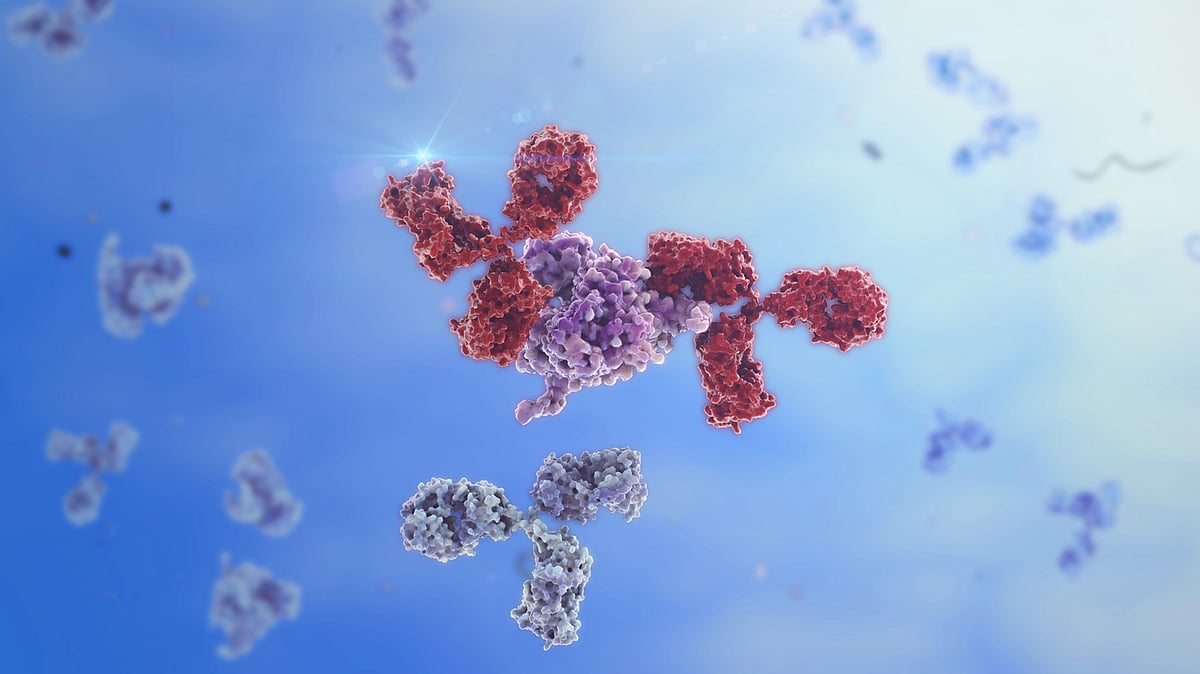
Researchers at the National Centre for Biological Sciences (NCBS) have unveiled a new software tool named Disobind, which aims to enhance understanding of intrinsically disordered regions (IDRs) in proteins. Led by Shruthi Viswanath, head of the Integrative Structural Biology Lab, the tool is designed to shed light on the complex interactions related to disease biology and drug design. Viswanath emphasized that “with Disobind, we can begin to reveal new interaction motifs linked to disease, suggest intervention points for regulating IDR-mediated interactions across the proteome, and better position disordered segments within large molecular assemblies.”
Disobind’s applications extend across various biological systems, including immune signaling pathways and proteins implicated in cancer and neurodegenerative disorders. IDRs have been increasingly recognized as critical yet poorly understood components in these areas, highlighting the need for innovative tools to explore their roles.
The introduction of Disobind comes at a pivotal time when health research is transitioning towards systems biology and precision medicine. Traditional methods have often overlooked IDRs, creating a significant blind spot in molecular understanding. The software, which is open-source and freely available, allows researchers worldwide to investigate what Viswanath describes as “the hidden logic of the cell’s most flexible components.”
This initiative was supported by entities within the Indian government, specifically the Department of Atomic Energy, the Department of Science and Technology (SERB), and the Department of Biotechnology. The collaborative effort underscores the importance of interdisciplinary approaches in tackling complex biological questions.
As researchers continue to grapple with the intricate roles of IDRs in cellular processes, tools like Disobind promise to bridge significant gaps in current knowledge. By enabling a deeper exploration of protein interactions, the software could pave the way for novel therapeutic strategies, particularly in the context of diseases where IDRs play a pivotal role. This could ultimately lead to advancements in precision medicine, tailoring treatments to individual molecular profiles.
The release of Disobind not only signifies a technological advancement but also reflects a broader shift in the scientific community towards a more integrated understanding of biological systems. As researchers adopt this tool, the potential for new discoveries in the fields of drug development and disease treatment continues to expand, offering hope for improved health outcomes.
See also AI Use in Research Increases Publishing Speed but Narrows Scientific Exploration, Study Finds
 Israel and U.S. Launch Strategic AI Partnership to Enhance Tech Cooperation and Innovation
 Uppsala University Team Enhances MEP Predictions with Quadrupole Moments Using PiNet2 Model
 AI Poll Reveals 86% of Patients Research Conditions Independently, Seeking Transparency in Care
 Indian Start-ups Launch AI Tools for Mass Health Screening, Benefiting Millions






