






















































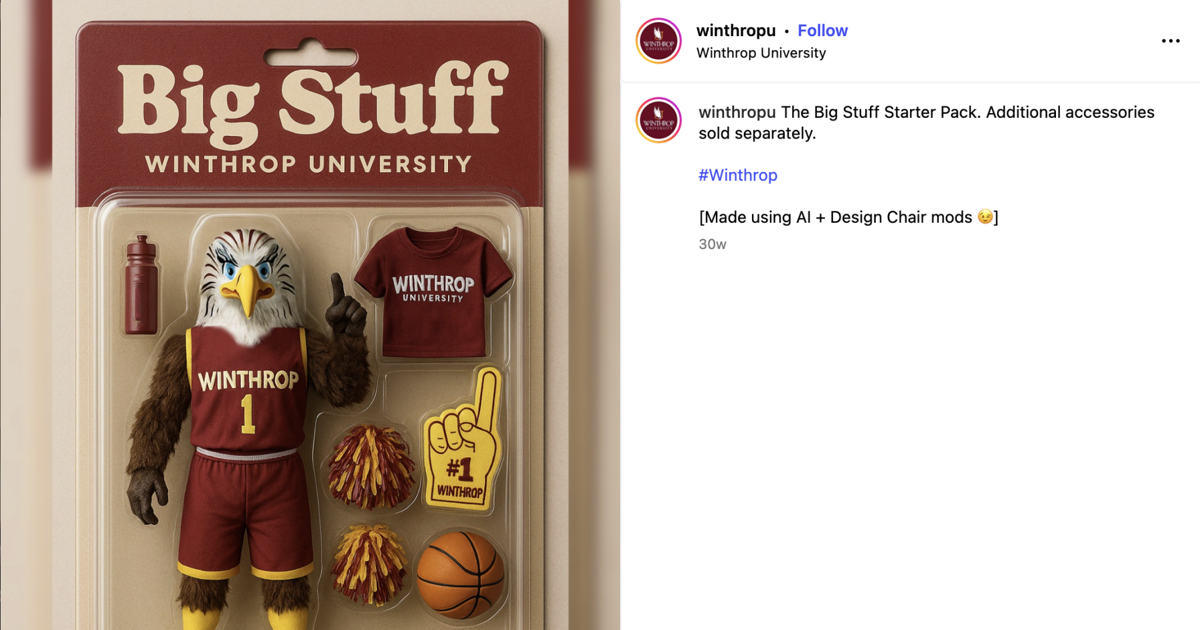
As the landscape of art and technology evolves, institutions like Winthrop University are exploring how artificial intelligence (AI) can empower future creators. The university aims to inspire its students to harness AI, not merely as a tool, but as a transformative force capable of unlocking unprecedented creative possibilities.
Mark Hamilton, the Fine Arts Chair at Winthrop, emphasizes the dual nature of art. It not only serves to provoke thought but also to evoke emotional responses. He views AI as the latest addition to a long history of technological evolution in the arts. Hamilton draws parallels between the current AI advancements and the transition from film to digital photography, which dramatically reshaped job landscapes in the industry.
According to Hamilton, one of AI’s primary strengths in the realm of art is its ability to simplify tasks. For instance, in photography, AI-driven editing tools can produce results that once required hours of manual effort in mere seconds. This efficiency can free artists to focus more on their creative vision rather than getting bogged down in time-consuming technicalities.
However, the integration of AI into creative processes is not without its drawbacks. There are concerns about the potential decline in traditional skills as routine tasks become increasingly automated. Hamilton cautions that while AI can enhance efficiency, it may also lead to a devaluation of manual artistry and the unique skills that artists possess.
Another significant consideration is the environmental impact of AI technologies. Hamilton points out that the energy consumed by data centers—essential for training generative AI models—is substantial. This not only raises questions about sustainability but also highlights the resource demands associated with cooling hardware, which can adversely affect local water supplies and ecosystems.
As the United States invests heavily in AI-related infrastructure, the potential ramifications for both the art world and broader society remain a critical focus. Winthrop’s approach to education aims to equip students with the skills and insights needed to navigate this complex terrain, encouraging them to think critically about the applications of AI in their future careers.
Ultimately, the challenge lies in finding a balance. As artists leverage AI to push boundaries, they must also remain acutely aware of the implications of these technologies. Empowering students to engage thoughtfully with AI will enable them to contribute meaningfully to their fields while preserving the core values of artistic expression.
See also Oxford Professor Reveals 3 Essential Ways Schools Can Shape AI Literacy for Students
 WSU Researchers Secure $82,500 Grant from Microsoft to Enhance AI in Rural Schools
 AI Transforms Medical Education with New Assessment Tools and Ethical Insights
 Nigerian Schools Must Integrate AI in Curriculum to Enhance Learning and Teaching Efficiency
 Google Scholar Labs Launches AI-Powered Research Tool for Enhanced Academic Insights















