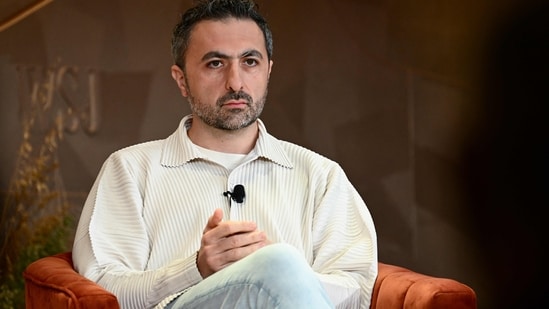
Generative AI is transforming the legal profession, prompting Columbia Law School to adapt its curriculum. Dean Daniel Abebe has instituted a faculty-led task force aimed at enhancing educational initiatives around generative AI, reflecting a broader strategy to equip students to thrive in an evolving landscape. At a recent Lawyers, Community, and Impact (LCI) event, moderated by Dean Abebe, task force members—including Professors Talia Gillis, Benjamin L. Liebman, Eric Talley, and Rebecca Wexler—discussed the implications of AI in legal education and practice.
“It’s our responsibility as educators here to make sure that we’re empowering [students] with the tools to be successful in a world that will be increasingly driven by AI,” said Dean Abebe, addressing an audience of students. He emphasized that changes would not only impact law firms but also public interest and government employers, who are increasingly focused on efficient resource utilization.
Columbia Law faculty are actively integrating AI into their teaching methods. Professor Talia Gillis, an expert in consumer market law and economics, shared her practical use of AI to enhance classroom discussions. By uploading her notes and interactions with students, she employs AI to assess the clarity of her explanations, particularly when discussions take unexpected turns. “AI helps me in that process of debriefing the class,” she noted.
In 2024, Eric Talley, the Marc and Eva Stern Professor of Law and Business, is set to teach a J-Term course focusing on machine learning and law. Talley aims to demystify the mechanics behind legal AI, urging students to develop a “lawyerly intuition” that prompts critical questioning of AI-generated responses. “How do you sequence the lawyerly spidey sense when you want to use these tools as actively as possible?” he asked.
Benjamin L. Liebman, the Robert L. Lieff Professor of Law and Vice Dean for Intellectual Life, pointed out that the Chinese legal system is rapidly advancing in AI adoption. In his upcoming course on Chinese legal institutions, he plans to explore how China is setting standards in AI regulation, potentially influencing global legal frameworks. “We’ll spend some time talking about how China is regulating AI and how that regulation may also shape what goes on outside of China,” Liebman explained.
Professor Rebecca Wexler, who teaches an Evidence course, highlights the growing importance of AI in discussions around legal evidence. She emphasizes that traditional rules of evidence apply to humans but not to machine-generated outputs. This discrepancy raises questions about potential revisions to federal rules to accommodate AI contributions. “This tees up discussions about the proposals for the federal rules of evidence to address potential AI outputs,” Wexler stated.
Beyond the classroom, faculty members are leveraging AI for their research. Gillis views AI as a constant collaborator in her writing process, capable of enhancing her clarity and helping her refine arguments. “It’s a constant back-and-forth of questions and answers rather than a one-of-a-kind interaction of question and answer,” she noted.
Liebman is utilizing AI to analyze a dataset of 130 million Chinese court judgments, striving for more efficient methodologies than those previously employed. “We’re still in the early days but really trying to experiment with how we can use ChatGPT to probe this dataset in ways that are much quicker and much more efficient,” he shared.
Wexler is also focusing on AI’s implications for the criminal justice system, examining how AI-driven discovery software might introduce biases that compromise defendants’ rights. Collaborating with a computer scientist, she is conducting simulations to highlight these risks. “We’ve created synthesized datasets to run simulations and try to do a proof of concept that this is a real risk,” she explained.
Talley conveyed to students that the evolving landscape of AI in law presents unprecedented opportunities. “This is a new area of law that’s being absolutely cracked open right now,” he stated. He advised students to identify emerging fields where AI could play a transformative role, noting that early engagement in these areas could be advantageous.
Gillis reassured students concerned about AI replacing junior associates that the narrative has shifted toward AI augmenting rather than replacing legal work. “I’m very happy that the conversation has shifted from AI replacing lawyers to augmenting lawyering,” she said. She emphasized the importance of students cultivating curiosity about new technologies, as different areas of legal practice will necessitate distinct AI tools. Engaging with technologists and data scientists, she added, is vital for entering the legal profession today.
Launched in 2016, the Lawyers, Community, and Impact series invites Columbia Law experts to explore pressing issues, providing deeper context to the work conducted by the Columbia Law community both in and out of the classroom.
See also Federal and State AI Regulations Emerge as Health Care Faces Growing Enforcement Risks
 90% of Compliance Leaders Adopt AI Tools, Yet Governance Remains a Challenge
 South Korea Enacts AI Safety Laws, Poised to Surpass EU Amid Regulatory Shifts
 Nasscom Reports Responsible AI Progress Amid Ongoing Data and Regulatory Challenges
 Oregon Lawmaker Proposes AI Companion Regulations to Safeguard Youth Mental Health