






















































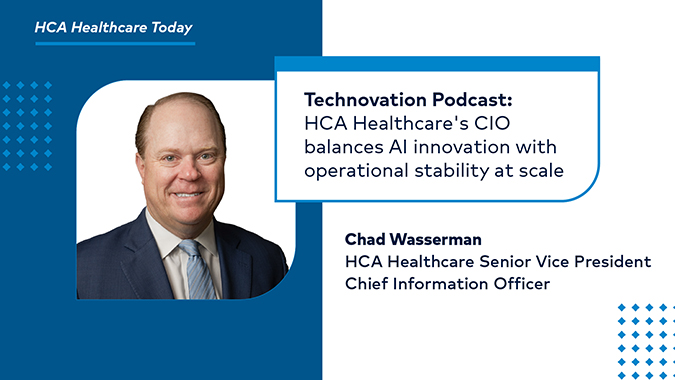
Chad Wasserman, senior vice president and chief information officer at HCA Healthcare, recently discussed the intersection of technology and patient care in an episode of the “Technovation” podcast. As the leader of HCA Healthcare’s expansive Information Technology Group, which includes over 8,000 IT professionals across 191 hospitals and 2,500 ambulatory care sites, Wasserman emphasized the critical role technology plays in enhancing healthcare delivery while maintaining patient focus.
During the conversation with podcast host Peter High, Wasserman shared insights on managing a large-scale technology agenda that prioritizes patient outcomes. He articulated the concept of “operational quiet,” which he described as essential for implementing innovations like artificial intelligence (AI) and digital transformation. By ensuring operational stability, HCA Healthcare can leverage data-driven insights and AI capabilities more effectively. Wasserman noted that his team’s approach to workforce development integrates technical training with immersive hospital experiences, fostering a deeper connection between technologists and patient care.
Key to HCA Healthcare’s technological strategy is the adoption of the Meditech Expanse, a cloud-based electronic medical record (EMR) system designed to standardize processes and enhance data accessibility for AI applications. Wasserman highlighted that this new infrastructure not only aims to improve clinician efficiency but also enhances the overall patient experience by reducing administrative burdens through ambient AI technologies, which can transcribe real-time clinician-patient conversations directly into EMR notes.
The discussions also covered how HCA Healthcare has adapted over the years. Wasserman, who joined the organization in 1996, reflected on the transformative journey the company has taken since implementing its initial EMR system. He pointed out that while many external factors—such as economic shifts and technological advancements—have changed, the core mission to deliver high-quality patient care remains constant. This focus drives the organization’s technological advancements and operational strategies.
Wasserman articulated three fundamental lessons learned throughout his tenure: the importance of listening to frontline staff, the necessity of execution discipline, and the value of building relationships with stakeholders. He believes that understanding the experiences of those working closest to patient care enhances technological implementation and operational effectiveness.
On the topic of data utilization, Wasserman emphasized its significance as a strategic asset for HCA Healthcare. With over a million devices generating data, the organization is harnessing this information to drive improvements in clinical, operational, and administrative domains. By migrating data to Google Cloud and adopting a “data-as-product” strategy, HCA aims to unlock the full potential of AI and automation, ultimately optimizing care for millions of patients annually.
The collaboration between HCA’s IT and business sectors has matured significantly, particularly with the establishment of the Digital Transformation and Innovation department, led by Chief Transformation Officer Dr. Mike Schlosser. This initiative aims to evaluate and implement strategies aligned with the organization’s goals for AI and digital progress, facilitating a united approach to technological development.
Wasserman expressed excitement about the current applications of AI, especially in improving clinical documentation and software engineering processes. The use of ambient clinical documentation not only alleviates clerical burdens for clinicians but also enhances the speed and quality of software engineering efforts through the integration of generative AI tools.
Looking toward the future, Wasserman underscored the importance of “operational quiet” as a prerequisite for innovation. He noted that a stable operational environment is crucial for integrating new technologies and maintaining focus on patient care. He is particularly enthusiastic about advancements in AIOps, which uses AI to monitor infrastructure and create self-healing mechanisms that preemptively address potential disruptions in care delivery.
As HCA Healthcare navigates the complexities of modern healthcare delivery, Wasserman’s leadership underscores the vital connection between technology and patient care. With ongoing investments in innovative systems and a commitment to workforce development, HCA is not only poised to enhance operational efficiency but also to continue delivering high-quality care for its millions of annual patients.
See also Microsoft Targets 3 Million Africans for AI Training Amid Rising Competition from DeepSeek
 Character.AI Faces Outage, Over 2,000 Users Report Login Issues, Status Under Investigation
 ByteDance Deploys 500 Nvidia Blackwell Systems in Malaysia, Tapping 36,000 B200 Chips
 Amazon Outpaces Microsoft with 24% Cloud Growth Amid AI Investment Surge
 Gredi Nikollaj Unveils Five Pillars of DeepSeekNation, Europe’s First AI Social Network















