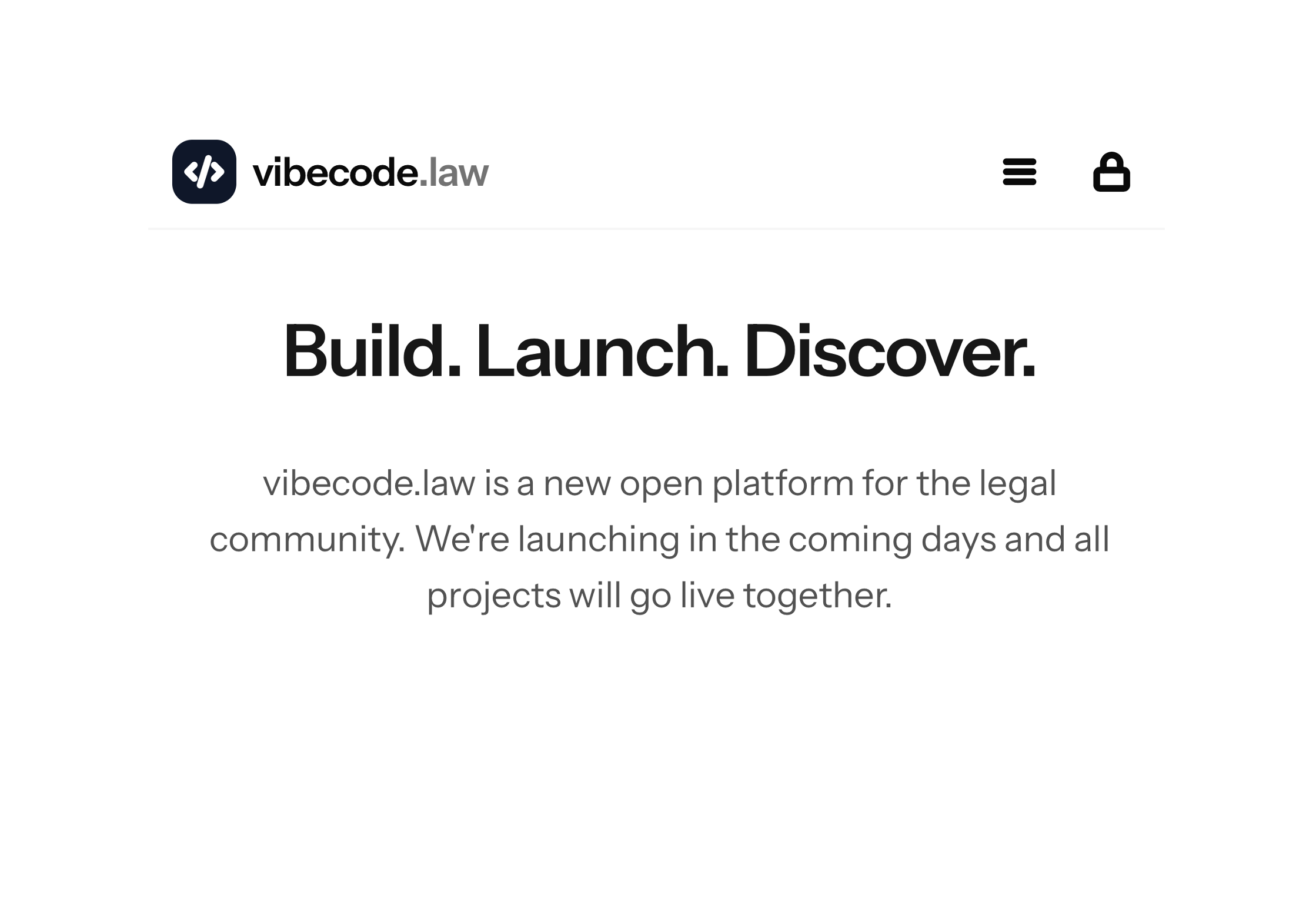
The legal tech landscape is witnessing a new wave of innovation with the introduction of Vibecode.law, an open platform designed for the legal community. This initiative emerges shortly after Clifford Chance lawyer Jamie Tso garnered significant attention for his bespoke AI tools. Vibecode.law is spearheaded by Chris Bridges, Co-founder at Tilder / Tacit Legal; Matt Pollins, CPO of Lupl; and Alex Baker, a legal tech consultant, all of whom aim to provide a dedicated space for legal professionals to showcase their projects and ideas.
According to its founders, “Vibecode.law is a new open platform for the legal community. We’re launching in the coming days and all projects will go live together.” The platform seeks to address the limitations of social media algorithms that often hinder visibility for innovative legal tech ideas. By creating a centralized location, Vibecode.law allows lawyers and tech enthusiasts to display their work, seek collaboration, or simply curate personal portfolios.
This initiative took root as a “fun weekend project” following the spontaneous acquisition of the domain. However, the enthusiastic response from the legal tech community has been overwhelming, leading the founders to emphasize that the platform will operate as a “run by the community, for the community” endeavor.
While the concept of vibe-coding has gained traction on LinkedIn, Bridges cautions that projects generated by non-developers using AI-assisted coding tools are not always ready for production. “We’re realistic about what vibe-coding can achieve,” he stated. Nonetheless, he views vibe-coding as a catalyst for change, enabling domain experts to demonstrate their ideas tangibly, validate concepts before committing to full development, and articulate their needs through functional prototypes. This shift marks a significant decrease in the cost of experimentation, allowing ideas that might have languished in committee to be tested in real-world scenarios.
Bridges further elaborated on the platform’s potential impact, suggesting that while DIY tools are unlikely to replace major platforms, there is room for firms to establish safe environments for “vibe-coded” applications. These applications can serve dual purposes—either for experimentation or to create low-risk, limited-use applications that do not impose significant maintenance burdens. He also highlighted the potential for vendors to collaborate with clients on product ideas through vibecoding, fostering a more interactive development process.
Recent projects emerging from this initiative include an agent lab focused on legal tasks and a SaaS Inflation Calculator, illustrating the creative breadth of applications that could arise from the platform. Yet, the question remains: will vibe-coded tools achieve widespread adoption? While the current DIY trend is in its early stages, the potential exists for niche areas—those underserved by existing vendors or consisting of commoditized solutions—to be disrupted by vibe-coded applications. Major firms and in-house teams are expected to continue relying on the stability and security offered by established providers.
In summary, Vibecode.law represents a significant entry point into the evolving intersection of law and technology, highlighting a community-driven approach to legal innovation. As the platform prepares for its launch, the legal tech community will be watching closely to gauge the lasting impact of vibe-coding on the industry.
See also RAIDS AI Launches Real-Time Monitoring Platform to Combat Rogue AI Behavior
 Right-Wing Influencers Launch Coordinated Attack on AI Overwatch Act with Identical Messages
 Texas Expands Tech Prohibition List, Targeting Chinese Firms Over Cybersecurity Risks
 Republican Lawmakers Propose AI Tool for Annual Review of Federal Regulations
 Australians Demand Airline-Level AI Safety Amidst 4,000x Risk Gap, Survey Reveals