TRAVERSE CITY, Mich. — Garfield Township planning commissioners voted Wednesday to fast-track regulations for data centers, joining communities nationwide scrambling to address the infrastructure demands of artificial intelligence before massive facilities arrive at their doorstep. The Planning Commission directed staff to prioritize drafting ordinance amendments that would shift data centers from permitted uses to special use permits, requiring heightened scrutiny of projects that can consume as much electricity as a quarter-million homes.
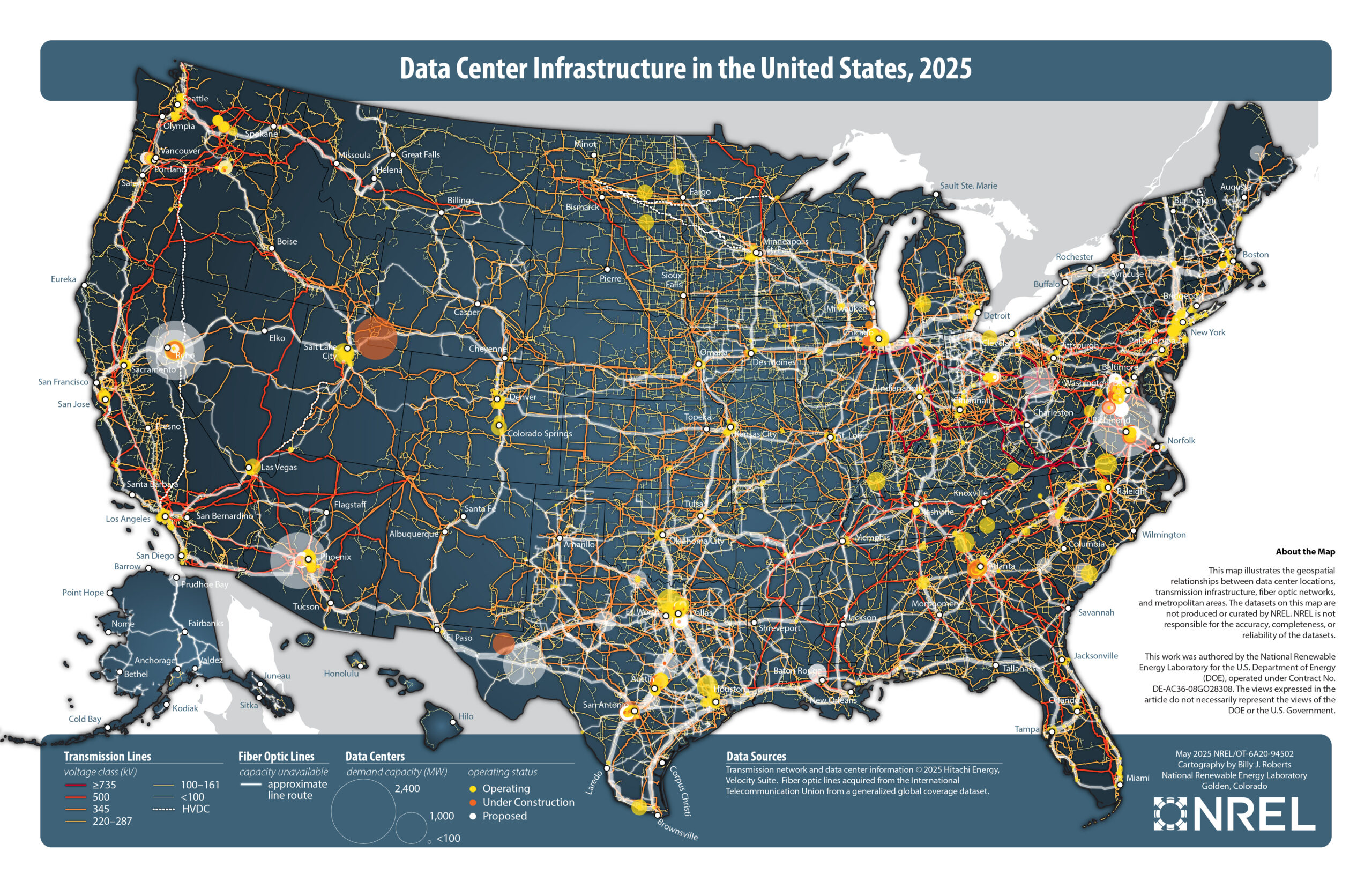
Data centers need fresh water, high-capacity transmission lines, and fiber optic connections to the main internet. The Grand Traverse region happens to sit at the intersection of all three, making it one of the only places in northern Michigan where companies would pursue a project like this. The township has not received any data center proposals, but planners cited recent attempts at development in neighboring Kalkaska County and downstate communities as a reason to prepare regulatory frameworks now.
“Their resource consumption is quite intense,” Planning Director John Sych told commissioners at the meeting. “There’s a lot of electricity and power that’s required for these facilities. There’s a lot of water that is used to cool the processors and servers.” Data centers house the servers and equipment that power AI systems like ChatGPT and cloud computing services.
According to materials presented to the commission, a single 300-megawatt facility running continuously would consume roughly 2.6 terawatt-hours annually — equivalent to the electricity used by 250,000 U.S. homes. The American Planning Association’s October 2025 report on AI infrastructure notes that most local zoning codes were written before the current scale of data center development and often fail to address their unique impacts.
“We have data centers which are defined, but they don’t anticipate anything at this intensity or this scale,” Sych said, referencing the township’s current ordinance. The facilities can range from small enterprise operations of 5,000 square feet to hyperscale campuses exceeding one million square feet. National forecasts suggest AI-driven data centers could require up to 123 gigawatts of capacity in the U.S. by 2035, compared to roughly 4 gigawatts today.
Beyond electricity, water consumption emerged as a major concern. Large AI-focused facilities can use hundreds of thousands of gallons of water daily for evaporative cooling systems. Google’s data centers in Council Bluffs, Iowa, and The Dalles, Oregon, rank among the company’s largest water users, according to Google’s 2025 environmental report.
Commissioners questioned whether the township should impose a moratorium on data center development while crafting new regulations, but Sych indicated current provisions would likely trigger review before any project could proceed. Commissioners urged quick action. “Can I suggest we make this kind of a high priority rather than kick it down the road six months?” said John Racine. “I think we have to do it fairly expeditiously.” Board chair Chris DeGood agreed, “The further discussion has made me more aware that it’s a priority.”
Staff said they would consult with Cherryland Electric Cooperative and Great Lakes Energy regarding electrical capacity and fiber-optic infrastructure needs. Decommissioning requirements also drew discussion, with commissioners comparing potential data center abandonment to vacant big-box retail developments. “One of the issues that I think was helpful when we looked at other types of utility types of facilities, such as solar farms and wind farms, is the aspect of decommissioning,” Sych said. “Should we have one of these being abandoned or no longer used, that becomes a potential liability of the community.”
The township’s current industrial zoning allows data centers by right, meaning developers need only administrative approval if projects comply with basic building and zoning codes. The proposed shift to special use permits would require Planning Commission review and public hearings. Staff will research ordinances from other Michigan communities and review national examples for compliance with state law. The commission plans to bring draft ordinance language forward at a future meeting, potentially as early as February.
Under Michigan’s planning enabling act, communities must allow every type of use somewhere within their jurisdiction, meaning an outright ban on data centers would likely be legally unviable. However, communities can impose location restrictions, performance standards, and impact mitigation requirements. Recent ordinances from Atlanta, Phoenix, and other cities offer models. Atlanta’s ordinance requires special use permits tied to energy, water, and noise studies. Phoenix’s ordinance introduces design standards, including facade articulation and noise studies.
See also APAC Banks Face Heavy Manual Compliance Burdens Despite 54% Exploring AI Solutions
 States Enact AI Regulations in Legal System as Courts Face 518 Hallucination Cases
 Charleston County School District Approves New AI Policy to Enhance Classroom Learning
 JURI Committee Proposes Key Amendments to AI Act for Enhanced Compliance and Clarity