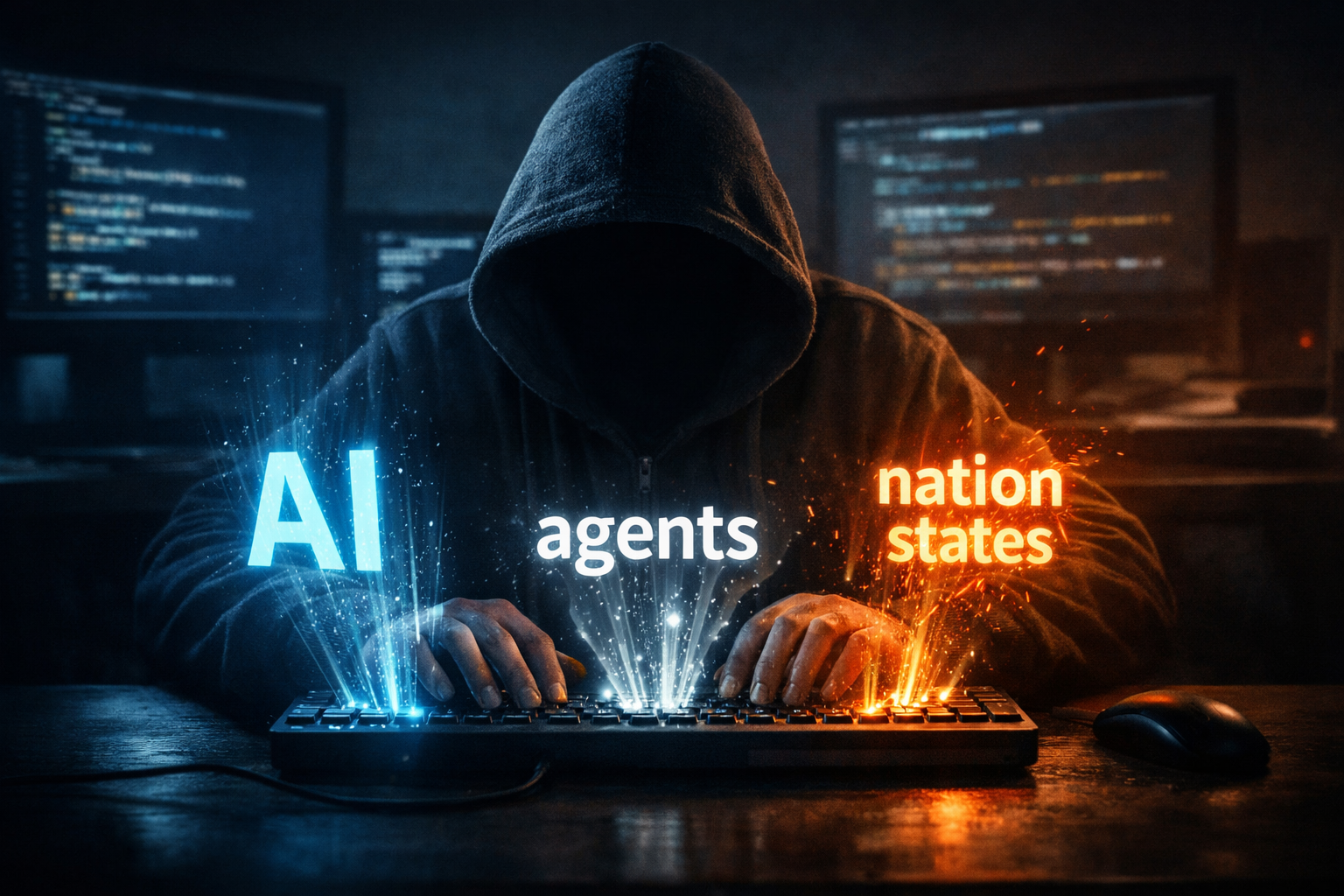
As the global artificial intelligence landscape continues to evolve, so too do concerns surrounding the security of the very infrastructure that supports it. The rapid rise of AI agents has sparked critical discussions regarding the security measures necessary to manage their access and actions effectively, particularly in light of geopolitical tensions and technological advancements from nations such as China.
The cybersecurity community began voicing apprehensions about the risks associated with AI shortly after OpenAI Group PBC’s ChatGPT emerged in late 2022. Three years later, widespread adoption of AI technologies has led experts to ponder whether the threat landscape has expanded. “The types of behaviors that we’ve started seeing in agentic AI are really changing our landscape,” said Dr. Margaret Cunningham, vice president of security and AI strategy at Darktrace Inc., during a recent virtual briefing hosted by the Cloud Security Alliance. “As we are going through this adoption, it is rapidly expanding our attack surface.”
This attack surface includes critical infrastructure, particularly Model Context Protocol (MCP) servers, which are integral for connecting large language models to external data sources and applications. Security researchers have raised alarms regarding the vulnerabilities associated with MCP since its introduction by Anthropic PBC in November 2024, emphasizing that the responsibility for securing these systems now rests heavily on users. Recent findings from cybersecurity professionals at Red Hat Inc. and IANS Research have documented several security concerns surrounding MCP, prompting Anthropic to release additional guidance on secure coding practices for AI agents.
Aaron Turner, a faculty member at IANS, remarked during the Cloud Security Alliance event, “I have not found true native full-stack security in MCP. We’ve got to be ready for some really bad things to happen.” The security challenges extend to CI pipelines, cloud workloads, and employee endpoints. A recent analysis from Clutch Security Inc. revealed that 95% of MCP deployments were operating on employee endpoints where security measures are largely absent. “It is my opinion that you should treat MCPs as malware if they try to run on endpoints,” Turner added.
These security challenges have intensified scrutiny on the ability of small businesses to safeguard their assets. A report from Accenture plc indicates that while 43% of cyberattacks target small enterprises, only 14% possess the necessary defenses. Wendy Nather, senior research initiatives director at 1Password LLC, introduced the concept of the “security poverty line,” highlighting the growing divide between resource-rich firms and those unable to invest in adequate cybersecurity measures. “If you are a retail shop with a 1% profit margin, you are going to have trouble spending the money on security that you need,” Nather noted, emphasizing that mere training will not suffice.
Simultaneously, malicious actors with limited resources are increasingly leveraging AI for their nefarious purposes. Cybersecurity firm GreyNoise Intelligence Inc. reported over 91,000 attack sessions targeting large language model infrastructure over three months starting in October, with nearly 81,000 occurring within an 11-day window. “I’m seeing lower-resource attackers able to scale up,” said Rich Mogull, chief analyst at the Cloud Security Alliance. “They can automate a lot of processes. Everybody from script kiddies to nation states are now using AI to develop exploits. This legitimately scares me.”
The involvement of nation-states in exploiting AI infrastructure adds another layer of complexity to cybersecurity preparedness. Dr. Avi Davidi, a senior researcher at Tel Aviv University, recently examined Iran’s ambitions to develop sovereign AI capabilities for cyber warfare. He noted the use of commercial AI tools by Iranian groups to probe industrial control systems and defense mechanisms of other countries. The Iranian hacker collective APT-42 has even attempted to manipulate AI systems into providing attack strategies akin to “red-team” assessments, which could be exploited by malicious actors.
Concerns about China’s anticipated advancements in AI capabilities further heighten the stakes for cybersecurity professionals. Dario Amodei, CEO of Anthropic, articulated in a recent essay that China is poised to surpass the United States in AI capabilities, a sentiment echoed by Colin Kahl, a senior fellow at Stanford University’s Freeman Spogli Institute for International Studies. Kahl underscored that while the U.S. still boasts the leading AI laboratories and models, China is strategically positioned to become a formidable competitor. He remarked, “We still have the best AI labs in the world, our models are still the best in the world. But China has almost everything they need to be a really close fast follower.”
Amid these developments, the U.S. government has implemented export controls aimed at limiting China’s access to advanced semiconductor technology essential for AI. However, recent policy shifts have enabled the export of Nvidia Corp.’s H200 AI processors, with over 2 million orders anticipated from Chinese tech firms. “We did not want to flood totalitarian adversary states with the best technology that the U.S. made,” Kahl stated, emphasizing the national security implications of China’s technological advancements.
As AI continues to permeate various sectors, the interplay between technological advancement and cybersecurity preparedness remains a pressing concern. The stakes are high as small businesses grapple with inadequate defenses, and nation-states aggressively pursue their AI ambitions, poised to exploit weaknesses in the system.
See also OpenClaw Surges Past 180,000 Stars, Exposing Major Security Flaws in AI Agents
 States Introduce 1,000 AI Bills in 2025 Amid Federal Cybersecurity Overhaul
 AI Amplifies Cyber Threats in Industrial Sectors, Exposing Major Security Gaps
 Enterprise Security Vendors Invest $200M in AI-Driven Threat Detection Solutions
 AI-Driven Cyber Threats Surge: NSA Reveals 90% of Firms Unprepared for Attacks