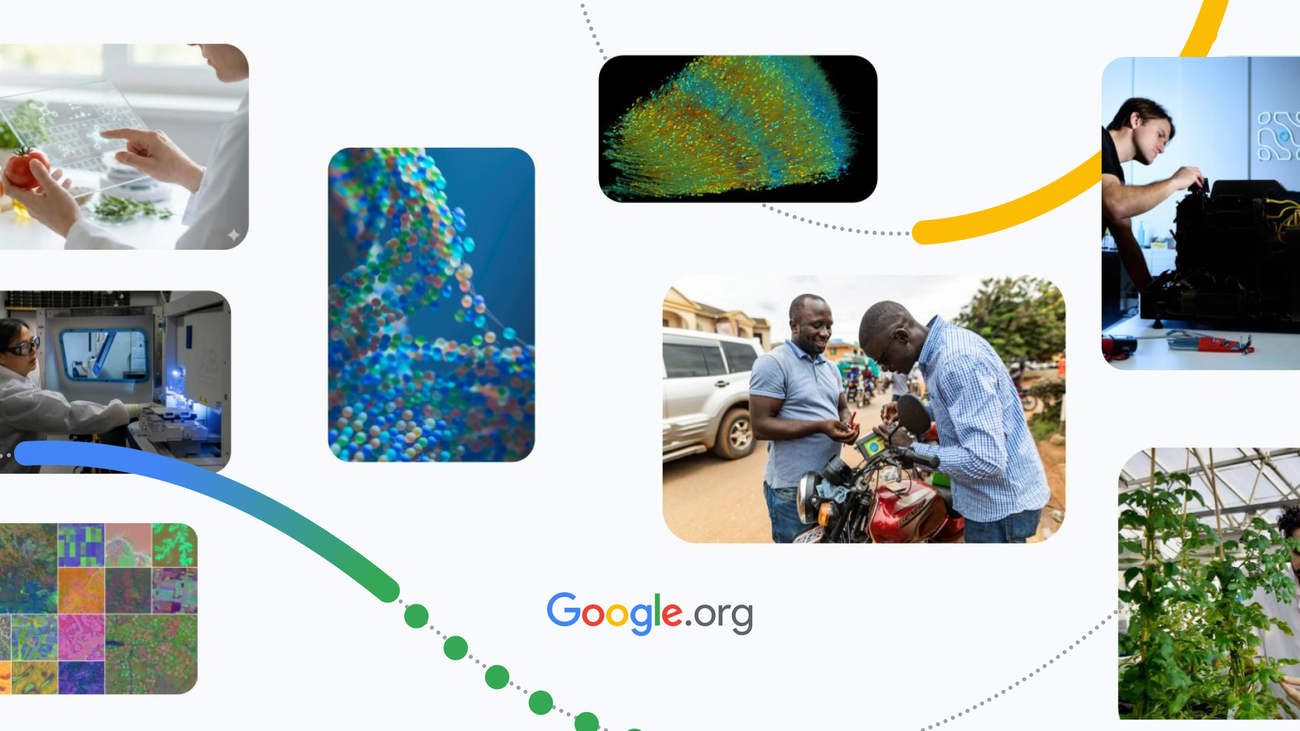
Google.org has announced the twelve recipients of its $20 million AI for Science fund, aimed at supporting innovative organizations using artificial intelligence to tackle complex scientific challenges. The initiative comes as the pace of new scientific discovery appears to be slowing, despite the increasing complexity of global issues. The selected groups span academia, nonprofits, and startups, and their projects focus on crucial areas including health, agriculture, and biodiversity.
The funding recipients are not merely employing AI for data synthesis; they are pioneering solutions that could transform scientific obstacles into tangible advancements. Each organization involved has committed to open science, promising that their work will lead to open-source datasets and solutions that extend beyond their immediate applications.
Five recipients are specifically targeting the intricacies of biological data to enhance medical progress. UW Medicine, for instance, is utilizing its breakthrough Fiber-seq technology to create long-read maps of the human genome’s largely unexplored regions. This initiative aims to uncover the genetic roots of rare diseases. Similarly, Cedars-Sinai Medical Center is developing the BAN-map, an AI-guided tool that real-time analyzes neural data to improve experimental conditions, thereby illuminating the neural mechanisms behind thought and memory.
Meanwhile, the Technical University of Munich is working on a multiscale foundation model to bridge the gap between individual cells and entire organs, enabling clinicians to simulate disease progression digitally. The Infectious Disease Institute at Makerere University is leveraging AI tools like the “EVE” framework and AlphaFold to predict malaria-causing parasites’ evolution, assisting in the quicker identification of drug resistance. Spore.Bio, based in France, is innovating within microbiology by developing an AI-powered scanner that could drastically reduce the time required to detect life-threatening, drug-resistant bacteria from days to under an hour.
As global populations grow and climate change intensifies, food systems face unprecedented challenges. Several funded projects are utilizing AI to enhance resilience, nutrition, and sustainability in agriculture. The Sainsbury Laboratory is launching “Bifrost,” which employs AlphaFold3 to predict interactions between plant immune receptors and pathogens based solely on genomic data, fostering the development of disease-resistant crops. The Periodic Table of Food Initiative (PTFI) is building an AI-driven platform designed to map the unknown molecules in food that define nutritional quality and flavor, ultimately facilitating healthier diets.
In a related effort, the Innovative Genomics Institute at UC Berkeley is decoding cow microbiomes to identify specific interactions that can be modified to substantially reduce methane emissions from livestock. These initiatives underscore the potential of AI to revolutionize food production in an era of significant environmental strain.
On another front, several organizations are deploying AI to protect biodiversity and enhance planetary resilience. Human activity has accelerated the degradation of natural ecosystems, necessitating innovative solutions. For example, The Rockefeller University is reengineering genome sequencing pipelines with AI, which automates data curation to produce high-quality genomic blueprints for the planet’s 1.8 million species, aiding conservation efforts. Similarly, the UNEP-WCMC is combatting data scarcity by using large language models to analyze millions of scientific records, generating a comprehensive distribution map of all known plant species to inform global conservation strategies.
Further, the Swiss Plasma Center at École Polytechnique Fédérale de Lausanne (EPFL) is working to standardize global fusion energy data, which will enable AI models to learn from collective experiments, driving progress toward a reliable, carbon-free energy future. The University of Liverpool is innovating with a “Hive Mind” approach, which connects autonomous lab robots with human scientists and AI agents to discover new materials for large-scale carbon capture.
As these organizations continue to push the boundaries of scientific exploration, they highlight the transformative power of AI in accelerating innovation across multiple sectors. Whether addressing rare diseases, enhancing food security, or safeguarding biodiversity, their efforts exemplify the potential of AI applications to provide solutions to pressing global challenges. Google.org remains committed to fostering these initiatives and will continue to seek out further opportunities to support breakthroughs in science and technology.
See also China Grants DeepSeek Conditional Access to Nvidia’s H200 AI Chips Amid Regulatory Shift
 AI Adoption Surges in U.S. Workplaces, Transforming Productivity Across Industries
 62% of Hong Kong Zoomers Fear AI Will Undermine Their Job Competitiveness: YMCA Survey
 Hugging Face Exploited to Distribute 6,000+ Variants of TrustBastion Android RAT Malware
 Leadde Revolutionizes Corporate Communication with Instant AI Video Creation Tools