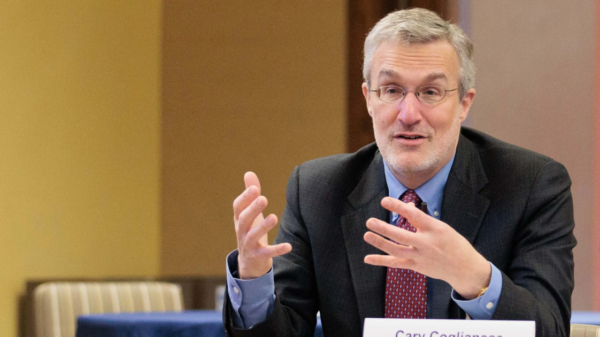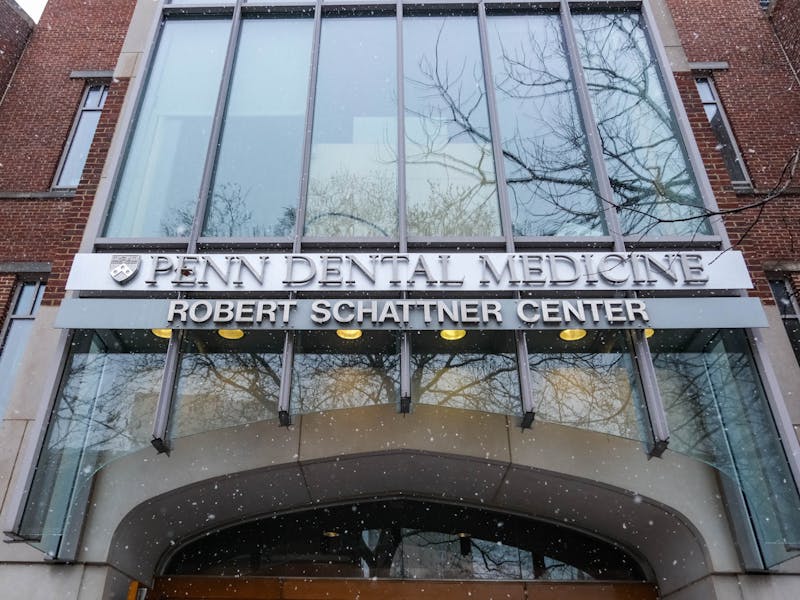
Researchers at the University of Pennsylvania have developed a novel artificial intelligence-based method to identify risk factors linked to tooth decay. The study, led by orthodontics professor Michel Koo and biostatistics and epidemiology professor Jason Moore, was published in the Journal of Dental Research in December 2025. The team utilized machine learning to analyze data from the National Health and Nutrition Examination Survey (NHANES), aiming to uncover patterns that could inform better preventive measures for oral health.
Koo, who serves as the co-founding director of the Center for Innovation & Precision Dentistry, emphasized the potential of machine learning to simplify complex health data into more actionable insights. “This kind of machine-learning pipeline can turn complex national health data into clearer hypotheses and better predictive models—starting with oral health, and potentially extending to other areas of medicine,” he noted in a press release from the dental school.
The research team also included experts from the Dental School, the Penn Institute for Biomedical Informatics, the School of Nursing, and Cedars-Sinai Medical Center. Their study, titled “Uncovering Dental Caries Heterogeneity in NHANES Using Machine Learning,” allowed the team to detect previously unrecognized correlations between dental health and various systemic, nutritional, and environmental factors.
NHANES, conducted by the Centers for Disease Control and Prevention (CDC), provides a wealth of information on health determinants among Americans. However, researchers acknowledged that the datasets can be challenging due to the presence of various “non-uniform” aspects. To tackle these issues, the researchers organized the data into subsets categorized by age. They found that the highest incidence of cavities was in children under five years old, who exhibited a pattern of iron and vitamin D deficiencies, as well as in adults over the age of 65.
“Our results point to the importance of age-targeted prevention and prediction—especially for young children and older adults—guided by real-world diet patterns, lab signals, environmental risk context, and potentially other signals,” Koo explained.
The study also explored the links between cavities and exposure to lead, along with other metals and chemicals, suggesting that tooth decay “may not be merely a localized disease,” but could act as a “sentinel marker of underlying systemic health issues.” The findings identified high-sugar foods, such as apple juice, energy drinks, flavored milk, and ice cream, as significant contributors to dental decay.
Interestingly, the researchers noted a potential relationship between sleep and tooth decay, although they acknowledged that this aspect “warrants further study.” In a related pursuit, researchers from the Dental School, the School of Engineering and Applied Science, and the Perelman School of Medicine collaborated in February 2025 to create a treatment option for apical periodontitis, a chronic dental infection affecting over half of the global population.
As the healthcare sector increasingly looks to integrate machine learning and AI into preventive medicine, studies like Koo and Moore’s may pave the way for more personalized and proactive healthcare solutions. By identifying specific risk factors linked to dental health, these advancements could ultimately lead to improved long-term health outcomes, particularly for vulnerable age groups.
For more information on the implications of AI in healthcare, visit IBM or explore the latest findings at CDC NHANES.
See also OpenAI Hires Anthropic’s Dylan Scand as Head of Preparedness with $555K Salary
 Anthropic AI Tool Triggers $285B Stock Selloff, Hitting Software and Financial Sectors Hard
 Nieman Fellows Discuss AI’s Role in Journalism: Opportunities and Ethical Challenges
 European Software & Ad Stocks Plunge as AI Models Disrupt Business Models; RELX Down 45%
 TradingView Reports Low Single-Digit Growth Amid Strategic AI Investments, Forecasts Modest 2026 Outlook