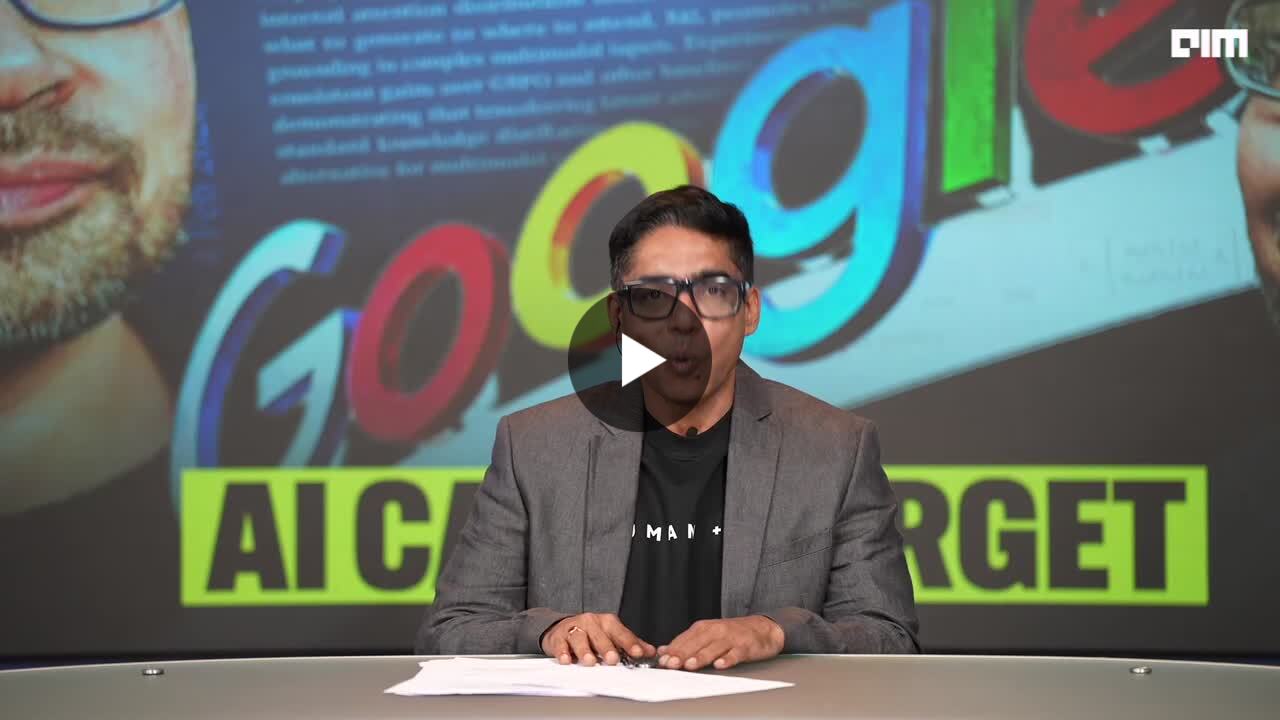
Google DeepMind has introduced a groundbreaking approach to artificial intelligence that could address the long-standing issue of memory retention in AI systems. In a recent research paper, the company unveiled a new paradigm known as **Reinforced Attention Learning** (RAL), which aims to overcome what has been termed **catastrophic forgetting**. This phenomenon, wherein AI models forget previously learned information when new data is introduced, has been a significant barrier to creating AI that can function as a continual learning partner rather than a static tool.
Current large language models, such as **RGBD** and **Gemini**, exhibit a memory crisis that can lead to them appearing forgetful or inconsistent. Users often find that an AI’s responses can vary dramatically depending on the time of day or the context of a conversation. For instance, a user might receive accurate, insightful answers in the morning but find the same AI seemingly unresponsive or confused later in the day. This is not a mere glitch; instead, it stems from a lack of continuous learning capabilities and the limited context window that defines most AI interactions today.
The key to **Reinforced Attention Learning** lies in shifting the model’s focus from simply optimizing outputs—predicting the next word or action—to honing its ability to prioritize the right information. By doing so, the AI becomes better at retaining relevant context and avoiding the pitfalls of forgetting prior knowledge. This process is described as **nested learning**, where the architecture of the AI and its training algorithms are viewed as an interconnected system rather than distinct phases.
DeepMind’s researchers have developed a proof-of-concept model called **HOPE**, which demonstrates the potential of this new approach. Initial results indicate that HOPE outperforms modern recurrent models in language tasks, particularly in its ability to handle long-term memory without succumbing to catastrophic forgetting. The model updates its components at varying speeds: some adapt quickly to new information while others preserve established knowledge over time. This architecture mirrors how the human brain manages both short-term and long-term memory.
As the AI industry increasingly prioritizes scale and monetization, with a focus on advertising versus subscription models, DeepMind’s approach takes a more foundational direction. The company is working on creating AI systems capable of continuous learning and improvement from experience. If successful, this could fundamentally change how AI operates, moving it closer to being a dynamic, lifelong learning system instead of a repository of static training data.
This development comes at a crucial moment in the AI landscape, where the race to enhance functionalities and user experience intensifies. The prospect of AI systems retaining knowledge akin to human memory could lead to significant advancements across various applications, from personal assistants to more complex problem-solving tasks.
For those frustrated by the perceived limitations of current AI chatbots and their inability to maintain coherent memories, DeepMind’s research may signify a turning point. The evolution towards models that can learn continuously and remember past interactions opens the door to more sophisticated digital partnerships. As the technology matures, users can anticipate AI systems that engage with them more intelligently and consistently.
In conclusion, while existing AI models often leave users feeling like they are conversing with an entity that has amnesia, Google DeepMind’s innovative approach may soon transform that experience. By introducing **Reinforced Attention Learning** and **nested learning**, the company is paving the way toward more resilient and capable AI, potentially revolutionizing how we interact with this technology. As we look to the future, the possibility of AI that learns and evolves with us underscores a significant leap toward creating truly intelligent systems.
See also India’s AI Impact Summit 2026: Pioneering Global Solutions for Humanity and Climate Action
 Healwell AI’s $0.53 Stock Faces Crucial Test as Financial Results Loom
 Amazon Announces $200B Investment in AWS, Sparking Debate Over Stock Opportunity
 Tech Sell-off Intensifies as Amazon’s Earnings Loom Amid Azure Growth Concerns