Software stocks have experienced a significant downturn in 2023, raising concerns among investors about the sector’s vulnerability to advancements in artificial intelligence. Following a strong recovery from the 2022 bear market, software companies, represented by the iShares Expanded Tech-Software Sector ETF (BATS: IGV), saw their shares surge more than 100% from early 2023 through the highs of 2025. However, this momentum has been abruptly halted, with the sector now firmly in bear market territory, having lost approximately 30% from its 52-week highs and nearly 22% year-to-date.
This sharp decline has reset valuations for many high-quality software firms, with their stock prices now trading well below historical earnings multiples. The primary catalyst for this selloff appears to be the rapid evolution of artificial intelligence, which has led investors to question the future viability of traditional software models, particularly Software-as-a-Service (SaaS) platforms. The emergence of sophisticated AI models from companies like OpenAI and Alphabet has fostered anxiety within the software industry, as these tools threaten to render some SaaS offerings obsolete.
The fears surrounding AI disruption have caused notable players in the software sector to face steep declines. For example, Salesforce (NYSE: CRM) has seen its shares plummet more than 42% from their 52-week high and nearly 29% year-to-date. Despite its pioneering status in the SaaS customer relationship management model, investor confidence has waned due to concerns that AI could undermine traditional subscription approaches. Nevertheless, analysts maintain a Moderate Buy consensus on Salesforce, with a price target indicating a potential upside of nearly 71%. Analysts note that Salesforce’s Agentforce platform could be a critical growth avenue, as it facilitates the integration of AI-powered agents within its ecosystem.
Dropbox (NASDAQ: DBX) has also come under pressure, with shares down 26% from their 52-week high and nearly 12% year-to-date. Trading at a forward P/E of just 8, Dropbox is seen by some as entering value territory, although concerns linger about the potential commoditization of cloud-based file storage due to AI. In response, the company is transitioning to an AI-driven platform aimed at enhancing productivity through products like Dropbox AI and Dropbox Studio. Analyst sentiment remains cautious but offers a price target suggesting a 30% upside, indicating potential for a rebound.
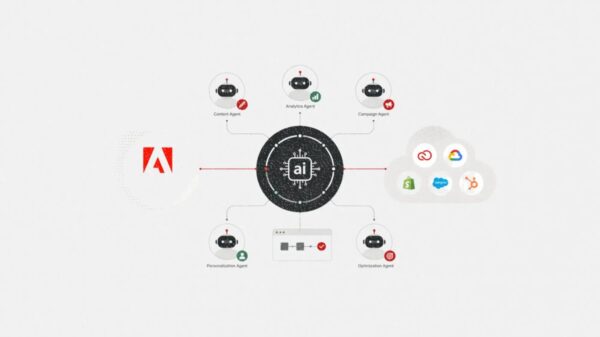
Similarly, Adobe (NASDAQ: ADBE) has been heavily impacted, with shares down 43% from their peak and nearly 25% year-to-date. Concerns about competition from generative AI tools have led to fears that Adobe’s creative software could face disruption. However, the company has proactively integrated AI into its products through Adobe Firefly, a generative AI model designed to enhance its existing software offerings. While analyst sentiment hovers around a neutral hold rating, Adobe’s forward P/E of 10 places it in attractive value territory for investors confident in its market position.
Oracle (NYSE: ORCL) has also seen its stock drop, with a decline of over 53% from its 52-week high and nearly 18% year-to-date. Investor unease stems from the company’s significant debt-funded investments in AI-related data centers and infrastructure. The multi-year deal with OpenAI, valued at approximately $300 billion, has generated both optimism and skepticism regarding future returns. Analysts remain largely bullish on Oracle, offering a price target that implies over 80% upside potential, suggesting that the current sentiment may be overly pessimistic.
For those seeking diversified exposure to the software sector, the iShares Expanded Tech-Software Sector ETF (IGV) offers a pragmatic alternative. The ETF, which holds 114 software stocks and trades at a P/E of 34, provides an avenue for investors wary of individual stock volatility while still capitalizing on potential sector recovery. Recently, IGV has found support near $80, a level that may signal a favorable entry point for investors optimistic about the software sector’s future.
While software stocks have transitioned from market leaders to significant laggards, this sector reset presents potential opportunities, particularly as fears about AI disruption may have overshot reality. For many software companies, AI could be a catalyst for growth rather than a threat. The key will be identifying which firms can adapt and integrate AI effectively to thrive in the evolving landscape.
See also Pentagon Integrates ChatGPT into GenAI.mil, Expanding Access to 3M Defense Personnel
 Qure.ai Enhances Early Disease Detection for 40M People Using AI in Medical Imaging
 Infosys Partners with Anthropic to Unlock $400B AI Market Opportunity
 India’s Tech Giants Deploy NVIDIA AI Agents to Transform Call Centers and Healthcare
 NHS Expands Oracle’s AI Note-Taking Tool to Over 300 Hospitals, Boosting Efficiency