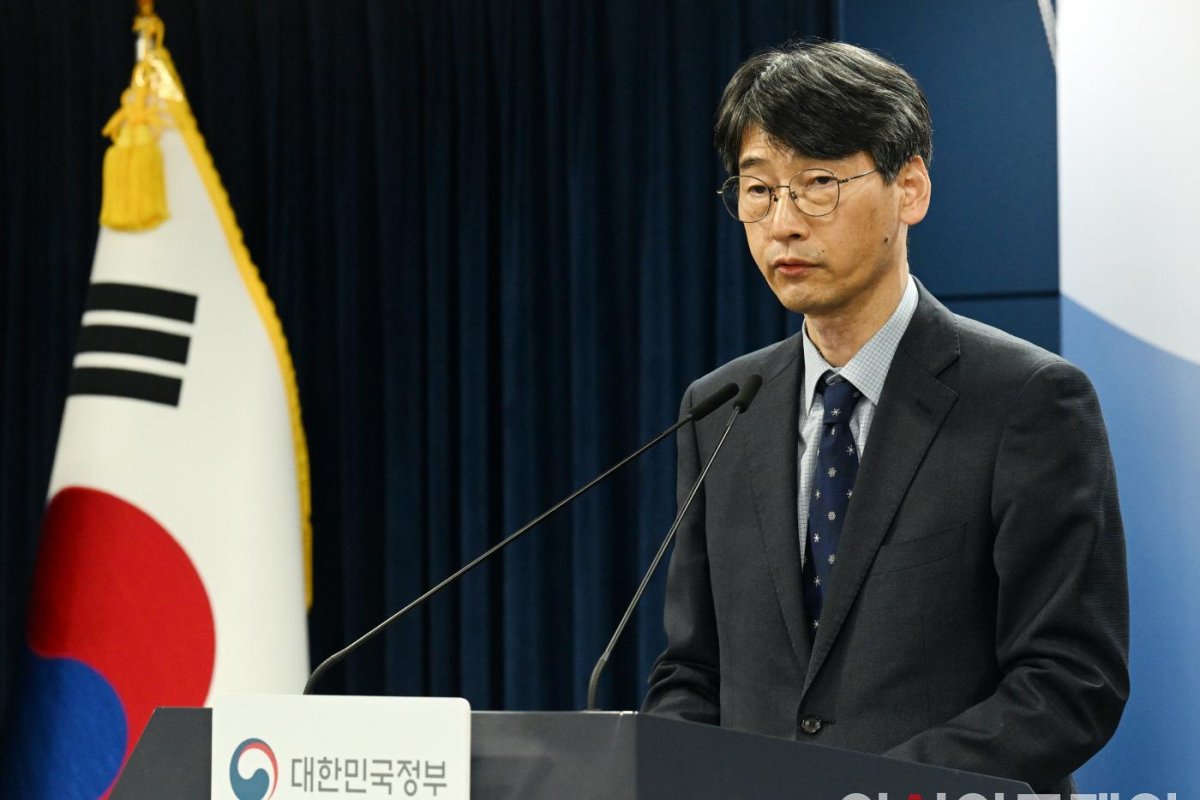
Motif Technology has been selected to join South Korea’s government-backed initiative aimed at developing an “independent” artificial intelligence foundation model. The announcement was made by Kim Kyung-man, director of the Artificial Intelligence Policy Office at the Ministry of Science and ICT, during a press event at the Seoul Government Complex in Jongno-gu on February 20. The selection comes as part of an additional call for participation in the project, which aims to bolster the domestic AI ecosystem.
The Ministry of Science and ICT stated that the consortium, led by Motif Technology, was chosen due to its expertise in designing AI models featuring proprietary architectures. The ministry noted that Motif has demonstrated the capability to compete with established global AI systems, even within a limited data environment. The consortium also includes the startup More, the Seoul National University‘s industry-academia cooperation foundation, and the Korea Advanced Institute of Science and Technology.
Motif plans to create an inference-focused large language model comprising 300 billion parameters. Future developments will expand into vision-language models and vision-language-action models, as stated by the ministry. Development of this model is scheduled to run from February through July, culminating in a competitive evaluation stage in August against other contenders, including LG AI Research, Upstage, and SK Telecom.
The ministry also announced that it would extend the development timeline for the existing teams by one month, with a new deadline set for the end of July. In addition to this extension, Motif will receive support comparable to that of the other teams, which includes access to 768 graphics processing units and necessary data resources.
The August stage evaluation is critical, as it aims to narrow the field to three teams, with an emphasis on originality in the projects submitted. Two teams will ultimately be selected for final support before the year’s end. Kim Kyung-man highlighted that the four participating teams will collaborate in establishing criteria for the originality assessment, with input from both industry and academic experts.
This project has garnered significant attention, particularly following the initial evaluation last month, where Naver Cloud was unable to meet the originality requirement and was subsequently eliminated. This incident has raised questions regarding the project’s viability and the momentum of South Korea’s efforts in AI.
Despite the challenges, the ministry remains focused on building a robust domestic AI ecosystem through partnerships capable of developing an independent foundation model. The project reflects the South Korean government’s commitment to fostering innovation in AI, as it seeks to position itself as a competitive player in the global AI landscape.
As the project progresses, stakeholders in the technology sector will be closely monitoring developments, particularly regarding the originality assessments that could set the tone for future AI initiatives in the country. The outcomes of the August evaluations may provide critical insights into the capabilities of South Korean teams to innovate and create cutting-edge AI technologies.
See also Vietnam’s AI Adoption Hits 89.3% Among Students, Reveals Major Literacy Gaps
 Foreign Firms Target India as Key AI Investment Hub Amid Data and Policy Advantages
 Philippe Bolopion: AI in Autocratic Hands Accelerates Global Human Rights Threats
 Netanyahu Launches AI Server Farm Initiative to Boost Israel’s Global Tech Leadership
 Government Alerts India AI Impact Summit Attendees About Phishing Scam Threat