
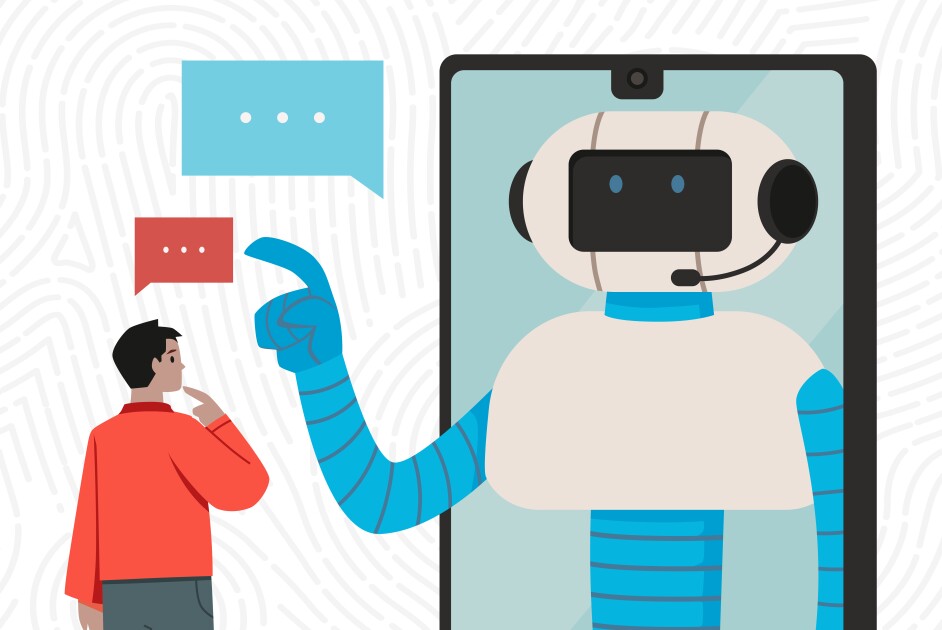
Concerns about the impact of artificial intelligence (AI) on students’ social-emotional development are taking center stage as educators and researchers reassess the role of technology in the classroom. Discussions at the annual online conference of the Collaborative for Academic, Social, and Emotional Learning (CASEL) this month highlighted the dual potential of AI tools to either enhance or hinder critical interpersonal skills among young people.
As AI-powered products become more prevalent in education, the implications for social-emotional learning (SEL) are increasingly tangible. A recent Gallup survey revealed that 64% of teens are familiar with generative AI chatbots, with 30% using them daily. David Adams, a social-emotional learning expert and CEO of the Urban Assembly, emphasized the need for deeper understanding regarding how AI influences students’ emotional growth. “I’m curious about how [AI] will impact what I call emotional offload,” he stated, raising concerns about students relying too heavily on technology for social reasoning.
AI’s influence extends to shaping young people’s self-perception and relationship-building capabilities. However, educators remain wary about the potential risks, including diminished critical thinking skills and difficulties in distinguishing between genuine human interaction and AI-generated responses. The American Psychological Association has warned that adolescents may struggle to differentiate between the empathy exhibited by chatbots and authentic human understanding.
Privacy concerns also loom large, as highlighted by Justin Long, a researcher at Instructure, the parent company of the learning-management system Canvas. He questioned how sensitive information shared with AI tools is stored and whether users are aware they are engaging with a bot. “How is the data being used and how is it being stored?” Long asked during the conference.
Despite these concerns, proponents argue that AI chatbots can serve as a safe space for students to practice social-emotional skills in low-stakes situations. For instance, students might rehearse difficult conversations or prepare for job interviews. Clarke Heyes, a licensed marriage and family therapist and clinical research manager at Alongside, believes AI can enhance student well-being if designed ethically. “AI is not a replacement for school mental health professionals; it’s a support tool,” he noted, suggesting that purpose-built AI can help alleviate pressures on educators and mental health staff.
While AI can reinforce certain SEL skills, it cannot replace the vital role of adults in teaching these competencies. Kim Normand Dorbin, co-founder of Free the Mind Co, stressed the importance of human connection in education. “Adults create the safety and emotional connection. AI does not teach empathy or relationship-building. Adults do that off-screen,” she remarked.
As technology evolves, the challenges that AI presents for social-emotional development are not entirely new. The rise of social media has already raised alarms about its negative health effects and its influence on cognitive performance. Adams drew parallels to the introduction of microwaves, which changed family meal dynamics and, consequently, social learning opportunities. “Technological changes are constantly altering the conditions in which kids develop social-emotional skills,” he said.
Adams advocates for proactive policies from educators and policymakers regarding AI’s role in SEL. “By naming what we need young people to be able to know and do, we should be in the driver’s seat thinking about, ‘What are the implications of this technology?’” he asserted. Rather than reacting to potential negative outcomes, he emphasized the importance of anticipating how AI might affect interpersonal skills.
As the educational landscape continues to evolve with AI integration, stakeholders must carefully navigate the balance between leveraging technology for student growth and ensuring it does not compromise essential human interactions that foster emotional intelligence.
See also LEGO Education Advocates Child-First AI Literacy at BETT 2023 Conference
 Navneet AI Partners with IIT Gandhinagar to Enhance AI Education for 2,000 Teachers in India
 Digital Promise Launches $26M K-12 AI Infrastructure Program to Enhance Assessment Standards
 EdTech Market Set to Soar to $426.23 Billion by 2033, Driven by AI Innovations and Digital Learning
 77% of Teachers Stressed by AI Rollout; Education Perfect Report Reveals Governance Gaps