
Nvidia is facing increasing competition in the artificial intelligence (AI) sector as companies such as Broadcom, AMD, and Alphabet make strides to erode its dominance in hardware. While Nvidia continues to lead the market in graphics processing units (GPUs), Alphabet has emerged as a formidable player in AI software, recently introducing its own hardware competitor aimed at challenging Nvidia’s supremacy.
As of the current year, both Nvidia (NASDAQ: NVDA) and Alphabet (NASDAQ: GOOG)(NASDAQ: GOOGL) have experienced declines in their stock prices, with Alphabet falling 6.6% and Nvidia down 6.38%. This downturn has prompted investors to reassess their positions, leading to discussions about potential buying opportunities in the market.
From a financial standpoint, Alphabet appears to be in a stronger position compared to Nvidia, particularly within the broader AI market. Not only is it challenging Nvidia’s hardware leadership, but it is also posing a threat to rising competitors in AI software, including ChatGPT and Claude. While Nvidia’s GPUs have become essential for many AI software firms, companies like OpenAI, which develops ChatGPT, are increasingly exploring custom hardware tailored specifically for AI needs.
Although Nvidia has secured its place as a leading provider of AI hardware, Broadcom and AMD are closely competing for market share. Notably, Broadcom has formed a partnership with Alphabet to develop tensor processing units (TPUs), which directly challenge the GPU’s utility in AI applications. This collaboration signifies Alphabet’s intent to reduce its reliance on Nvidia’s hardware, a move echoed by Anthropic, OpenAI’s primary competitor, which is also adopting TPUs with plans to deploy 1 gigawatt of computing capacity by the end of 2026.
The growing trend suggests that AI hardware may be more easily replaceable than software. Evidence indicates that Anthropic’s Claude operates effectively, if not superiorly, on TPUs compared to GPUs. Additionally, products like Claude and Google’s Gemini, developed by Alphabet, have been rapidly gaining traction in the market, further solidifying Alphabet’s position.
Investors contemplating stock purchases in Alphabet should note that the Motley Fool’s Stock Advisor team recently identified ten other companies they believe are better investments at this time, excluding Alphabet from their recommendations. Historical data reveals that past recommendations from the Stock Advisor have generated substantial returns, such as a $1,000 investment in Netflix in 2004 yielding $490,325 today, or Nvidia’s recommendation in 2005 resulting in more than $1 million from the same initial investment.
Despite Alphabet’s current challenges and the stock’s recent decline, the company’s strategic moves—particularly its development of TPU technology—position it as a potentially lucrative investment compared to Nvidia. With both hardware and software challenges mounting against Nvidia, Alphabet’s broader moat may signify a more favorable outlook for the company’s future prospects.
As the AI landscape continues to evolve, the competition between Nvidia and Alphabet is expected to intensify, further shaping the direction of technology and market dynamics. Investors will need to stay informed about these developments to navigate the shifting terrain effectively and capitalize on emerging opportunities.
See also Arm Launches First AI Data Center Chip, AGI CPU, to Meet Growing AI Demand
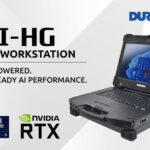 Durabook Launches Z14I-HG: First Rugged Mobile Workstation with 682 TOPS AI Performance
 Nvidia’s Networking Revenue Soars 263% as AI Demand Expands Beyond GPUs
 Quantum Computing Threatens Digital Security: AI-Safe Measures Urgently Needed Now
 ARM Holdings Surges 16% as AGI CPU Launch Signals AI Hardware Evolution