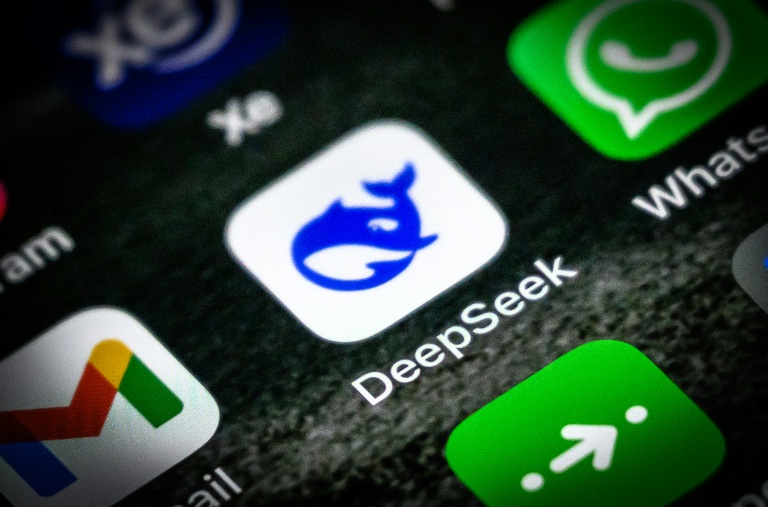
After more than a year of anticipation, the global tech industry is closely watching for a significant artificial intelligence launch from DeepSeek, a company that has been pivotal in showcasing China’s advancements in AI technology. The startup first gained attention in early 2025 with a low-cost chatbot, R1, which demonstrated capabilities comparable to its U.S. counterparts, triggering substantial shifts in the market.
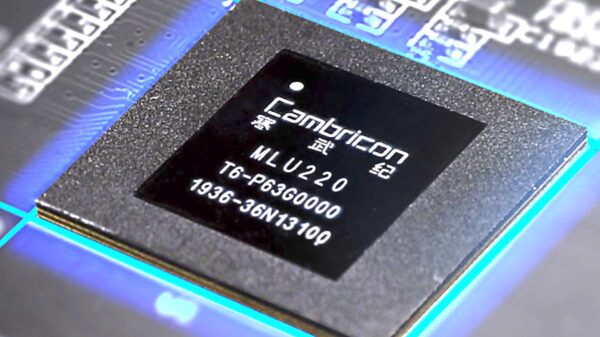
Despite ongoing speculation regarding the imminent release of DeepSeek’s next-generation model, referred to as V4, the product remains unannounced. Reports indicate that the choice of computer chips used to train this new AI model is a central concern, raising questions about whether it will rely on world-leading U.S. designs or alternative chips manufactured domestically in China. “It’s important to know because at one level, it is a signal of China’s AI self-sufficiency trajectory,” noted Wei Sun, a principal AI analyst at Counterpoint Research.
Recent insights from The Information suggest that V4 could be optimized for the latest chips produced by Huawei. Such a transition would mark a crucial milestone for China as it seeks to navigate around U.S. restrictions on exporting high-end AI chips, particularly those from Nvidia, a leading U.S. semiconductor manufacturer.
According to the report, multiple tech giants including Alibaba, ByteDance, and Tencent have placed large orders for Huawei chips in preparation for DeepSeek’s latest launch. AFP reached out for comment from DeepSeek, Huawei, Alibaba, ByteDance, and Tencent, but none provided a response.
DeepSeek originated in 2023 as a side project stemming from a hedge fund that had access to powerful Nvidia processors. The company’s breakout moment came in January 2025 with the release of R1, which underscored its capabilities and prompted President Donald Trump to label it a “wake-up call” for American technology firms. R1 was built upon DeepSeek’s previous model, V3, which was released in December 2024.
DeepSeek’s innovative, cost-effective AI tools have gained traction not only in China but also in emerging markets, including regions like Southeast Asia and the Middle East. As anticipation mounts for V4, industry observers like Stephen Wu, founder of Carthage Capital, suggest that the new model—rumored to be multimodal—could once again disrupt valuations among U.S. technology stocks. “I expect the upcoming DeepSeek V4 release will not just be a software update; it will be a highly capable, open-source model that handles massive context windows at a fraction of the cost,” Wu commented.
However, DeepSeek’s future reputation as a leader in cutting-edge AI technology hangs in the balance. Transitioning from reliance on Nvidia chips to collaborating with domestic chipmakers would necessitate significant engineering efforts. Wei cautioned that “substantial re-engineering” could slow development cycles and introduce performance trade-offs, particularly as V4 is expected to set new standards in the industry.
The U.S. government cites national security concerns as the rationale behind its export ban on Nvidia’s most powerful AI chips to China. Wu observed that the prolonged wait for DeepSeek V4 highlights the obstacles China faces in scaling advanced AI models without unrestricted access to top-tier Nvidia hardware. Reports have surfaced claiming that DeepSeek may have bypassed the ban, allegedly training V4 using high-end Blackwell chips reportedly smuggled into China.
Training AI models typically demands far greater computing power than that required for generating queries, known as inference. While Nvidia declined to comment on specific allegations, the company has previously stated that it has not observed evidence of such smuggling, describing the claims as “far-fetched.” Meanwhile, another Chinese AI startup, Zhipu, recently revealed an image generator that it claims was entirely trained on Huawei chips. Furthermore, Alibaba announced plans to establish a new AI training and inference data center in southern China, backed by 10,000 of its own chips and operated in partnership with China Telecom.
If DeepSeek successfully develops V4 entirely on Huawei silicon, it could signify a substantial shift in the geopolitical tech landscape. Industry experts agree that the stakes are high, as the outcome of this transition could redefine not only DeepSeek’s future but also China’s position in the global AI arena.
See also Cisco Reveals Network Infrastructure Must Evolve to Support AI Demands and Quantum Security
 Continuous Learning Boosts AI Career Growth Amid Rapid Industry Changes
 AMD Enhances Lemonade AI for Seamless Integration in Apps with New 10.2 Release
 Nvidia Leads $25.88 Billion AI Infrastructure Boom, Achieving 73% Revenue Growth