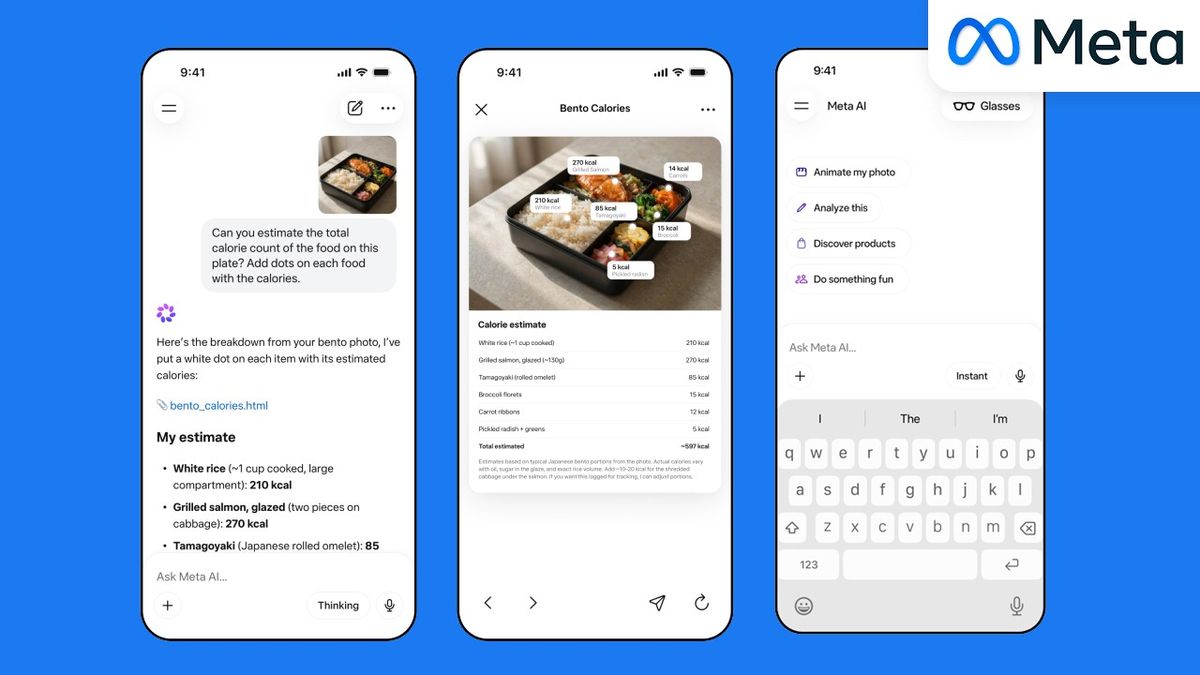
Meta has introduced a new artificial intelligence model, Muse Spark, developed by its Meta Superintelligence Labs. This launch is part of the company’s broader initiative to enhance its AI capabilities and is designed to improve both reasoning and multimodal functionalities.
Muse Spark is the first in a series of models aimed at tackling a range of tasks, from simple inquiries to complex problem-solving across disciplines like science, mathematics, and health. The model has been integrated into the Meta AI assistant, which users can access via the Meta AI app and the company’s web platform.
According to Meta, the updated assistant features different modes tailored for various tasks, enabling it to deploy multiple sub-agents for processing queries simultaneously. This is expected to streamline user interactions and enhance the overall efficiency of the assistant.
One of the significant upgrades is the incorporation of multimodal features, allowing users to engage with the assistant using both text and images. This enhancement opens up new avenues for tasks such as product analysis, item identification in photos, and the provision of contextual information.
In the realm of health, Meta has collaborated with medical professionals to refine the system’s capabilities in addressing common health-related inquiries. This includes interpreting visual data like charts, thereby improving the accuracy and relevance of responses.
Additionally, the updated assistant aims to facilitate content creation and discovery. Users will be able to generate simple applications, including websites or games, directly from prompts. The assistant will also offer personalized recommendations based on user interests and activities across Meta’s various platforms.
The rollout of these new features is initially taking place in the United States, with plans for expansion into additional regions. Meta intends to integrate the capabilities across its platforms, including Instagram, Facebook, Messenger, and WhatsApp.
Looking ahead, Meta plans to offer limited access to the underlying technology through an API for select partners. There is also the potential for future versions of the model to be open-sourced, which could foster further innovation in AI development.
See also Google DeepMind Accelerates AI Development by Merging Resources and Embracing Startup Culture
 Large Language Models Market to Surge from $3.5B in 2025 to $25B by 2033 with 28% CAGR
 Florida AG Launches Investigation into OpenAI Over FSU Shooter Chatlogs
 China’s Leading AI Firms Shift to Closed Source Models Amid Funding Crisis
 Grok Surpasses ChatGPT and Claude with Real-Time X Integration for Daily Insights