






















































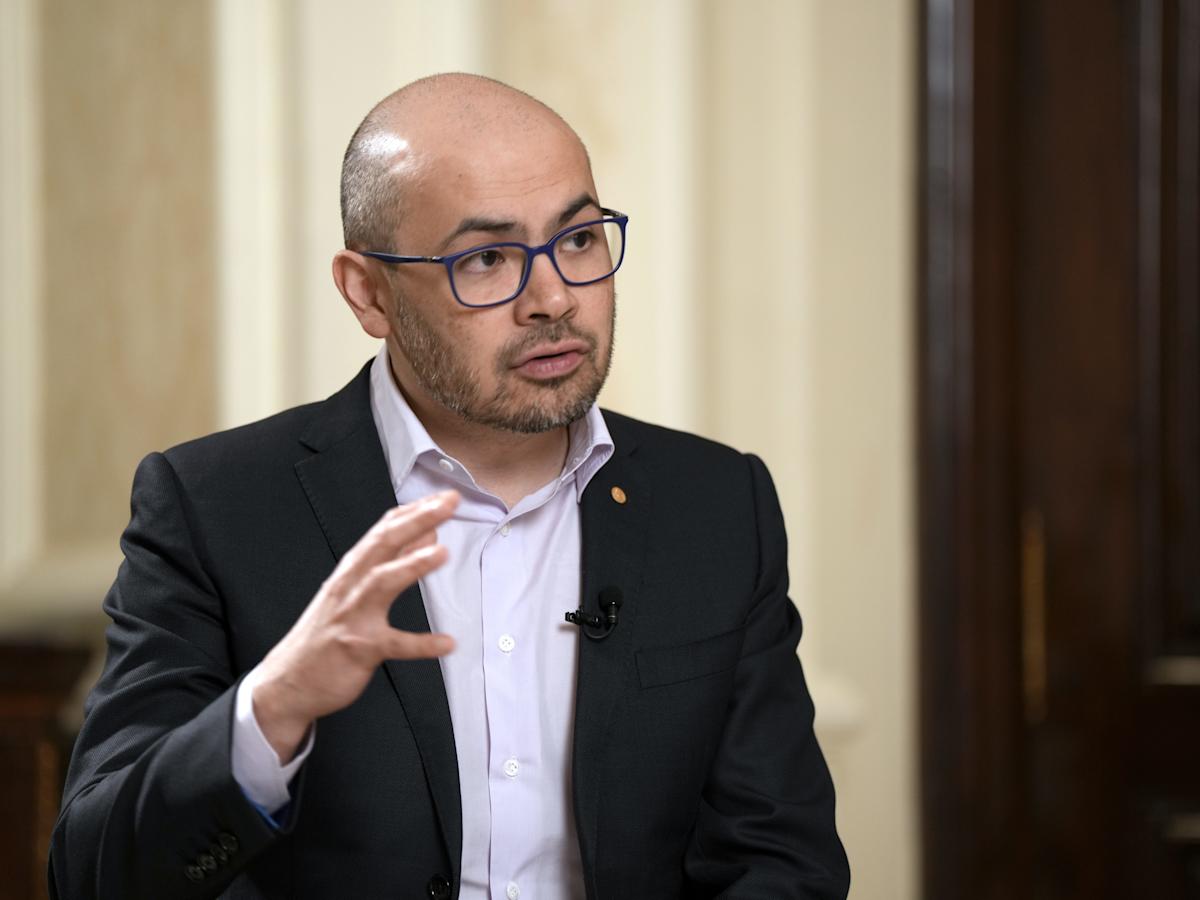
Google DeepMind CEO Demis Hassabis revealed that the lab has made significant strides in closing the gap with its competitors by merging resources with other divisions within Google. In a recent episode of the “20VC” podcast, Hassabis discussed how the reorganization of the lab has facilitated a more agile, startup-like environment, enhancing its pace of innovation and collaboration.
The changes, implemented over the last two to three years, aimed to consolidate all of Google’s artificial intelligence resources, particularly addressing the critical bottleneck posed by computing power. “We’ve basically helped put together all the talent from around the company, sort of pushing in one direction,” Hassabis stated. This strategic alignment has enabled Google to focus on developing larger, more sophisticated AI models, rather than maintaining multiple iterations of less powerful systems.
The evolution of Google DeepMind can be traced back to its inception in 2010, followed by its acquisition by Google in 2014. A significant milestone occurred in 2023 when DeepMind merged with Google Brain, resulting in the unified entity known as Google DeepMind, which is responsible for advanced AI tools like Gemini and Nano Banana.
Hassabis underscored that approximately 90% of the foundational breakthroughs shaping the modern AI landscape stem from either Google Brain, Google Research, or DeepMind itself. As the unit positions itself against other leading AI laboratories such as OpenAI, Anthropic, and Microsoft AI, the integration of talent and resources serves as a crucial factor in its competitive advantage.
This renewed focus on agility echoes sentiments expressed by other tech leaders. For instance, in a letter to shareholders last year, Amazon CEO Andy Jassy emphasized the importance of operating like “the world’s biggest startup.” He remarked on the necessity of speed across all industries, arguing that it is a false dichotomy to suggest that companies must choose between rapid innovation and high standards.
Similarly, Steve Jobs, cofounder of Apple, famously likened the company to a startup, highlighting how different teams could collaborate on shared objectives. “We’re the biggest startup on the planet,” he noted at a conference in 2010.
The strategic reshaping at Google DeepMind not only exemplifies a shift in operational philosophy but also reflects a broader trend in the tech industry towards nimbleness and innovation. As AI technologies continue to evolve and penetrate various sectors, the ability to adapt quickly and consolidate expertise will likely play a pivotal role in determining market leaders.
Looking ahead, the implications of Google DeepMind’s restructuring are significant. The lab’s focus on unified resources and enhanced collaboration could redefine how AI research and development are approached, potentially yielding new breakthroughs that further push the boundaries of what artificial intelligence can achieve. As competition intensifies, the landscape of AI innovation will undoubtedly be shaped by the agility and resourcefulness of firms like Google DeepMind.
See also Large Language Models Market to Surge from $3.5B in 2025 to $25B by 2033 with 28% CAGR
 Florida AG Launches Investigation into OpenAI Over FSU Shooter Chatlogs
 China’s Leading AI Firms Shift to Closed Source Models Amid Funding Crisis
 Grok Surpasses ChatGPT and Claude with Real-Time X Integration for Daily Insights
 H Company Launches Holo3 AI Agent with 35B Parameters for Multi-App Task Execution














