Nvidia continues to assert its dominance in the artificial intelligence (AI) hardware sector, as recent assessments from Wedbush highlight an escalating demand for its new Blackwell chips. The firm anticipates that demand will significantly outpace supply, ensuring a steady flow of capital through the tech ecosystem. According to Wedbush, the recent fluctuations in Nvidia’s stock price represent a temporary pause in what they describe as an early-stage AI investment cycle.
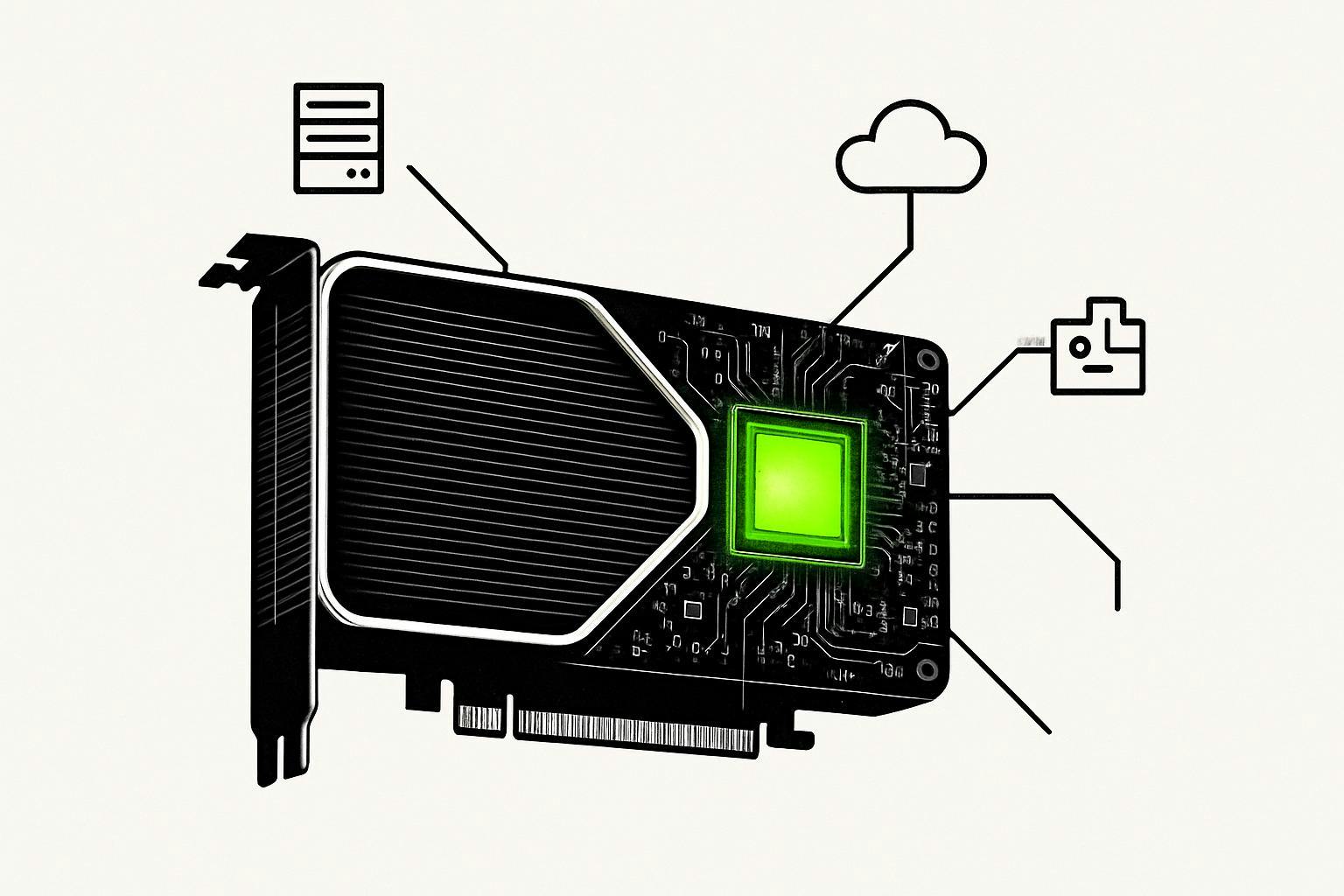
Wedbush estimates that each dollar spent by customers on Nvidia hardware generates an additional $8 to $10 in related expenditures across various sectors, including cloud services, networking equipment, software, and data center infrastructure. This multiplier effect illustrates why the firm believes Nvidia’s latest financial results, which again demonstrated strong revenue growth in AI data centers, support the notion that the current boom has considerable room for expansion. However, Nvidia’s stock has experienced a decline in recent weeks as investors express concerns about a potential AI bubble, tighter U.S. export controls regarding China, and volatility in tech markets.
Competing pressures are also emerging in the sector, with Google‘s custom TPU accelerators, developed in collaboration with Broadcom, gaining traction in its cloud offerings. Meanwhile, Advanced Micro Devices (AMD) is promoting its MI300 chips as viable alternatives. Despite the intensifying competition, Wedbush maintains that Nvidia’s robust software ecosystem, developer community, and strategic roadmap for Blackwell will keep it in a leading position for the foreseeable future.
The implications of Nvidia’s ongoing success extend beyond the company itself, suggesting that AI spending trends align more with a marathon rather than a sprint. If Wedbush’s assertions hold true, the financial impact of every dollar spent on Nvidia technology could benefit a wide range of firms, from cloud service providers to chip manufacturers and software developers. The recent downturn in Nvidia and other high-performing tech stocks underscores the volatility of market sentiment, particularly concerning fears of an impending bubble and the evolving landscape of U.S.–China tech relations.
Wedbush anticipates that these apprehensions will diminish as more concrete AI applications materialize across industries such as enterprise software, healthcare, and cybersecurity. This could set the stage for another rally in tech stocks later this year, with market leadership remaining concentrated in AI-linked companies. However, the sphere of winners may broaden as the financial benefits ripple through various sectors beyond Nvidia.
In a broader context, the current AI expansion bears a resemblance to the initial growth phase of cloud computing. Wedbush argues that today’s AI infrastructure development contrasts sharply with the late-1990s tech bubble, where inflated valuations lacked sustainable revenue or business models. Presently, major cloud providers and corporations are committing tens of billions of dollars towards AI data centers, supported by tangible demand for training and deploying AI models.
Nvidia’s ability to sustain rapid growth while scaling up its supply capabilities serves as an indicator that this wave of investment is manifesting in actual sales rather than merely hype. If the current AI cycle parallels the formative years of cloud computing—with years marked by consistent infrastructure and software investment—then hardware leaders, cloud platforms, and application developers could benefit from prolonged structural advantages rather than fleeting excitement.
See also SoftBank Acquires Ampere Computing for $6.5 Billion to Strengthen AI Chip Portfolio
 Dell and HP Warn of AI-Driven Memory Chip Shortages, Prices Set to Surge 50%
 Google Offers AI Chips to Meta at Deep Discounts, Challenging Nvidia’s Dominance
 Quantum Computing Market to Reach $97B by 2025, AI Set to Surpass Trillions
 Africa’s AI Revolution: $10B Investment Needed in Connectivity, Compute, and Talent