






















































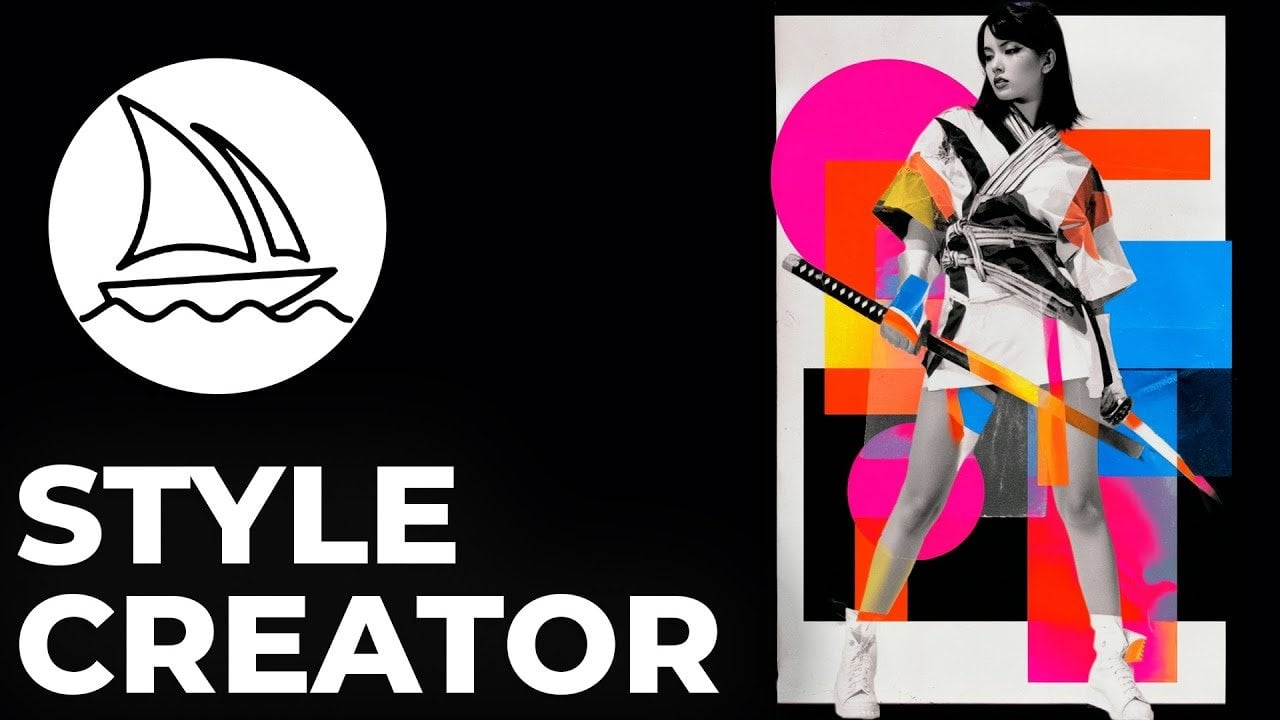
Midjourney has launched a beta feature called the Style Creator, aiming to empower users to refine and personalize AI-generated visual styles. This tool allows for an iterative process where artists can select images from a generated grid to guide refinements and create unique style codes for their projects. While some users are lauding its potential to revolutionize digital artistry, others are facing challenges due to its complexity and steep learning curve. The question remains: is this tool a boon for creative professionals, or does it risk alienating users with its intricacies?
The Style Creator facilitates an interactive experience where users enter a prompt, generating a grid of images. By selecting images that resonate with their creative vision, users can iteratively refine the output, generating unique style codes that can be saved for future use. This functionality is appealing for those looking to maintain a consistent aesthetic across multiple projects or explore new artistic directions. However, achieving the desired outcome often requires considerable patience and multiple rounds of refinement.
Typically, the iterative process involves selecting images from a grid, skipping options that do not meet expectations, and making adjustments to visual elements such as brightness or color. Despite allowing for detailed customization, this narrowing down can sometimes limit the creative diversity of the output. Users need to have a clear understanding of their artistic goals to avoid unintended results which may stray far from their initial vision.
Feedback on the Style Creator has highlighted usability concerns, particularly its unintuitive interface. Users have reported that generated styles can deviate significantly from their prompts, especially when the selected images introduce unexpected elements. The integration of style and color adjustments into a single process has also been criticized, with many suggesting that these should be separated to allow for greater control. The steep learning curve associated with the tool may deter new users, emphasizing the need for clearer instructions and more intuitive navigation.
New interface features, including options to like or delete images, hotkeys for faster navigation, and toggle settings for grid views, aim to enhance usability. Yet, some users have described the interface as cumbersome, pointing to inconsistent grid sizes and vague instructions that complicate their experience. Addressing these issues will be crucial for Midjourney to ensure broader adoption and improved effectiveness of the Style Creator.
As a beta tool, the Style Creator is evolving with user feedback playing a vital role in shaping its development. Users have suggested improvements such as clearer guidance on image selection, separating style and color adjustments for enhanced creativity, and refining the interface for easier navigation. These enhancements are essential for Midjourney to meet the diverse needs of its user base and elevate the overall creative experience.
Despite its challenges, the Style Creator presents substantial opportunities for creative exploration. It serves as a platform for experimenting with various artistic styles, making it a valuable asset for artists, designers, and creative professionals. Users can generate unique style codes tailored to their preferences, refine specific elements of their prompts, and develop a cohesive aesthetic for their work.
Looking ahead, the Style Creator signifies a meaningful advancement for Midjourney, introducing a new avenue for customizing and refining visual styles. While its complexity and unpredictability highlight the need for continued development, the tool’s potential for creative exploration is clear. As Midjourney works on refining the feature based on user input, the Style Creator is positioned to become a more intuitive and effective resource for artistic expression. Engaging with the tool and providing feedback will be instrumental in its evolution, ultimately shaping the future of AI-driven creativity.
See also Micron Stock Soars 166% in 2025; Analysts Predict Continued Growth Amid DRAM Price Surge
 Warren Buffett Allocates 24% of Berkshire Hathaway’s Portfolio to Apple, Alphabet, and Amazon AI Stocks
 Open-Sourcing AI-DLC: Adaptive Workflows Transform Software Development Efficiency
 Nvidia’s AI Chip Dominance Poised for $4 Trillion Infrastructure Boom by 2026
 AI Bias Study Exposes Systemic Discrimination in ChatGPT, Perplexity Against Women and Minorities















