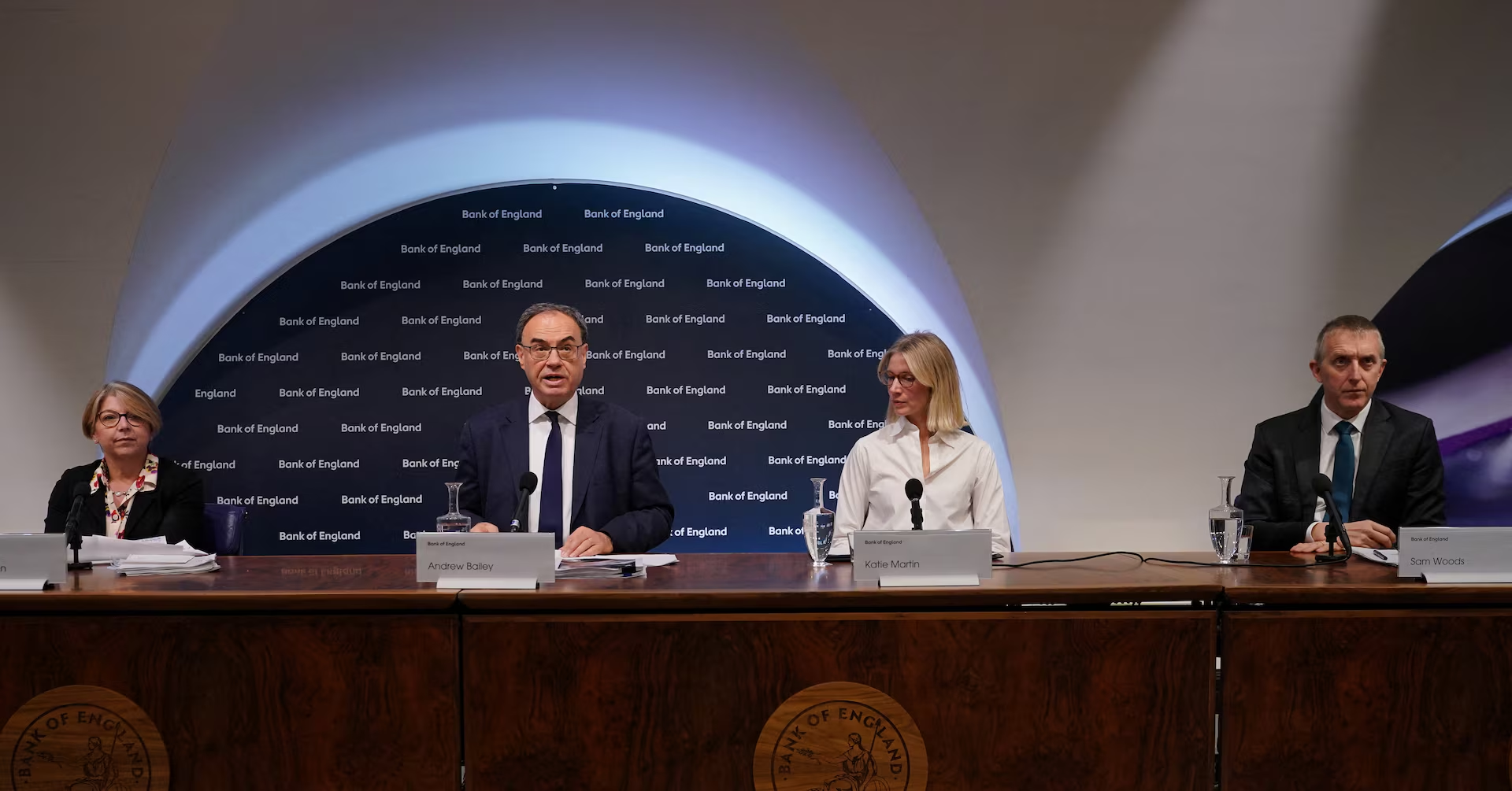
LONDON, Dec 2 (Reuters) – The Bank of England (BoE) has raised alarms regarding the stability of Britain’s financial system, highlighting heightened risks associated with inflated valuations in sectors driven by artificial intelligence, aggressive lending practices, and significant leveraged positions in government bond markets. This assessment was delivered during the release of its half-yearly Financial Stability Report on Tuesday.
BoE Governor Andrew Bailey indicated that threats have amplified throughout 2025, stating, “Overall risks to financial stability have increased during this year. Key sources of risk include geopolitical tensions, fragmentation of trade and financial markets and pressures on sovereign debt markets.” He noted the implications of rising government expenditure, which could constrain future responses to economic shocks.
Despite these concerns, the BoE observed that the UK banking sector remains well-capitalized, with overall debt levels in corporate and household sectors remaining low. However, the central bank warned of vulnerabilities stemming from international developments and niche segments within financial markets.
According to the report, investor enthusiasm for artificial intelligence has propelled share prices to levels reminiscent of the dotcom bubble in the United States and the peak valuations in the UK since the global financial crisis. The BoE cautioned that increased interconnections among AI firms and credit markets could exacerbate financial stability risks should an asset price correction occur. Bailey remarked, “Even if AI proved a success, there was no guarantee that all companies which were currently highly valued would turn out to be winners.”
Recent corporate failures, such as the collapses of U.S. car parts manufacturer First Brands and auto dealership Tricolor, were highlighted by Bailey as potential indicators of broader systemic issues that could manifest. In response, the BoE plans to conduct a stress test focused on assessing the resilience of the private market ecosystem, with further details expected later this week. “It’s important for firms to manage their risks by including scenarios in their analysis where losses are greater, or more correlated, than in the past,” he added.
The British Private Equity & Venture Capital Association acknowledged the resilience of private equity finance through various economic cycles, asserting its vital role in the UK economy for over four decades. Chief Executive Michael Moore stated, “Private capital has been an important part of the UK economy for over 40 years, showing its resilience through different economic cycles.”
Another significant concern raised by the BoE was the record level of leveraged activity within the gilt repo market, which reportedly reached nearly £100 billion ($132 billion) last month. This surge was primarily driven by a limited number of predominantly U.S.-managed hedge funds that rely heavily on regular refinancing. The central bank warned that a sudden halt in this financing could trigger a fire sale of British government bonds. Deputy Governor Sarah Breeden emphasized, “The resilience of the gilt repo market is fundamental to the resilience of the sovereign bond market, which is the basis of all financial market activity in the UK.”
BoE policymakers believe that while the gilt market is relatively stronger than it was in previous years, challenges remain, particularly as hedge funds increasingly engage in debt-fueled bets. This concern has been compounded by conditions in short-term lending markets. In September, the BoE suggested measures aimed at bolstering the resilience of bond markets, including greater central clearing for gilt transactions and higher margin requirements, although implementing these reforms will take time, necessitating that investors prepare adequately for potential shocks.
As the global economic landscape continues to evolve, the BoE’s warnings underscore the intricate interdependencies in financial markets and the critical need for vigilance in risk management. The ongoing developments in artificial intelligence and their implications for investment strategies could further complicate the economic picture, making the upcoming BoE stress tests a focal point for understanding potential vulnerabilities in the UK financial system.
See also Catholic Scholar Joseph Vukov Advocates Human Dignity Amid AI’s Rise in Ethics Lecture
 Cross-Border Counsel Krish Thakker Transforms Compliance Amid Global AI Regulatory Chaos
 AWS Launches Autonomous AI Agents and Nova Sonic for Enhanced Customer Interactions
 AI Trade Wars Intensify: Semiconductors and Data Sovereignty Redefine Global Power Dynamics
 Affordable AI Sparks Investment Surge in Emerging Markets, Revolutionizing Startups and Education