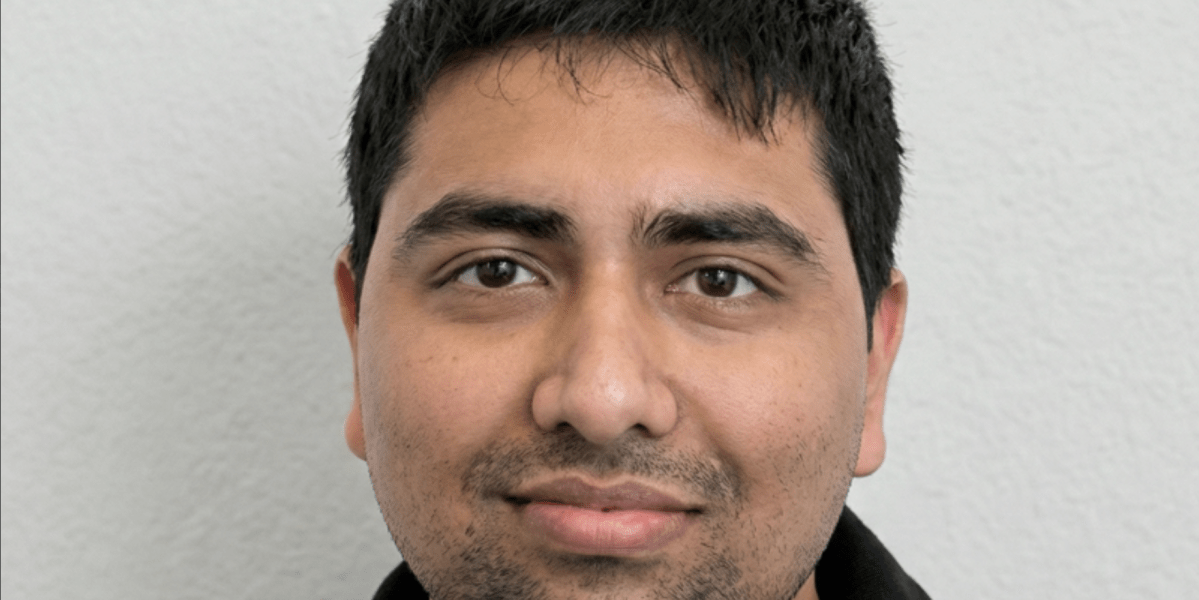
Apple has named Amar Subramanya as its new vice president of AI, marking a significant shift in the company’s leadership strategy just a year after the launch of Apple Intelligence. Subramanya, a seasoned professional with experience at both Google and Microsoft, will take over from John Giannandrea, who has served as Apple’s AI chief since 2018 and plans to retire in spring 2026. This transition is viewed as a critical moment for Apple as it seeks to enhance its AI capabilities in an increasingly competitive landscape.
Subramanya will report directly to software chief Craig Federighi and will oversee key areas including “Apple Foundation Models, ML research, and AI Safety and Evaluation.” His appointment positions him at the forefront of AI technology development for Apple’s range of devices, including the iPhone, Mac, and iPad, as well as its various services. Responsibilities previously handled by Giannandrea will be redistributed among COO Sabih Khan and Eddy Cue, who leads Apple’s services division.
With over two decades of experience in machine learning and large-scale AI systems, Subramanya comes to Apple from Microsoft, where he held the role of corporate vice president of AI. His work at Microsoft focused on foundation models that drive products such as Microsoft Copilot, an AI assistant for productivity tools. Prior to this, he spent 16 years at Google, eventually becoming the head of engineering for Gemini, the tech giant’s flagship generative AI product. His extensive background includes roles as a staff research scientist, principal engineer, and vice president of engineering, where he connected machine learning research with consumer products.
Subramanya’s academic credentials are equally impressive. He earned a bachelor’s degree in electronics and communications engineering from Bangalore University in 2001 and completed a PhD in computer science at the University of Washington in 2009. His specialization in semi-supervised learning and graphical models has significant implications for training AI systems efficiently, particularly in scenarios where labeled data is limited. He has also published multiple papers on topics ranging from natural language processing to speech technologies.
Apple’s decision to elevate Subramanya comes at a time when the company is facing scrutiny for lagging behind competitors such as Google and Microsoft, as well as emerging players like OpenAI and Anthropic in the development of generative AI features. While Apple was an early pioneer of voice assistants with Siri, it has since been criticized for not keeping pace with the advancements made by its rivals, who have rapidly integrated AI tools into their offerings. Apple has traditionally emphasized privacy and on-device processing but is now under pressure to enhance its AI capabilities.
Giannandrea, who previously led Apple’s AI efforts, has been instrumental in developing the company’s current AI infrastructure, including its foundation models and knowledge systems. As he steps away from his role, he will continue to serve as an advisor to facilitate a smooth transition for Subramanya. This arrangement allows for continuity in leadership as Apple navigates its evolving AI landscape.
CEO Tim Cook acknowledged the significance of this leadership change, expressing gratitude for Giannandrea’s contributions while framing Subramanya’s appointment as a pivotal moment for Apple’s AI ambitions. “We are thankful for the role John played in building and advancing our AI work, helping Apple continue to innovate and enrich the lives of our users,” Cook stated. “AI has long been central to Apple’s strategy, and we are pleased to welcome Amar to Craig’s leadership team and to bring his extraordinary AI expertise to Apple.”
As Apple prepares to enter this new chapter in its AI strategy, the company’s ability to leverage Subramanya’s expertise could prove crucial in reclaiming its competitive edge in a rapidly evolving tech landscape. The transition in leadership reflects Apple’s commitment to enhancing its position in AI, an area that will undoubtedly shape its future product offerings.
See also Young Talent Fuels China’s AI Chip Revolution with 100,000 New Experts Annually
 NVIDIA Invests $2B in Synopsys to Accelerate AI-Driven Engineering Innovations
 Electrokare Launches AI-Driven Sports Tech for Real-Time Fatigue Detection and Recovery Insights
 Alphabet Eyes $2 Trillion AI Cloud Boom as Chipmakers Take a Backseat
 Google Unveils Agentic AI Travel Booking Tools, Partners with Major OTAs