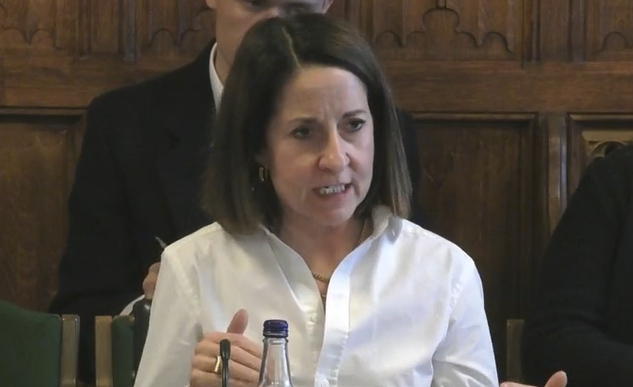
Science secretary Liz Kendall defended her department’s focus on artificial intelligence and deep tech during a select committee appearance on December 3. Responding to concerns that the Department for Science, Innovation and Technology (DSIT) may be prioritizing these sectors at the expense of the broader UK research ecosystem, Kendall emphasized her commitment to economic growth through technological advancement.
Kendall highlighted that two of her three main priorities are technology-related: transforming public services with digital solutions and ensuring that the UK workforce is equipped with AI skills. She plans to upskill 7.5 million workers, reinforcing the government’s focus on AI as a critical component of future growth. “There is no route to significantly better growth…without science and technology being absolutely front and centre,” she stated.
This emphasis on technology led committee member George Freeman, a former science minister, to question whether sectors such as robotics, advanced manufacturing, and clean tech are being overlooked. He noted that the government’s industrial strategy lacks specific directives on which research areas will receive support, contrasting it with the Conservative government’s earlier “eight great technologies” plan from 2013.
Freeman remarked, “The industrial strategy – I welcome it – but it’s pretty high level. It covers the vast majority of the economy – I am wondering where the robotics, advanced manufacturing, space, clean tech, materials, agri-tech is in all of this.” This critique follows a trend from Kendall’s predecessor, Peter Kyle, who also concentrated heavily on AI and online safety, leaving broader research policies to Patrick Vallance, the science minister.
In response, Kendall referenced a bespoke investment plan for life sciences introduced in July, asserting that these sectors are integral to the government’s growth strategy. She assured the committee, “We are, in R&D, doubling the amount of funding in critical technologies – that does include engineering biology as well as AI and quantum. So it is broad.” Her remarks were buoyed by a recent speech at the Science Museum, where she outlined the importance of adapting public services to modern technological standards.
Kendall addressed criticisms regarding the government’s funding approach, arguing that it is essential to guide taxpayer money toward sectors with the greatest growth potential. “There is a false debate whether we are picking winners – which is wrong for government to do – or you just allow all curiosity-led research,” she explained. “It’s perfectly legitimate and right to say ‘this is taxpayers’ money and we should put it into growth sectors which have most potential for the country’.”
When asked about measuring the success of DSIT in the future, Kendall suggested that private investment in key research sectors would be a key indicator. Quoting actor Tom Cruise, she said, “Show me the money,” to emphasize the importance of financial backing for innovation. She noted that the UK has attracted more venture capital investment in AI technology than France, Germany, and Switzerland combined, highlighting the significance of this funding in shaping future success.
In closing, Kendall expressed her aspirations for the UK’s research landscape, stating, “I want to see our world-leading researchers and universities holding their positions too.” Her remarks suggest a commitment to a balanced approach that acknowledges the importance of a diverse range of research sectors while driving forward with innovations in AI and technology.
See also Utah Announces Pro-Human AI Initiatives at 2025 AI Summit, Aiming for $3 Trillion Impact
 MCA Urges Dynamic AI Regulation as Australia Launches $440M National AI Plan
 Gartner Reveals AI’s Impact on IT Spending Amid 5.7% Stock Decline and $284 Fair Value
 National AI Plan Lacks Essential Guardrails, Prompting Criticism from Experts
 Australia’s AI Plan Drops Mandatory Safety Guardrails, Raises Worker Concerns