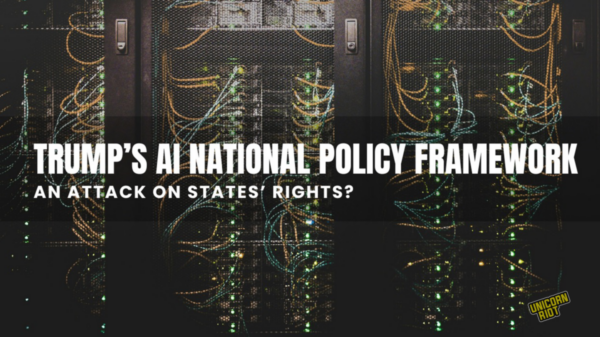
The push to prohibit states from regulating artificial intelligence (AI) within the framework of a defense bill has been rejected, facing bipartisan opposition. House Majority Leader Steve Scalise (R-LA) announced on Tuesday that Republican leaders would explore “other places” to amend the legislation, a move that has garnered support from former President Donald Trump, as reported by The Hill.
This proposal to preempt state-level AI regulations came several months after Republican lawmakers attempted to insert a decade-long moratorium on such laws into a tax and spending bill associated with Trump. That effort also failed amid strong resistance from both sides of the aisle.
Supporters in Silicon Valley have advocated for these measures, arguing that varying state regulations create an unmanageable patchwork of rules that could hinder innovation. However, critics contend that much of the state-level AI legislation is aimed at enhancing safety, transparency, and consumer protection. They warn that blocking states from imposing regulations would effectively cede control to Big Tech without any oversight, leaving consumers vulnerable.
Scalise acknowledged that the defense bill was not the appropriate venue for such a contentious provision and reiterated Trump’s earlier calls to pursue the ban through separate legislation. In parallel, a leaked draft of an executive order indicates that Trump is contemplating unilateral action, although those plans appear to be on hold for now.
The ongoing debate highlights the complexities and challenges of regulating AI technology in a rapidly evolving landscape. With significant advancements in AI capabilities, the urgency for appropriate oversight has grown, prompting various stakeholders to seek clarity on regulatory frameworks.
As discussions continue, the implications of AI regulation remain profound. The balance between fostering innovation and ensuring consumer safety will be a focal point of future legislative efforts. The rejection of this particular measure does not signify the end of the conversation; rather, it underscores the necessity for a more comprehensive approach to AI governance that can unite diverse perspectives across the political spectrum.
See also Australia Unveils National AI Plan, Experts Urge Global Cooperation for Safety Measures
 GOP Rejects Trump’s NDAA AI Deregulation Push, Preserving State Oversight
 Jensen Huang Critiques U.S. Chip Restrictions, Claims 95% Market Share Loss in China
 Bitcoin Achieves ‘Digital Capital’ Status as Institutions Eye $180K ETFs by 2026
 Australia’s AI Ethics Framework MEET Launched, Uniting Seven Systems for Responsible Use