
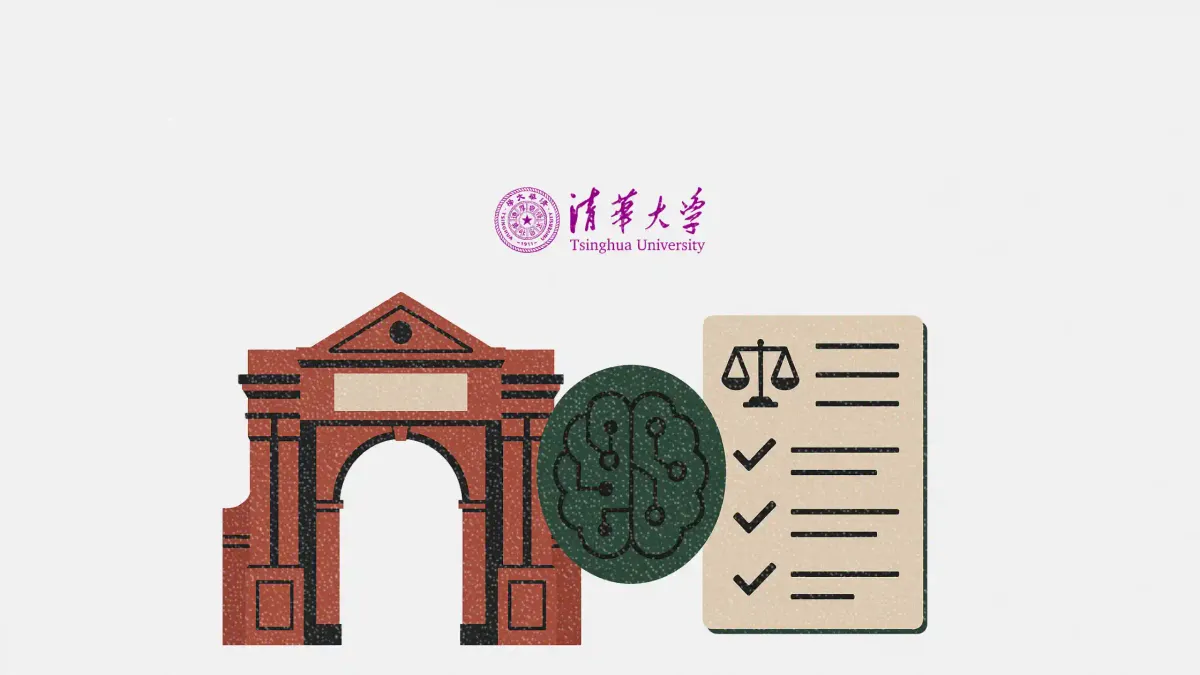
In a significant development for higher education, Tsinghua University has unveiled a comprehensive framework governing the application of artificial intelligence (AI) in academic settings. As AI technologies increasingly permeate teaching and research, this initiative establishes a crucial balance between innovation and ethical considerations, setting a precedent for universities across the globe.
The “Tsinghua University Guiding Principles for the Application of Artificial Intelligence in Education” offers insights into the institution’s approach to managing AI’s complex role in academia. From AI-assisted assignments to maintaining thesis integrity, the guidelines reflect how one of China’s premier universities is addressing the dual challenges posed by AI.
The framework is structured into three main sections: General Provisions, Teaching and Learning, and Theses, Dissertations, and Practical Achievements. It delivers scenario-based guidance for both students and faculty, outlining specific rules regarding the permissible use of AI tools.
The General Provisions section positions AI as a supportive tool rather than a replacement for human intellectual efforts. It emphasizes that faculty and students must lead educational and research activities, with AI fulfilling a secondary, assistive role. Five core principles underpin the guidelines: responsibility, compliance and integrity, data security, critical thinking, and fairness. Notably, it explicitly prohibits the use of AI for plagiarism, ghostwriting, or unauthorized processing of sensitive data.
In the Teaching and Learning section, instructors are tasked with establishing clear boundaries for AI usage within their courses, maintaining accountability for any AI-generated content introduced. While students are permitted to utilize AI tools, such use must be supplementary; blindly copying or rephrasing AI output is strictly forbidden.
The section focused on Theses and Dissertations delineates a firm stance: AI cannot supplant the intellectual rigor expected in graduate-level research. Faculty supervisors are responsible for guiding students on appropriate AI use to ensure that academic work remains original.
Tsinghua’s initiative is not entirely new; the university has been exploring AI-enabled teaching methodologies for several years. However, this formalization marks a shift from experimental adoption to a framework of institutional accountability. As AI-driven tools like chatbots and intelligent tutors become increasingly prevalent, educational institutions worldwide face the pressing task of defining fair use versus academic misconduct. Tsinghua’s framework aims to provide a model that combines flexibility with clearly defined limits, signaling to policymakers and technology firms that universities will actively shape the evolving landscape of knowledge creation.
The framework is described by Wang Shuaiguo, Director of the Online Education Center and the lead drafter, as a “living system.” It is designed to adapt alongside emerging use cases, including administrative systems, knowledge engines, and AI instructors. This adaptability underscores the university’s commitment to staying at the forefront of educational innovation.
This development has broad implications beyond academia. Tsinghua’s guidelines could serve as a benchmark for universities and education ministries, not only in China but globally. For those in the education technology (edtech) sector or involved in educational policy, this document presents a template for responsible AI integration that balances innovation with risk management.
Moreover, the increasing emphasis on transparency, bias mitigation, and human oversight indicates a growing institutional demand for AI tools that are not only effective but also ethical. Marketers of AI-based educational products will need to align their offerings with these principles, emphasizing explainability and compliance rather than just features.
For education marketers, Tsinghua’s framework raises the standards for pitching AI-powered tools. Marketing claims of efficiency or personalization must now be supported by use cases that resonate with academic values such as originality, fairness, and critical thinking. Furthermore, Tsinghua intends to promote its framework through AI literacy platforms and workshops, suggesting an expanding market for vendors offering AI literacy tools or ethical training modules.
Tsinghua’s AI framework extends beyond a mere campus policy; it represents a declaration that universities must take a proactive role in shaping the application and potential misuse of generative AI. For marketers, edtech entrepreneurs, and researchers, this evolution signals a new era where ethical design, transparent use, and institutional alignment are fundamental rather than optional. As the global education landscape adapts to the AI revolution, frameworks like Tsinghua’s may increasingly become the norm rather than the exception.
See also Small-Town India Surges Ahead in AI Classroom Adoption, Transforming Education Landscape
 Dartmouth College Launches Campus-Wide Access to Claude AI for Enhanced Education
 DfE Survey Reveals 44% of Teachers Use AI Tools, Yet Evaluation Plans Lag at 22%
 State Education Leaders Launch New Guide to Transform AI Professional Learning Systems
 AI Research in STEM Education Overlooks Student Development, New Study Reveals