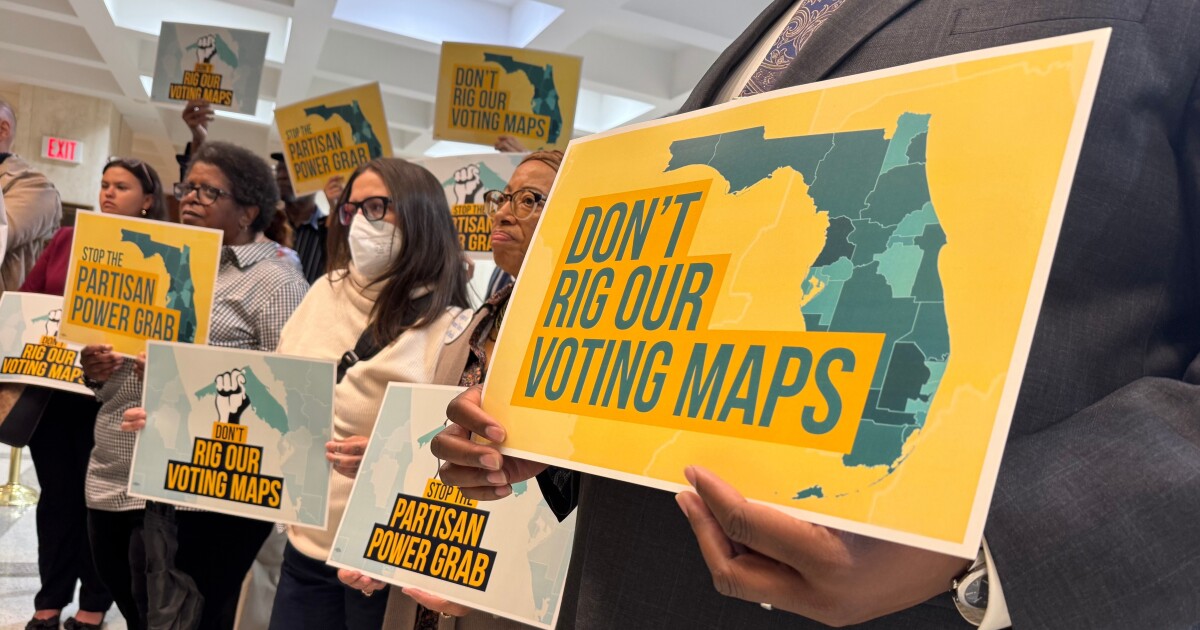
The Florida House convened this week to address the matter of congressional redistricting, a process typically undertaken once every decade following the U.S. Census. This year, however, the stakes have been elevated as President Donald Trump is reportedly urging Republican-led states to consider redrawing congressional boundaries in a bid to secure additional Republican seats ahead of the upcoming 2026 midterm elections.
In attendance at the Florida House discussions were key figures, including Douglas Soule, a state government team reporter for “Your Florida,” and Patrick Rickert, an Assistant Professor of Political Science at Rollins College. Their insights reflect the complexity and contentiousness surrounding the redistricting process, which often plays a pivotal role in shaping political landscapes.
On another front, Governor Ron DeSantis introduced his “Bill of Rights for Artificial Intelligence” this week, signaling a proactive approach to regulating the emerging technology. As artificial intelligence continues to permeate various sectors, several Florida House committees are scheduled to hold hearings next week to examine the implications of AI use, particularly within state government operations.
Scholars are weighing in on the ethical dimensions of AI deployment. Notably, Sonja Schmer-Galunder, a Professor in AI and Ethics at the University of Florida’s Department of Computer & Information Science & Engineering, is among those contributing to the discussions aimed at ensuring responsible AI integration across industries.
In a broader context, the Florida House has also been advancing four proposed constitutional amendments aimed at reducing property taxes for homeowners. While these measures could offer financial relief to residents, there are growing concerns regarding potential impacts on funding for essential local services. The balance between tax relief and public service financing is a delicate issue that lawmakers must navigate carefully.
Environmental issues are also at the forefront of legislative discussions. Activists are voicing alarm over potential erosions in manatee protections resulting from proposed amendments to the Endangered Species Act under the Trump administration. This has raised questions about the implications for Florida’s rich biodiversity and the state’s commitment to environmental conservation.
In a more pastoral setting, the historic Peace River, which stretches approximately 10 miles from Legoland in Winter Haven to Charlotte Harbor on the Gulf, serves as a reminder of Florida’s natural beauty. Despite the legacy of exploitation over the past century and a half, there are still pockets of “Old Florida” charm along the river, attracting both locals and tourists alike.
Meanwhile, volunteers are gearing up for the National Audubon Society’s annual Christmas bird count, an initiative that underscores the importance of citizen science in monitoring avian populations and ecosystems across the country.
Lastly, the red-and-black hurricane warning flags that once flew over Key West were ceremoniously burned last weekend, marking the official end of the 2025 Atlantic hurricane season. This event not only symbolizes the conclusion of a tumultuous weather period but also serves as a reminder of the ongoing challenges posed by climate change and the necessity for communities to remain vigilant in disaster preparedness.
See also Australia’s New AI Plan Abandons Mandatory Regulations, Favors Self-Regulation Strategy
 EU Launches Antitrust Probe into Meta’s WhatsApp AI Policies Over Competition Concerns
 Compliance Week Review: FCPA Enforcement Trends and Key Insights for December 2025
 Study Reveals AI Art Attracts Greater Legal Scrutiny in Copyright Cases
 State AI Laws for 2026 Announced: Key Regulations Impacting Hiring Practices