Meta is reportedly in discussions to acquire billions of dollars’ worth of Google’s A.I. chips starting in 2027, according to a report by The Information last week. This news has raised concerns for investors, causing Nvidia’s stock to decline as it faces the prospect of new competition in the A.I. computing hardware market.
In a move that signals a significant shift in the industry, Google launched its Ironwood TPU in early November. TPUs, or tensor processing units, are specialized chips designed for deep-learning tasks, optimizing the kind of mathematical calculations needed for A.I. Unlike traditional CPUs, which handle general computing tasks, or GPUs, which primarily process graphics, TPUs are engineered specifically for A.I. workloads, enabling more efficient performance.
The introduction of Ironwood underscores a broader trend in A.I. workloads, moving from large, resource-intensive training operations to cost-effective, high-volume inference tasks. These changes are reshaping the economics of A.I., with a stronger emphasis on hardware that prioritizes responsiveness and efficiency over sheer computational power.
Although real-world adoption of TPUs is still limited, the ecosystem surrounding them is gaining momentum. Major Korean semiconductor firms, including Samsung and SK Hynix, are expanding their roles as component manufacturers and packaging partners for Google’s chips. Notably, Anthropic has announced plans to utilize up to one million TPUs from Google Cloud in 2026 for the training and operation of future iterations of its Claude models, marking a shift in its compute strategy alongside Amazon’s and Nvidia’s offerings.
Analysts have noted this development as part of Google’s “A.I. comeback.” Alvin Nguyen, a senior analyst at Forrester specializing in semiconductor research, stated, “Nvidia is unable to satisfy the A.I. demand, and alternatives from hyperscalers like Google and semiconductor companies like AMD are viable in terms of cloud services or local A.I. infrastructure. It is simply customers finding ways to achieve their A.I. ambitions and avoiding vendor lock-in.”
This shift illustrates a larger initiative among Big Tech companies to reduce their dependency on Nvidia, whose GPU prices and limited availability have strained cloud providers and A.I. labs. While Nvidia continues to supply Google with its Blackwell Ultra GPUs for cloud workloads, the introduction of Ironwood presents a tangible path toward greater self-sufficiency in A.I. hardware.
Google’s foray into TPU development began in 2013, aimed at addressing the growing A.I. demands within its data centers more efficiently than GPUs. The initial TPU chips became operational internally in 2015 for inference tasks, later expanding into training capabilities with the introduction of TPU v2 in 2017.
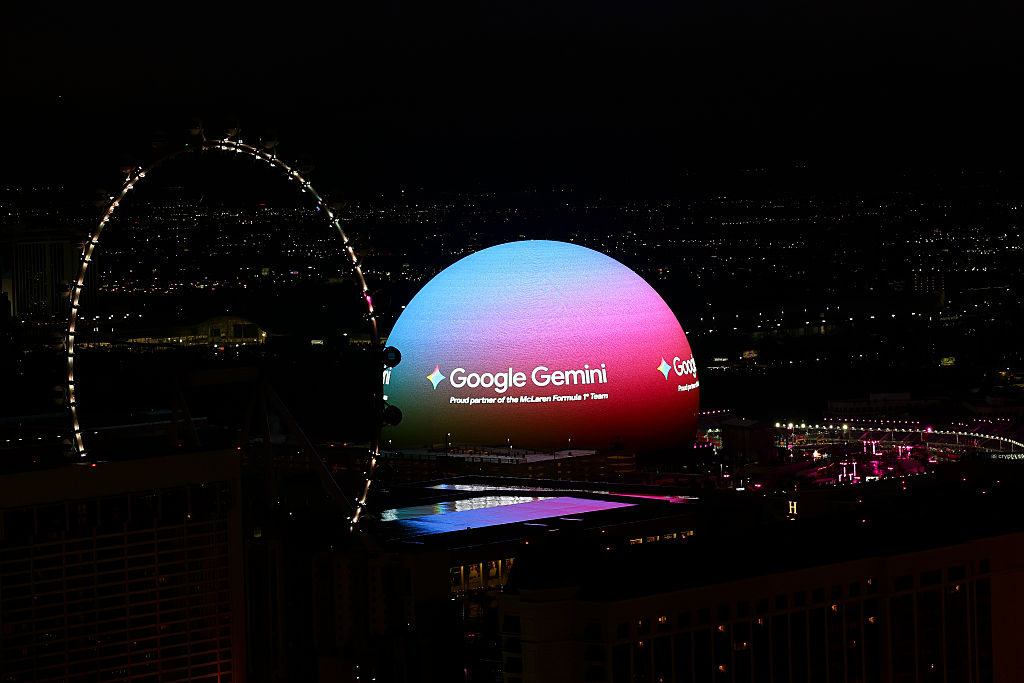
Ironwood now powers Google’s Gemini 3 model, which has excelled in benchmark evaluations for multimodal reasoning, text generation, and image editing. Salesforce CEO Marc Benioff lauded the advancements of Gemini 3 as “insane,” while OpenAI CEO Sam Altman remarked that it “looks like a great model.” Nvidia has also acknowledged Google’s progress, expressing delight at its success while maintaining that its own GPUs still provide “greater performance, versatility, and fungibility than ASICs” like those produced by Google.
Despite Nvidia’s current dominance, controlling over 90 percent of the A.I. chip market, analysts suggest that competitive pressures are increasing. Nguyen noted that while Nvidia is likely to lead the next phase of competition for the foreseeable future, the landscape of leadership could become more diverse in the long term. He described Nvidia’s position as having “golden handcuffs,” implying that while it is recognized as the face of A.I., it must continuously innovate to sustain its high-margin products.
Meanwhile, AMD is also making strides in the market, particularly for inference workloads. The company consistently updates its hardware to match Nvidia’s annual release cycle and offers performance that is often comparable or superior to that of Nvidia’s products. Google’s latest A.I. chips are said to possess performance and scalability advantages over Nvidia’s current offerings, though slower release cycles could eventually impact this balance.
While it may be premature to declare Google’s A.I. chips as capable of dethroning Nvidia, they have undeniably prompted the industry to envision a more diversified future. This scenario includes a vertically integrated TPU-Gemini stack competing directly with the GPU-oriented ecosystem that has characterized the past decade of A.I. development.
See also Yoodli Triples Valuation to $300M with $40M Series B Focusing on Human-Centric AI
 Jet.AI and Convergence Compute Announce 350-Acre Data Center Near Winnipeg to Boost AI Capacity
 Meta Acquires AI Wearables Startup Limitless, Phases Out Hardware Sales Immediately
 Perk Practical Combines Data Engineering and Automation for Measurable Marketing Growth
 AMD Achieves Record $9.2B Revenue, Driven by AI Growth and Data Center Demand