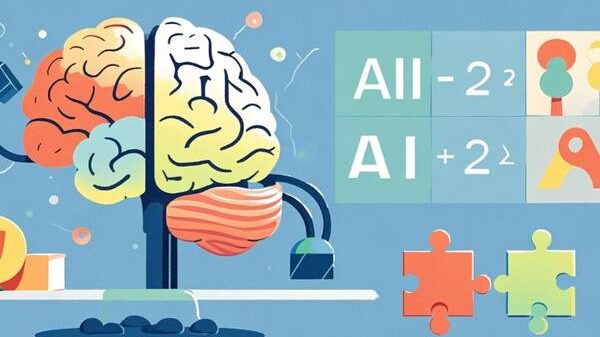
The introduction of the Transformer architecture has significantly transformed sequence modeling through the implementation of attention mechanisms, enabling models to reference previous inputs to prioritize relevant data. However, a notable drawback of this architecture is its escalating computational costs with increased sequence lengths, which restricts the scalability of Transformer-based models for comprehensive tasks such as full-document understanding or genomic analysis. This limitation has sparked interest in alternative approaches, including efficient linear recurrent neural networks (RNNs) and state space models (SSMs) like Mamba-2, which promise faster, linear scaling by compressing context into a fixed size. Nonetheless, the challenge remains that such fixed-size compression fails to capture the extensive information contained in exceptionally long sequences.
In a significant development, two new papers titled Titans and MIRAS present an innovative architecture and theoretical framework that merge the rapid processing capabilities of RNNs with the precision of Transformers. Titans refers specifically to the new architecture, while MIRAS serves as the theoretical blueprint for generalizing these methodologies. Collectively, these advancements aim to enhance the concept of test-time memorization, which allows AI models to retain long-term memories by integrating “surprise” metrics—unexpected pieces of information—during operation without requiring offline retraining.
The MIRAS framework, exemplified by the Titans architecture, represents a pivotal shift towards real-time adaptation in AI models. Rather than static compression of information, this architecture is designed to actively learn and modify its parameters as data flows in. This capability enables the model to swiftly incorporate new, specific details into its core knowledge base, marking a significant evolution in how AI systems process and retain information.
As these advancements unfold, they signal a crucial step forward in addressing the limitations posed by existing models, particularly in applications that require handling extensive sequences. The integration of RNN-like speed with Transformer-like accuracy could pave the way for more robust AI applications, especially in fields such as natural language processing and genomics, where understanding complex, lengthy data is essential.
The implications of the Titans and MIRAS frameworks extend beyond mere technical enhancement; they open avenues for a broader range of applications that demand real-time learning and adaptability. As researchers continue to explore this hybrid architecture, the potential for AI systems to become increasingly sophisticated and capable in processing long-term and complex information is promising.
See also Stanford Dropout Carina Hong Raises $64M, Attracts Top Meta AI Talent to Axiom Math
 Trump’s Executive Order Launches AI Initiative to Accelerate Scientific Discovery
 ASU Grad Aashritha Machiraju Advances AI for Health Solutions, Wins Impact Award