Chinese technology giants are making strides in an unexpected segment of the market: AI companionship toys. Companies such as Huawei, JD.com, and UBTECH Robotics have recently entered this burgeoning field, as reported by Commercial Times. These “AI toys” differ from traditional electronic pets; they are equipped with advanced AI models and emotional-computing capabilities. This allows them to engage in human-like conversations, thanks to their memory and contextual awareness, facilitated through voice and facial recognition technologies.
On December 1, UBTECH Robotics launched new products in its “Meng UU” family series, marking the company’s second foray into AI companionship since June 2025. Preorders are available on Tmall and through UBTECH’s livestreaming platform Douyin, with an initial offering of 2,000 units.
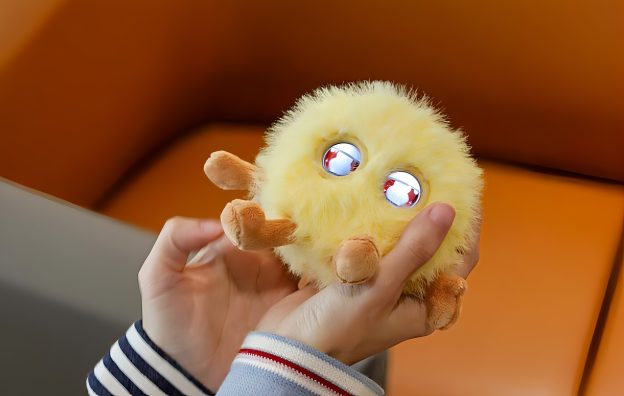
Similarly, Huawei has unveiled its own AI companion, the Smart Hanhan, during the launch of the Mate 80 series. Priced at 399 yuan (approximately $56), Smart Hanhan quickly sold out on Huawei Mall after its release. The plush companion features circular eye displays that respond to touch and voice commands, alongside speakers and microphones, all integrated with a chatbot app designed for HarmonyOS 5, as reported by Gizmochina.
Other prominent players like JD.com and smartphone brand Honor are also making their presence felt in the AI toy market, according to Ifnews. Furthermore, venture capital firms have taken notice, actively investing in the sector. Public data indicates over 30 funding rounds have occurred since 2024, with notable investors such as IDG Capital and HongShan engaging in this nascent market. More than 20 startups, including Haivivi and Robopoet, have secured financing, illustrating strong interest from investors.
The potential for growth in the AI toy market is substantial. According to the AI Toy Consumption Trend White Paper, co-released by JD.com and the Shenzhen Toy Industry Association, the global AI toy market is projected to exceed 100 billion yuan by 2030, achieving an annual compound growth rate of over 50%. China’s domestic market is anticipated to surpass 10 billion yuan, with an impressive compound annual growth rate exceeding 70%.
As noted by Commercial Times, AI toys are particularly appealing to the hardware industry due to their robust profit margins. Devices priced between 300 and 400 yuan generally carry gross margins of around 50% to 65%. In contrast, mid- to high-end models, which range from 1,500 to 3,000 yuan, can achieve margins between 70% and 85%. This profitability could attract further investment and innovation in the sector.
The entry of major technology firms into the AI toy market not only indicates a shift in consumer preferences but also reflects broader trends in AI application across various industries. As consumer interest in intelligent, interactive devices continues to grow, the competition among these tech giants is likely to intensify, signaling a new era in the AI-driven toy landscape.
(Photo credit: Huawei)
Please note that this article cites information from Commercial Times, Ifnews, Gizmochina, and Notebookcheck.
See also MIT’s New AI Transforms Hand-Drawn Sketches into CAD-Ready 3D Models in Seconds
 Google’s AI Generates Misleading Headlines, Confusing Users on Google Discover
 Nvidia’s Huang Predicts Gradual AI Job Shift, Envisions Robot Apparel Industry Rise
 Discover Top AI Tools for 2026: Perplexity, Gemini 3 Pro, DeepSeek 3.2 Transform Workflows
 Getty Wins UK Trademark Case Against Stability AI, Clarifying AI’s IP Responsibilities