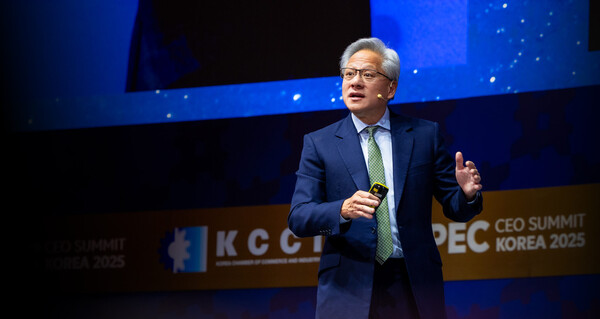
Nvidia CEO Jensen Huang has expressed a cautious outlook regarding the potential for a sudden wave of layoffs linked to advancements in artificial intelligence (AI). During a recent interview with podcast host Joe Rogan, Huang emphasized that while AI will undoubtedly transform the job market, it may also lead to the creation of new job categories, such as those involving robotic tailoring.
Huang noted that jobs most resistant to AI’s influence will likely require more than just routine tasks. “If your job is just to chop vegetables, Cuisinart’s gonna replace you,” he stated, highlighting the vulnerability of certain positions to automation. Conversely, roles that involve higher levels of interpretation, such as that of radiologists, may be more secure. “The image studying is simply a task in service of diagnosing the disease,” he explained, underscoring the need for human judgment in complex medical decisions.
While acknowledging that some jobs will inevitably be lost to AI, Huang refrained from echoing the more dire predictions made by figures such as Geoffrey Hinton, often referred to as the “Godfather of AI,” and Dario Amodei, CEO of Anthropic, who have warned of significant unemployment due to AI advancements. Huang’s perspective is notably more moderate, suggesting instead that the evolving job landscape may also introduce new opportunities. He speculated on the emergence of demand for technicians who can build and maintain future AI assistants.
Expanding on the theme of new job creation, Huang posited the possibility of a burgeoning industry focused on designing apparel for robots. “You’re gonna have robot apparel, so a whole industry of—isn’t that right? Because I want my robot to look different than your robot,” he quipped, envisioning a future where robots have their own styles and needs for clothing.
The notion of AI-driven robots taking over tasks traditionally performed by humans may seem like the realm of science fiction. Nonetheless, major tech companies are actively working to make this vision a reality. Tesla CEO Elon Musk has made the company’s Optimus robot central to its long-term strategy, advocating for a future where work may become optional due to the presence of a fully realized robotic workforce. Just last month, Musk suggested that money could become obsolete in the next 10 to 20 years, underscoring the transformative potential of AI.
Recent research from the Massachusetts Institute of Technology (MIT) indicates that AI could potentially automate the equivalent of around 12% of jobs in the United States, impacting approximately 151 million workers and threatening over $1 trillion in wages. This stark figure highlights the considerable disruption AI could bring to the current employment landscape.
Despite the allure of new roles such as AI robot apparel designers, Huang acknowledged that even these positions might not offer long-term security. When Rogan inquired whether robots could eventually produce clothing for other robots, Huang responded, “Eventually. And then there’ll be something else,” hinting at a continuous cycle of job evolution driven by technological advancement.
As AI technology continues to advance, its trajectory will likely reshape industries and redefine the nature of work. While some jobs may vanish, others are set to emerge, posing both challenges and opportunities for the workforce. The ongoing dialogue about AI’s impact on employment underscores the need for adaptability in an era where machines are increasingly capable of performing complex tasks once reserved for human intellect.
See also Discover Top AI Tools for 2026: Perplexity, Gemini 3 Pro, DeepSeek 3.2 Transform Workflows
 Getty Wins UK Trademark Case Against Stability AI, Clarifying AI’s IP Responsibilities
 AI’s Environmental Impact Smaller Than Anticipated, May Propel Green Tech Advances
 CoreWeave and AMD: Key Stocks Poised for Major AI Rallies by 2026
 Top AI Video Editing Apps of 2025: Boost Quality and Efficiency for Creators