






















































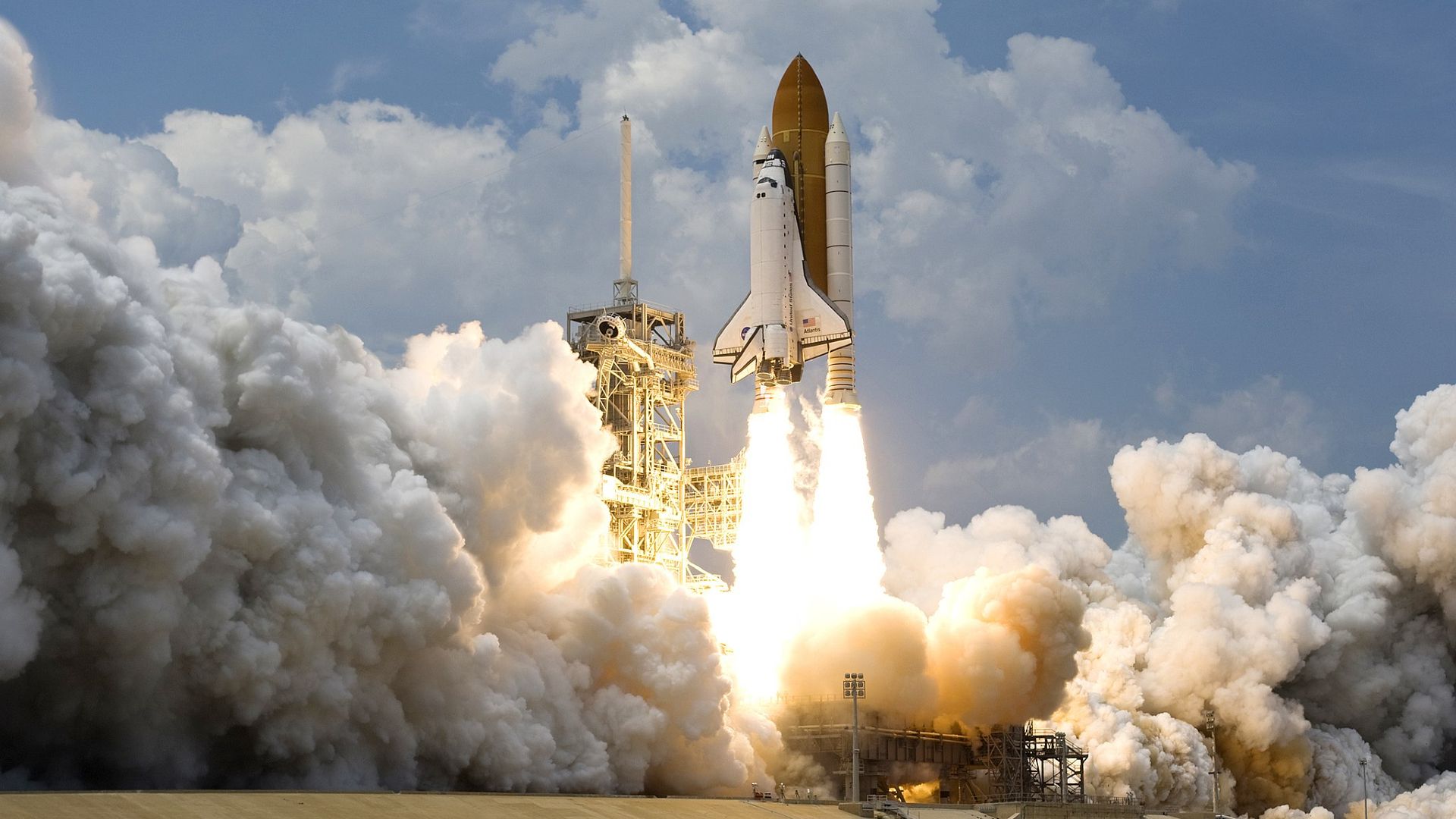
Space exploration is on the brink of a significant transformation as advancements in propulsion technology, particularly through the integration of artificial intelligence (AI), are poised to redefine how humanity traverses the cosmos. With ambitious missions targeting the moon, Mars, and beyond, the urgency for innovative propulsion methods has never been greater. As hundreds of rockets are launched annually, the need for faster and more efficient travel options is drawing the attention of researchers and engineers alike.
A team of engineers and graduate students is delving into the potential of AI, specifically a subset known as machine learning, to revolutionize spacecraft propulsion systems. By optimizing technologies such as nuclear thermal engines and managing complex plasma confinement in fusion systems, AI is emerging as an essential ally in humanity’s quest for the stars.
Machine learning, a branch of AI, enables systems to identify patterns in data without explicit training. It employs various methods, including reinforcement learning, which enhances machine capabilities by allowing them to learn from experience. Just as a chess player recognizes winning strategies from countless games, reinforcement learning equips machines with the ability to analyze outcomes and adapt strategies accordingly. This approach is especially beneficial in navigating the intricacies of space travel, where determining efficient trajectories and optimal propulsion systems can be immensely complex.
In the realm of space propulsion, reinforcement learning is being applied in two primary areas: assisting during the design phase and optimizing real-time operations of spacecraft in flight. One of the most intriguing concepts is nuclear propulsion, which harnesses nuclear fission and fusion to generate thrust. While fission, which involves splitting heavy atoms, has seen practical applications in space, such as in radioisotope thermoelectric generators, fusion remains an area rich with untapped potential.
Nuclear thermal propulsion could enable missions to Mars and beyond at lower costs compared to traditional fuel methods, and it promises faster travel than electric propulsion systems reliant on plasma. This technology utilizes heat from nuclear reactions to expand a propellant—typically hydrogen—exiting through a nozzle to generate thrust.
Reinforcement learning plays a pivotal role in designing these advanced systems. Historical designs, like those from NASA’s NERVA program, relied on solid uranium fuel configurations. However, the field has progressed, with engineers now exploring various designs to optimize heat transfer between fuel and propellant. The efficiency of this transfer directly correlates with thruster performance, making it a critical design challenge. Reinforcement learning can analyze myriad design variations, identifying configurations that enhance heat flow, akin to a smart thermostat managing temperature but operating under extreme conditions.
Reinforcement learning is also crucial in developing nuclear fusion technology, which, despite its complexity, offers the potential for significant advancements in propulsion. Current experiments, such as Japan’s JT-60SA tokamak, highlight the challenges of fusion energy, as their large scale presents difficulties for space applications. Researchers are thus investigating compact fusion designs, such as polywells, which confine plasma within magnetic fields to create fusion conditions. The management of these magnetic fields is intricate and vital for achieving the necessary conditions for fusion.
The utility of reinforcement learning extends beyond design challenges; it also aids in the management of fuel consumption during missions. In an era where spacecraft may need to adapt rapidly to shifting mission requirements, as seen with Lockheed Martin’s LM400 satellite, the ability to make real-time adjustments to fuel use is invaluable. Reinforcement learning can calculate fuel requirements and timing, enabling missions to remain flexible and responsive under varying circumstances.
As AI continues to evolve, its role in space exploration is likely to expand, offering opportunities to enhance our understanding of propulsion systems, streamline operations, and ultimately facilitate deeper exploration of our solar system and beyond. The intersection of AI and propulsion technology not only holds the promise of making interplanetary travel more feasible but also opens the door to new discoveries that could redefine our place in the universe.
See also Fluidstack Seeks $700M Funding at $7B Valuation Amid AI Data Center Surge
 Generative AI Models Transform Quality Engineering Test Strategies for Enhanced Efficiency
 AI Funders Influence Media Coverage Amid Growing Debate Over Safety and Regulation
 China Aims for AI Leadership with $53.8B Investment in Cloud and Infrastructure
 Lumentum Stock Soars 58% as AI Infrastructure Demand Fuels Growth Potential















