Nvidia has made a significant investment in CoreWeave, committing to a $6.3 billion deal as it seeks to bolster its foothold in the artificial intelligence (AI) infrastructure market. CoreWeave, known for building AI data centers and renting out compute capacity to hyperscalers, has seen its stock price rise 110% since going public earlier this year, even as it trades over 50% below its prior highs.
According to Nvidia’s most recent 13F filing, the semiconductor giant holds shares in several public companies, including Applied Digital, Arm Holdings, and Recursion Pharmaceuticals, alongside CoreWeave. The investment underscores Nvidia’s recognition of CoreWeave’s potential role in the growing demand for AI infrastructure.
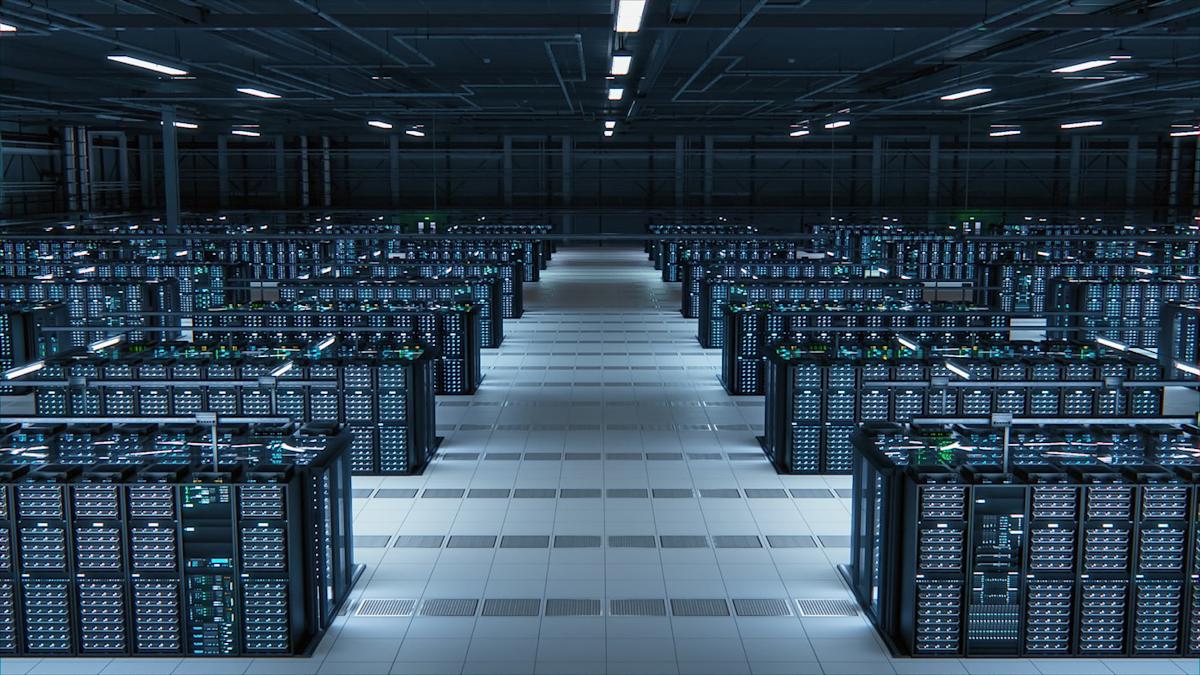
CoreWeave’s business model can be characterized as a “neocloud,” where the company constructs data centers equipped with clusters of GPUs, offering access through a cloud-based platform. This model caters to firms unable to procure the necessary resources—such as chips and networking equipment—or those lacking the time to build their own AI infrastructures. The growing trend of large tech companies increasing their capital expenditures on AI has positioned CoreWeave favorably within this landscape.
During the third quarter, CoreWeave reported a backlog of $55.6 billion, marking a staggering 271% increase year over year. Among its notable clients is OpenAI, which has committed $22.4 billion to CoreWeave over three tranches. Additionally, the firm secured a multiyear deal worth $14.2 billion with Meta Platforms during the same period. Notably, Microsoft is CoreWeave’s largest customer, accounting for 67% of its revenue, raising concerns about customer concentration. However, demand for CoreWeave’s services is rapidly growing among new AI developers, which may help mitigate this risk.
Looking ahead, consensus estimates from Wall Street project CoreWeave’s revenue to nearly quadruple over the next two years. With a market capitalization of $42 billion, the company currently trades at an implied price-to-sales (P/S) ratio of 2.2 based on its expected 2027 revenue. This valuation is approximately one turn lower than its competitors Iren and Nebius Group, which trade for 3.3 times projected 2027 sales.
Despite these promising metrics, skeptics often point to CoreWeave’s debt profile, which exceeds $13 billion, as a concern. The company has undertaken significant capital outlays to finance its infrastructure and procure GPUs. However, Nvidia’s investment serves as a strategic buffer, with the tech giant agreeing to purchase any unused capacity should CoreWeave’s current customers not utilize it fully. This arrangement is seen as a safeguard against potential overbuilding or operational challenges.
CoreWeave appears well positioned for long-term success in the AI infrastructure era, bolstered by its growing backlog, strong customer base, and strategic alliance with Nvidia. Analysts suggest that now may be an opportune time to invest in CoreWeave stock, given its current valuation relative to peers.
Investors should exercise caution, however, as the Motley Fool’s Stock Advisor recently identified ten stocks they believe are stronger buys than CoreWeave. The list includes past recommendations that yielded significant returns, such as Netflix and Nvidia, highlighting the importance of thorough research before committing to investments.
As demand for AI infrastructure continues to soar, the dynamics of the market will evolve, and companies like CoreWeave will play pivotal roles in shaping the future of technology.
See also Korean and Japanese Business Lobbies Forge AI, Semiconductor Alliance Amid Population Crisis
 70% of Creative Professionals Fear AI Stigma, Anthropic Study Reveals
 AI and Machine Learning Set to Transform India’s Power Distribution Networks, Says Khattar
 AI Bubble Risks Emerge as Tech Giants Invest Trillions Without Profitable Returns
 Demis Hassabis Urges Maximum AI Scaling to Achieve AGI Amid Industry Concerns