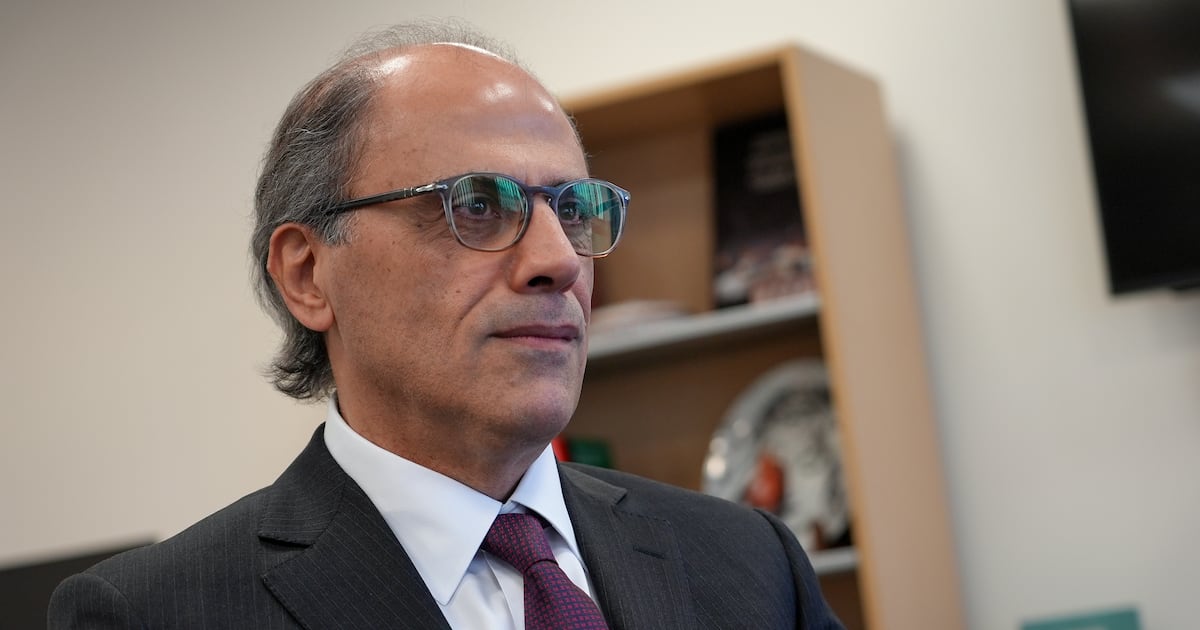
Jihad Azour, the International Monetary Fund’s regional director, has stated that sustained investment in artificial intelligence (AI) will serve as a “game changer” for the UAE and the broader Gulf economy. This statement was made during an interview with The National at the IMF headquarters in Washington, D.C., just ahead of the Abu Dhabi Finance Week, which began on Monday. Azour emphasized that such investment is crucial as the UAE aims to position itself as a global technology hub.
Investment in AI is a cornerstone of the UAE’s strategy to diversify its economy. According to Omar Al Olama, Minister of State for AI, Digital Economy, and Remote Work Applications, the Emirates has invested a total of $148 billion in AI initiatives both domestically and abroad since 2024. The UAE is also emerging as a significant player in data center capacity.
Azour mentioned that maintaining this level of investment could enhance the UAE’s economy by 0.7 percent. “It’s a game changer. It’s very important,” he reiterated, highlighting the growing role of technology in various sectors, including financial services and government services. This aligns with efforts to expand the non-oil economy within the region.
The UAE has embraced various aspects of digitalization, including digital currencies, cross-border payments, and the development of crypto assets, making it a focal point for capital flow. The ongoing Abu Dhabi Finance Week also marks the tenth anniversary of the Abu Dhabi Global Market (ADGM), which has become a leading financial center due to its robust regulatory framework and financial innovations that attract global fund managers.
Other Gulf economies have also adopted digitalization strategies as part of their diversification efforts since the onset of the Covid-19 pandemic. The shift to online platforms has been particularly notable in the public sector, where telehealth and digital banking services have become mainstream. Meanwhile, private businesses increasingly employ AI and blockchain technologies to bolster efficiency, as detailed in a recent IMF report.
AI Infrastructure and Investments
The ambitions of the UAE and Saudi Arabia in the AI sector received a notable boost in November when the US approved the export of advanced chips for AI applications. This development allows companies like the UAE’s G42 and Saudi Arabia’s Humain to acquire these critical technologies, marking a significant milestone for Gulf AI leaders. Azour noted, “It’s a sign that those countries are becoming serious players in this industry.”
In recent months, the UAE has announced plans for a 5-gigawatt UAE-US AI campus in Abu Dhabi, involving partnerships with major US companies including Cisco, Nvidia, OpenAI, Oracle, and SoftBank. Meanwhile, Humain has formed strategic alliances with tech giants such as Qualcomm, Cisco, and AMD.
Azour identified three integral dimensions to AI readiness in the Gulf: infrastructure, investment in advanced technologies, and human capital development. He stressed the importance of reforming labor market regulations, attracting innovators, and developing educational curriculums to ensure the region becomes a platform not just for investment but also for innovation.
However, the transition to an AI-driven economy is not without risks. Analysts warn that inflated asset valuations could lead to market corrections, affecting up to 40 percent of the global workforce. Azour stated, “Therefore, it’s very important for those countries not only to look at the opportunities, but also to see how this is going to change their economies … how this also is going to help modernize public services.”
In a recent IMF paper, the fund projected a resilient economic outlook for the Gulf region, bolstered by strong non-hydrocarbon activities and limited regional conflict spillover. Although global economic uncertainty poses a risk, the UAE’s economic framework is expected to be supported by increased natural gas production and the easing of oil production cuts.
As trade patterns shift in response to evolving tariffs, Azour sees an opportunity for a more interconnected Gulf and Middle East. He cautioned that countries risk marginalization in a changing global economy and emphasized the need for a more dynamic approach to mitigate these risks. This includes enhancing workforce participation among women and young people, investing in infrastructure, and preparing for the potential adverse effects of AI on employment.
“I think this is where the region could find a model that will allow it to reach peace, stability, growth, and prosperity for the next decade,” Azour concluded, underscoring the pivotal role of AI investment in shaping future economic dynamics.
See also Marvell Acquires Celestial AI to Revolutionize Optical Interconnects for AI Data Centers
 DeepSeek Launches V3.2 Model, Achieves Gold Medal-Level Math Performance
 Micron’s Hiroshima Investment: A $3.7B Strategy to Secure AI Memory Supply Chain Resilience
 OpenAI Disables ChatGPT Ads After Subscriber Backlash Over Intrusive Promotions