ChemLex, a next-generation artificial intelligence (AI)-for-science company, has announced the establishment of its global headquarters and self-driving laboratory in Singapore, coinciding with the completion of a $45 million funding round led by Granite Asia. The funding, disclosed last Sunday, is earmarked for the recruitment of additional hardware and software engineers, as well as chemists, to enhance the company’s capacity to engage in a broader array of pharmaceutical and materials science projects.
“We’re building a research and development (R&D) engine that compresses months of synthesis and optimization into weeks or even days, transforming both the speed and certainty of discovery,” said Sean Lin, Founder and Chief Executive Officer of ChemLex. He emphasized that Singapore bolsters this effort by providing an ecosystem conducive to rapid scaling and support for global partners in need of advanced capabilities.
Founded in 2022, ChemLex specializes in developing AI technologies that significantly accelerate chemical discovery for the pharmaceutical industry, thereby reducing time-to-market. Since its inception, the company has expanded rapidly, now supporting over 70 customers worldwide, including six of the world’s top ten pharmaceutical firms. This growth mirrors a broader industry trend, with analysts forecasting the AI-powered drug discovery market will surge from $3.6 billion in 2024 to nearly $50 billion by 2034.
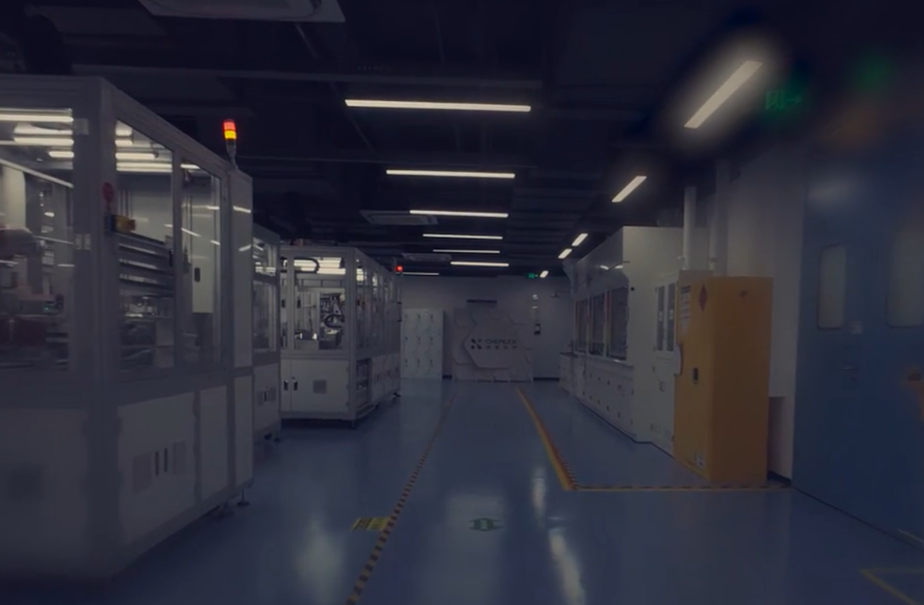
Central to ChemLex’s operations is a 24/7 autonomous chemistry system that revolutionizes chemical discovery, offering cost-efficiency and sustainability compared to traditional laboratory methods. This system features an innovative AI-powered, fully automated synthesis line that conducts experiments autonomously, captures data in real-time, and transforms chemical discovery into a continuous workflow.
“AI-enabled chemistry is creating one of the most important industrial transitions of the decade, and ChemLex sits in that sweet spot, turning that shift into a business advantage with a platform that can accelerate molecule design and manufacturing at scale,” remarked Yinghui Kuang, Partner at Granite Asia. He noted that ChemLex represents a deep tech company capable of reshaping supply chains, shortening development timelines, and unlocking new economic value, with Singapore providing a solid foundation for its growth.
In addition to its new headquarters, ChemLex has signed a memorandum of understanding with the Experimental Drug Development Centre (EDDC), Singapore’s national platform for drug discovery and development. This partnership aims to expedite next-generation small molecule drug discovery through advanced automation.
“We first met ChemLex in 2023, and since then we’ve seen the company grow from a promising startup to a global innovator in AI and automation-driven chemical synthesis,” said Prof. Damian O’Connell of the EDDC. “As ChemLex’s first Singapore partner, we are thrilled to expand our collaboration through the MOU. This partnership reinforces our shared vision of accelerating drug discovery and development through cutting-edge technology, ultimately bringing safer, more effective therapies to patients faster.”
According to Prof. O’Connell, combining EDDC’s drug development expertise with ChemLex’s automation and AI capabilities seeks to shorten timelines, reduce costs, and deliver innovative treatments that enhance lives both in Singapore and globally. These initiatives align with the Singapore Economic Development Board’s (EDB) efforts to cultivate a more resilient, innovation-ready life sciences ecosystem.
Goh Wan Yee, Senior Vice President and Head of Healthcare at EDB, stated that ChemLex’s decision to anchor its global R&D headquarters and AI laboratory in Singapore underscores how companies can leverage their strengths in deep tech and biomedical sciences to drive breakthrough innovations. “We look forward to supporting more like-minded partners like ChemLex to accelerate scientific discoveries that will benefit patients worldwide,” she added.
See also Microsoft Research Reveals AI’s Next Frontier: Self-Governing Systems for 2026
 SHS Student Solvieg Anderson Presents ML Research on Early Cognitive Decline Detection at ASHA 2025
 UCL Launches PhD and Research Role in AI for Ophthalmology Education
 Pistoia Alliance Reveals 27% of Life Scientists Unaware of AI Data Sources in R&D
 AI Models Mirror Human Networking Habits, Study Reveals Key Social Dynamics