






















































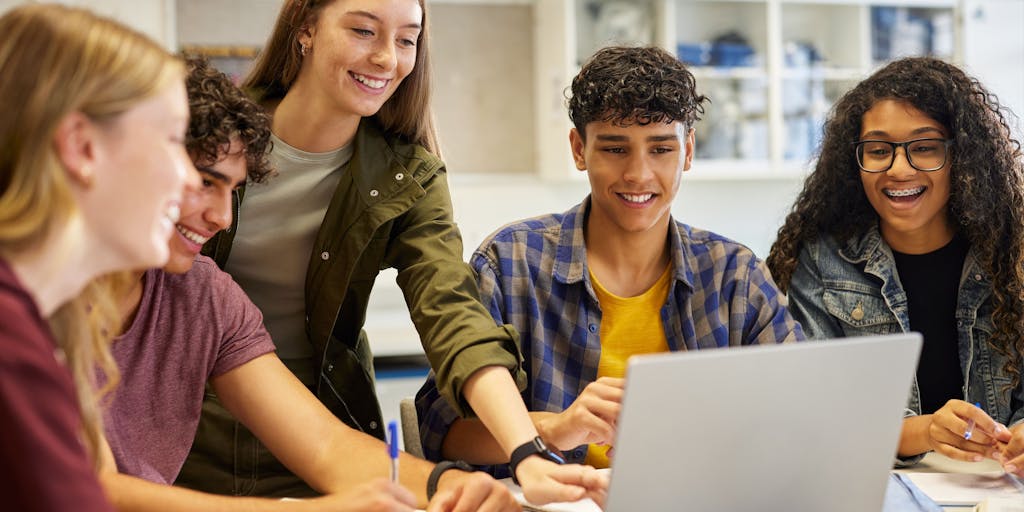
As artificial intelligence becomes more prevalent in education, educators are seeking ways to integrate these tools effectively. Dr. Carolina Gutierrez, a high school physics teacher in Texas, experienced a surprising outcome when her students used AI to solve problems: the answers were incorrect. However, rather than frustration, these mistakes prompted deeper inquiry among students, who began adjusting their prompts and honing critical thinking skills. This reflects a broader goal in education: using AI not as a shortcut but as a means to enhance learning and foster authentic problem-solving.
Jessica Garner, senior director of innovative learning at ISTE+ASCD, emphasized the importance of transforming the learning experience with AI. “We focus on how AI can help make education what it should be for students,” she noted. Garner leads GenerationAI’s Communities of Practice, which bring together educators from diverse backgrounds to explore practical questions about AI in education. Participants collaborate to examine how to responsibly enhance teaching and learning in their respective contexts.
In a recent webinar moderated by EdSurge host Carl Hooker, panelists discussed effective strategies for implementing AI in K-12 classrooms. The panel included Garner, Dr. Craig Perrier, a high school social studies specialist in Virginia, and Hannah Davis Ketteman, a digital learning coach in Texas. They shared their experiences in building student confidence and ensuring equitable access to innovative learning tools.
Davis Ketteman highlighted the varying levels of AI literacy among educators. “Empowering teachers will ultimately empower students to become AI literate,” she stated. She emphasized the importance of scaffolding, recommending simplified platforms like MagicSchool or SchoolAI as entry points for hesitant teachers. Small successes with these tools can build confidence, allowing educators to tackle more complex AI applications.
Perrier’s focus is on personalization and adaptive learning, particularly in Virginia’s curriculum-embedded performance assessments. He shared how he uses AI tools to modify complex texts, making them accessible to students. For instance, he leveraged AI to adjust materials related to historical inquiries, which previously included difficult readings that were not suitable for students. “The problem of practice was: How can we use AI to support the new standards and be emblematic of Universal Design for Learning?” he explained.
Gutierrez echoed the importance of critical thinking and problem-solving, especially in her AP Biology class. By utilizing tools like Gizmos for simulations, she combines guided lessons with AI-generated prompts. This approach encourages students to engage with material on a deeper level, moving from merely describing concepts to asking meaningful questions. “Once students learned how to ask better questions and think critically, they became empowered to manage their own learning,” she stated.
Davis Ketteman noted that her work revolves around helping teachers navigate a more structured curriculum while maintaining autonomy. She shared a project where students defined “affordability” and adjusted budgets based on hypothetical life changes. This exercise not only required computation but also critical evaluation, leading to significant engagement and learning outcomes.
As educators adapt to the challenges of integrating AI, they are encouraged to maintain an open mindset. “Learn to pivot when challenges arise, and don’t give up at the first obstacle,” Gutierrez advised. “AI is a valuable tool, and just as we adapted to computers, it’s becoming part of our classrooms.”
Panelists also shared practical advice for educators looking to implement AI. “Start where you are,” said Davis Ketteman. “Find one small task and try it.” She urged teachers to overcome self-doubt by networking and getting involved in communities of practice.
Perrier stressed the importance of self-awareness regarding the limitations of educators in keeping up with AI developments. “Stay networked. Find your community,” he suggested. Garner concluded, expressing optimism regarding the collaborative exploration of AI’s potential in education. “The ways they are working with AI are exactly what we want to see!”
Through initiatives like GenerationAI, educators are coming together to examine the impact of generative AI on education. This collaboration aims to create more engaging, equitable, and transformative learning experiences for all students. For more information on how to participate in this ongoing exploration, visit GenerationAI.
See also Google Reveals AI-Powered Smart Glasses to Transform Everyday Device Interaction
 Trump Administration Set to Sign National AI Preemption Order, Reshaping Industry Landscape
 Over 50 Nations Sign Landmark Pact for Global AI Regulation, Setting New Safety Standards
 Paulina Borsook’s ‘Cyberselfish’ Revived: Misunderstanding Libertarianism in Tech Culture
 Embracing ‘Gongsheng’: Transforming AI Ethics to Include Aging and Disabled Users






