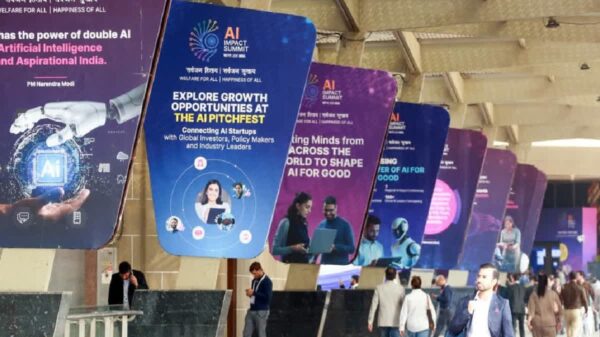
The Government of India has mandated that developers of large language models (LLMs) under the IndiaAI Mission address inherent biases within their artificial intelligence systems. This directive comes from the Ministry of Electronics and Information Technology (MeitY) and is reported by the Economic Times. Officials emphasized the necessity for AI models to reflect the country’s diverse social fabric, ensuring that government-supported foundational AI does not yield insensitive or biased responses to complex prompts.
Biases in AI models often stem from the historical disparities and prejudices present in the training data. As such, bias mitigation involves the systematic identification and reduction of unfair prejudices in these LLMs. A MeitY official stated, “Sensitive connotations linked with caste, gender, food practices, regional and linguistic stereotypes, as well as ethnic and religious differences have to be handled with utmost care. We want Indian models to be inclusive, and not discriminatory or based on historical biases.” This commitment aims to ensure that all LLMs currently in development incorporate rigorous stress testing protocols.
The initiative is part of a broader global agreement centered on launching open-access AI tools, referred to as “AI Commons.” These tools are designed to include ethical AI certification, anonymization, and stress testing, which will help enhance the reliability and fairness of AI applications. Earlier this October, the IndiaAI Mission issued a call for expressions of interest (EOI) for Stress Testing Tools (STT), aimed at assessing AI systems under challenging conditions. The criteria outlined in the EOI encompass examining models against adversarial inputs and shifts in data distribution, extending beyond conventional IT load testing.
Officials highlighted that the development of sovereign LLMs represents a critical milestone in India’s AI journey, with the potential to unify the nation. Care must be taken to prevent misuse by bad actors who might attempt to manipulate AI systems with damaging prompts. “We need to be careful since machine learning tools process data on a massive scale; even small biases in the original training data can lead to widespread discriminatory outcomes,” warned another MeitY official.
The push for bias mitigation in LLMs reflects a growing recognition of the ethical implications surrounding AI technologies. As AI systems become more integrated into society, the impact of biased algorithms can have far-reaching effects, reinforcing existing inequalities and discrimination. The Indian government’s proactive stance signifies a commitment to fostering responsible AI development that aligns with the country’s diverse cultural context.
Moving forward, the emphasis on stress testing and bias mitigation in AI models is expected to shape the landscape of AI deployment in India. As the country navigates its AI ambitions, the focus on inclusive and fair AI technologies will likely play a pivotal role in ensuring that these innovations serve all segments of society equitably. The collaboration between the government, private sector, and academic institutions will be crucial in addressing these challenges and achieving the intended goals of the IndiaAI Mission.
See also Govt AI Panel Proposes Mandatory Licensing Framework for GenAI Copyright Royalties
 Congress Introduces AI Talent Act to Enhance Federal Workforce with Specialized Teams
 Learning Tree Launches AI Workforce Solutions with Tiered Maturity Framework for Organizations
 Trump Signs Executive Order to Block State AI Regulations, Citing Industry Risks
 Government Confirms No AI Regulation for Scriptwriting Amid Industry Concerns on Copyright