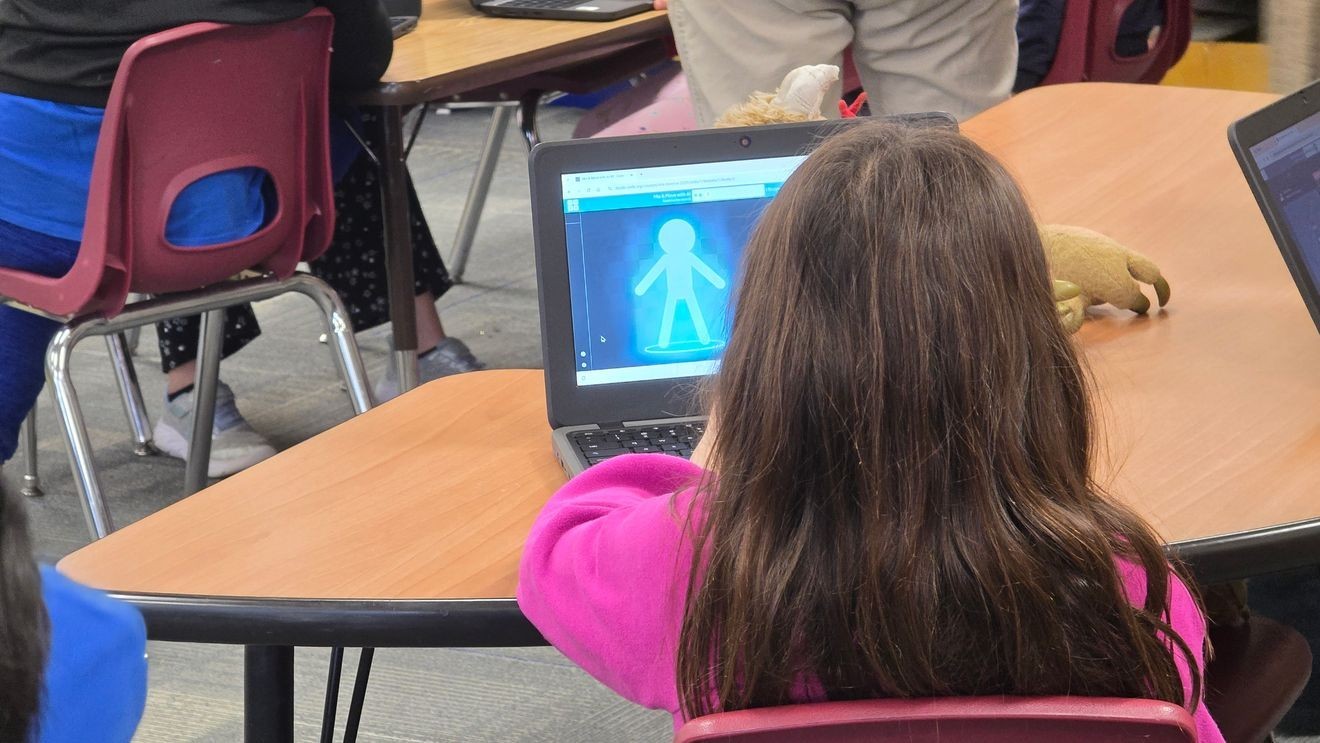
BOISE, Idaho — This week, Idaho Governor Brad Little has designated December 8-14 as Computer Science Education Week, marking the occasion with “The Hour of AI,” an initiative aimed at educating students about artificial intelligence. Sponsored by Micron, the event is part of a broader effort to expand on The Hour of Coding, an initiative from Code.org that emphasizes the importance of Science, Technology, Engineering, Arts, and Mathematics (STEAM) education.
The Hour of AI kicked off at Whitney Elementary School in Boise, featuring remarks from officials representing Micron and the Idaho education system. “As artificial intelligence becomes a part of how we learn, work, and solve problems, it’s essential that students understand not only how to use these tools, but to use them responsibly, ethically, and creatively,” said Lisa Roberts, the superintendent of the Boise School District, addressing a group of sixth graders.
When asked about their experiences with AI, every student in attendance raised their hand, indicating they engage with AI technologies such as Apple’s Siri, Amazon’s Alexa, and OpenAI’s ChatGPT on a daily basis. Many students demonstrated a deeper understanding of these technologies than some adults, showcasing a generational shift in tech literacy.
Crystal White, a K-6 teacher at Whitney Elementary, acknowledged that she is learning alongside her students. “I am just so lucky to be a person that gets to really like push them to learn as much as we can with it,” White said, emphasizing her excitement about integrating AI into the classroom. Her students left the session with a certification of understanding, marking an important step in their education.
White, who is also involved with the school’s green group, expressed a desire to leverage AI for enhancing environmental sustainability. “I want to utilize AI to help make everyday lives more sustainable,” she stated, reflecting a commitment to intertwining technology with ecological responsibility.
The future of AI remains uncertain, yet its growth trajectory shows no signs of abating. As its prevalence increases, educators are proactively seeking innovative ways to introduce AI concepts. “It is really important that we start with age-appropriate information on what that is and how that’s integrated into jobs, into tools that we have,” said Debbie Critchfield, Idaho’s Superintendent of Public Instruction. This approach underscores the necessity of preparing students for a job landscape that will heavily rely on technology.
Critchfield further noted that students in today’s classrooms are likely to pursue careers that may not yet exist, but technology will undoubtedly play a pivotal role in their futures. “We know that the students in the classroom behind me are going to have jobs for which we’re not entirely sure even what that job is today, but we know that technology is going to be a part of it,” she emphasized, drawing attention to the ongoing evolution in the job market.
The education sector is facing the challenge of keeping pace with rapid advancements in AI technology. As governments and institutions globally strive to ensure that educational frameworks evolve in tandem with technological innovations, initiatives like The Hour of AI serve as vital tools for equipping future generations. This proactive educational strategy highlights the importance of integrating AI into curricula, aiming to foster a well-rounded understanding of its implications in both personal and professional spheres.
In conclusion, as AI continues to permeate various aspects of daily life, the responsibility falls on educators to cultivate not just users, but informed and ethical practitioners. The initiative at Whitney Elementary School exemplifies a growing recognition of the need to equip students with the skills necessary to navigate a future where technology and human creativity intersect.
See also Anthropic Reveals New Agent Mode for Claude with Task-Oriented Features and Avatars
 AI Geopolitics: U.S. vs. China in a New Tech Cold War Over Semiconductors and Control
 2026: Focus on Profitable AI Firms, 15 Companies Emerge as Industry Leaders
 Perplexity Launches BrowseSafe to Mitigate AI Browser Security Flaws
 Industrial AI Adoption Stalls: 88% Utilize Tech, Yet Only 39% See Earnings Impact