WASHINGTON—During a November meeting in the Oval Office, Nvidia Chief Executive Jensen Huang cautioned President Trump that a fragmented set of artificial intelligence laws in states like California could jeopardize the development of technology in the United States. Huang’s warning echoes sentiments shared by White House AI czar David Sacks and senior AI policy adviser Sriram Krishnan, both of whom maintain strong connections to Silicon Valley.
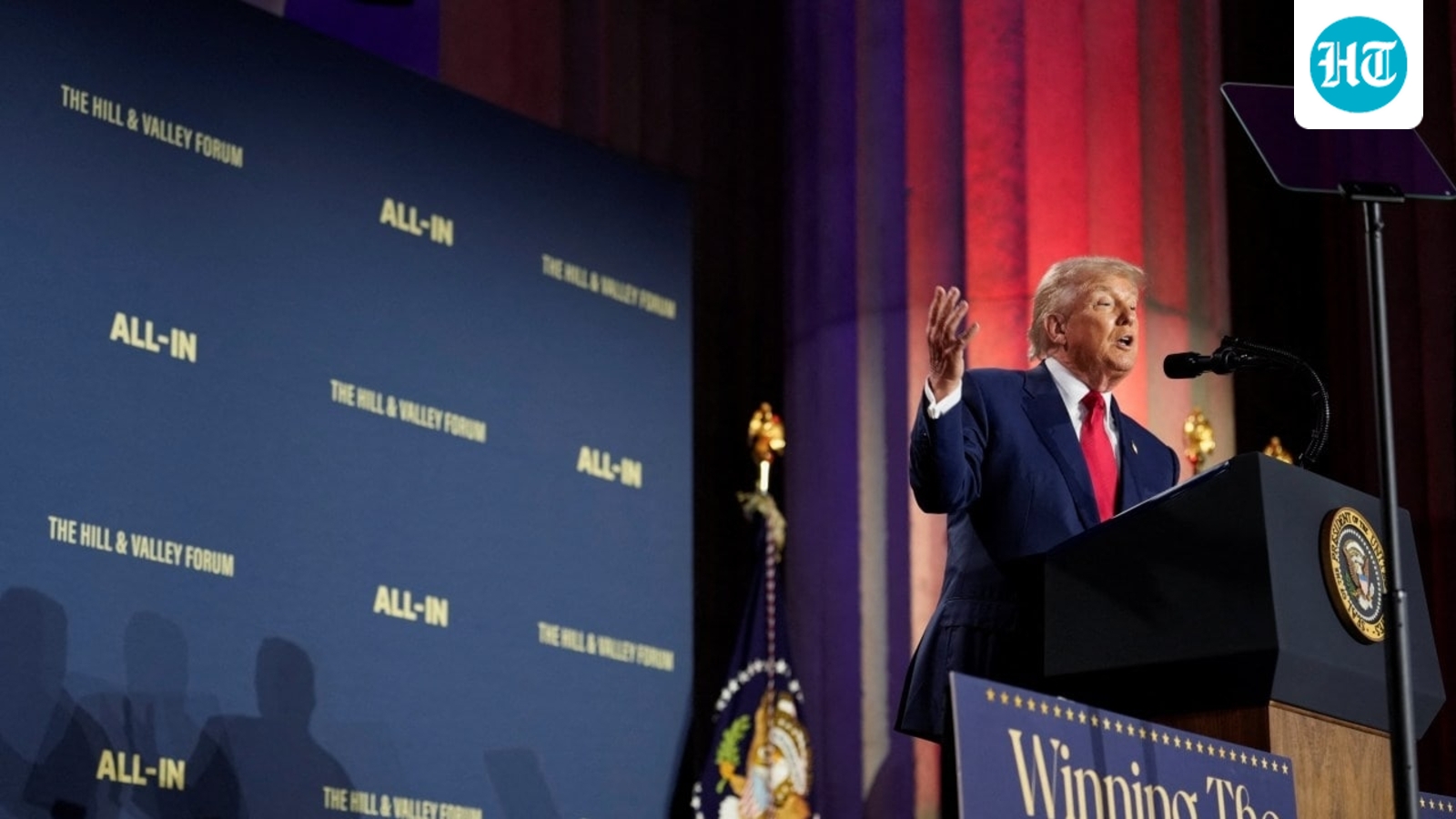
Huang expressed concern that an influx of state regulations could hinder the U.S.’s competitive edge in the AI sector. Following this discussion, Trump indicated to his chief of staff Susie Wiles that the administration should consider addressing the issue through an executive order. Shortly after, he took to Truth Social, emphasizing the need to avoid a collection of disparate state rules regarding AI, which ignited a month-long debate expected to culminate in an executive order later this week. This measure might provoke backlash from some Republicans while potentially benefiting tech companies.
“You can’t expect a company to get 50 approvals every time they want to do something,” Trump posted on Monday. “THAT WILL NEVER WORK!”
The Oval Office meeting has become a significant flashpoint in Republican politics, potentially influencing the party’s stance on AI as the midterm elections approach. If the upcoming executive order threatens state AI laws, it could test the allegiance of MAGA conservatives, including former strategist Steve Bannon and Senator Josh Hawley (R., Mo.), who have resisted efforts to ban state AI regulations in Congress. They argue such measures would undermine states’ abilities to impose consumer protection regulations and mitigate potential risks associated with AI.
Bannon criticized Sacks, stating, “David Sacks has epically failed twice to jam through AI Amnesty into must-pass legislation—he has made the very concept toxic. The EO will carry that stench.”
Critics, including Florida Governor Ron DeSantis, have expressed skepticism regarding the potential effectiveness of an executive order. “An executive order doesn’t/can’t preempt state legislative action,” he noted on X on Monday. However, some politicians appear more amenable to supporting Trump’s approach, including a spokesperson for Arkansas Governor Sarah Huckabee Sanders, who has previously criticized state pre-emption efforts but now supports Trump’s strategy and aims to collaborate in the AI race while safeguarding American interests.
In an effort to garner support for the order, Sacks recently held a call with Republican governors, assuring them that the executive order would not impede their ability to protect children online or hinder the construction of data centers. He characterized these points as compromises the order would incorporate. Sacks, a veteran venture investor, has voiced concerns regarding the potential for Democratic states to dictate AI regulations, advocating against what he terms “woke AI” that may exhibit liberal bias.
The White House is reportedly considering language for an executive order that could challenge states with AI laws perceived as excessive through a legal task force organized by the Justice Department and potentially by withholding federal funding. This strategy risks placing the administration directly at odds with Republican-led states.
Trump’s advocacy for executive action has spurred intense lobbying on both sides, with some draft proposals circulating in Washington that reflect softer language more favorable to the states. The exact language Trump is prepared to endorse remains unclear.
In response to inquiries, White House spokeswoman Taylor Rogers stated, “President Trump is the final decision maker and determines all policies based on what is best for the American people. Nothing is final until announced by the president.”
This executive order is part of Trump’s broader strategy to position the AI industry at the forefront of his agenda, a move that tech executives welcome. However, some analysts warn that the administration’s focus on AI could backfire if the technology becomes unpopular among voters. Joel Thayer, a Republican lawyer specializing in tech issues, remarked, “The base has been pretty clear that MAGA is not a fan of this approach. You’re going to see a backlash from states and their respective attorney general offices, red and blue, over this.”
Republicans have long supported the notion of overriding state AI regulations, a push that gained momentum over the past 18 months as Democratic states like Colorado, California, and New York enacted laws imposing restrictions on technology firms. Key figures close to Trump, including Huang, Sacks, and venture capitalist Marc Andreessen, have emphasized the necessity of preventing a hodgepodge of state laws. Andreessen’s venture firm is backing an AI-focused political action committee aimed at combatting stringent regulations.
Earlier this summer, Sacks and other officials advocated for a 10-year moratorium on state regulations to be included in Trump’s tax-and-spending megabill. That proposal, which would have effectively withheld federal funding for states with AI regulations, ultimately failed amid significant opposition.
The issue gained renewed attention when California Governor Gavin Newsom signed an AI bill into law, prompting Trump to call for congressional measures to ban state regulations within military spending packages or through stand-alone legislation. Despite his public endorsement, these efforts encountered resistance from both Democrats and several Republicans who argued that targeting states made little sense without a concurrent federal law.
While the forthcoming executive order may represent a short-term victory for tech companies, analysts caution that it could face legal challenges. Additionally, simply penalizing states does not resolve the complex issue of establishing federal regulations. “An executive order is a clear signal of the administration’s robust commitment to a federal AI governance framework,” noted Dean Ball, a former White House AI policy adviser. “The question now is what that framework will be.”
For further information on AI regulations and industry developments, visit Nvidia, the White House, and OpenAI.
See also Accenture Expands Anthropic Partnership to Upskill 30,000 AI Professionals for $10B Growth
 Freddie Mac Mandates AI Governance for Mortgage Firms, Effective March 2026
 Destination AI Expands 2026 Hospitality Summit to 1.5 Days Amid Surging Industry Demand
 Nvidia Granted Approval to Sell H200 AI Chips to China, Targeting Billions in Revenue
 Microsoft Unveils $17.5 Billion AI Investment in India to Expand Cloud Infrastructure and Workforce Training