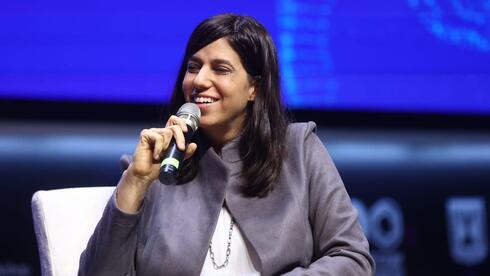
The average organization in Israel faces around 2,000 cyberattacks weekly, according to recent findings from Israeli cybersecurity firm Check Point. This statistic was revealed by Check Point Chief Product Officer Nataly Kremer during her presentation at Cyber Week at Tel Aviv University.
Among various sectors, telecommunications emerged as the most attacked, experiencing an alarming average of approximately 4,000 weekly incidents per organization. This starkly contrasts with the global average, which sits at 2,703 attacks per organization. The transportation and logistics sector also faced significant threats, with 3,017 weekly attacks per organization, more than double the global average of 1,169.
These findings highlight the pressing security challenges that organizations, particularly in Israel, currently grapple with. Kremer emphasized that as companies increasingly adopt artificial intelligence (AI) tools, they inadvertently introduce new vulnerabilities. “We are leaping generations ahead in productivity and efficiency, but generations backward in security,” she noted.
During her talk, Kremer reported that Check Point identified around 10 major security flaws within various AI applications over just one month. OpenAI Codex, a popular coding tool, was among the notable examples. She explained that tools designed to simplify coding for employees generate substantial productivity gains, yet simultaneously expose organizations to new security risks.
“Vibe coding tools, which allow any employee to write code quickly and intuitively, create a massive productivity advantage,” Kremer stated. “But alongside this acceleration, new layers of vulnerabilities and weaknesses are exposed within the development environment itself.”
The integration of AI systems into organizational workflows brings about a fundamental shift, as these systems effectively become a new infrastructure layer. Kremer warned that without a dedicated security framework, organizations risk facing issues such as training data manipulation, hidden capability injection into models, and information leakage through autonomous agents. “Today, protection is required for the models, the training data, the AI supply chain, and the interactions executed on our behalf,” she remarked.
The implications of these findings are significant for businesses across sectors. As the frequency and sophistication of cyberattacks increase, the need for robust security measures becomes paramount. Organizations are called to reassess their security architectures, especially as they integrate advanced AI technologies into their operations.
Looking ahead, the cybersecurity landscape will likely continue to evolve rapidly, demanding both vigilance and innovation from organizations. As threats multiply, the interplay between productivity and security will remain a critical focus for businesses navigating this complex digital environment.
See also Global Cyber Attacks Surge 3% Amid Rising AI Data Leak Risks, Check Point Reports
 AI Analytics Revolutionizes Real-Time Threat Detection for Enhanced Security Operations
 BitsLab Launches AI-Agent Security Stack, Protecting $160B in On-Chain Value for 716M Users
 Global Cyberattacks Surge 3% in November 2025, Ransomware Hits Record 727 Incidents
 91% of Cybersecurity Pros Plan Increased Threat Intelligence Spending Amid AI Risks