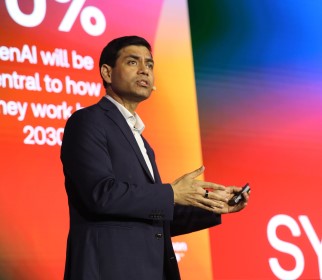
Phocuswright has unveiled its latest report, titled Travel Forward, which details the evolving landscape of global travel as it heads into 2026. The report emphasizes that the travel industry has moved beyond mere recovery from the pandemic, transitioning into a competitive era characterized by significant growth and increasing complexity. According to Pete Comeau, Managing Director of Phocuswright, the industry is in urgent need of actionable insights to navigate these changes. “Travel Forward is our effort to synthesize the macro forces shaping travel, the signals emerging now, and the structural changes that will define the years ahead,” Comeau stated during the press briefing.
The travel and tourism sector now contributes $11.7 trillion to global GDP and supports approximately 371 million jobs. International visitor spending is projected to reach a record $2.1 trillion, surpassing pre-pandemic levels. Although demand has stabilized following the initial reopening surge, the focus has shifted to digital channels, which currently account for 63% of all global travel sales, with projections indicating this could rise to 67% by 2027. “Travel’s being sold, serviced, and experienced online like never before. It’s no longer about recovery, it’s about who adapts best to a digital-first traveler,” Comeau explained.
Within this digital framework, online supplier-direct bookings dominate in mature markets such as North America and Europe, while online travel agencies (OTAs) remain prevalent in the Asia-Pacific and emerging regions, particularly in lodging. The geographic focus of growth is shifting, with the Middle East, Latin America, and various parts of Asia expanding at rates above the global average. These regions are expected to welcome the next 100 million travelers, spurred by rising middle classes and major infrastructure investments.
One of the report’s pivotal themes is the transformative role of artificial intelligence (AI) in the travel sector. “We’ve moved from automation to actual intelligence,” Comeau remarked. The report indicates that approximately one in three U.S. travelers has utilized generative AI tools for trip planning or in-destination support. Adoption rates are also accelerating across Europe and the Asia-Pacific, as platforms increasingly integrate contextual assistants into the booking process. This trend aligns with Phocuswright’s broader prediction that AI will eventually blur the lines between inspiration, planning, and booking within the travel industry.
Travel businesses are racing to incorporate AI into their operations, with over 70% of U.S. short-term rental hosts now utilizing property management systems that include AI functionalities for tasks such as pricing and messaging. Comeau emphasized that the next competitive edge will not come from possessing vast amounts of data, but rather from creatively and personally leveraging that data.
The report also examines the shifting dynamics of traveler loyalty. Senior analyst Madeline List highlights that traditional loyalty programs often miss the mark in understanding true consumer behavior. “A lot of conversations about loyalty felt like they were missing the plot,” List said. “Loyalty, in the literal sense, means repeat patronage.” The report reveals that more than half of leisure travelers take only one or two trips a year, complicating their loyalty to specific brands. While travelers may have favorites, many switch providers frequently, with younger generations prioritizing variety over brand loyalty.
Notably, 84% of leisure travelers reported engaging in some form of “loyalty gaming” in the past year, whether through purchasing gift cards for points or making specific flight choices to maintain status. List’s key takeaway is that “loyalty is not created by a program. It’s the sum of every interaction a traveler has with a brand.” Brands that offer strong products, competitive pricing, and elements of novelty will be best positioned to secure repeat business.
As Comeau reiterated, the travel industry is moving from a comeback phase into a competitive mode. “Growth is global, tech is accelerating, and the game is now on,” he stated, underscoring the importance of adaptation in this rapidly changing environment. The insights from Phocuswright’s report signal that the future of travel will be shaped by both technological advancements and a deeper understanding of customer behavior.
For more information, the full report can be accessed on the Phocuswright website.
See also Amazon and Microsoft Unveil $52.5B AI Investment Plan to Transform India’s Tech Landscape
 Microsoft and Amazon Invest $50B in India’s AI Future Amid Global Bubble Concerns
 AI-Driven Hoax Threat at Conway High Sparks Urgent Call for Enhanced Cybersecurity Measures
 Korea Plans Major Deregulation to Boost AI and Semiconductor Investments, Easing Ownership Rules
 Delhi Airport Enhances Winter Operations with AI, Predictive Analytics, and CAT-III Runways