Massachusetts Judiciary Explores Generative AI for Court Accessibility
The Massachusetts judiciary is assessing the potential of generative artificial intelligence (GenAI) to enhance access to court services, while navigating concerns regarding reliability, confidentiality, and costs. Currently, the use of GenAI is restricted to administrative functions, utilizing only publicly available information. This initiative aims to assist individuals unable to afford legal representation and improve access to justice, although the judiciary is proceeding “deliberative and thoughtful” to ensure it does not compromise judicial independence or public trust in the legal system.
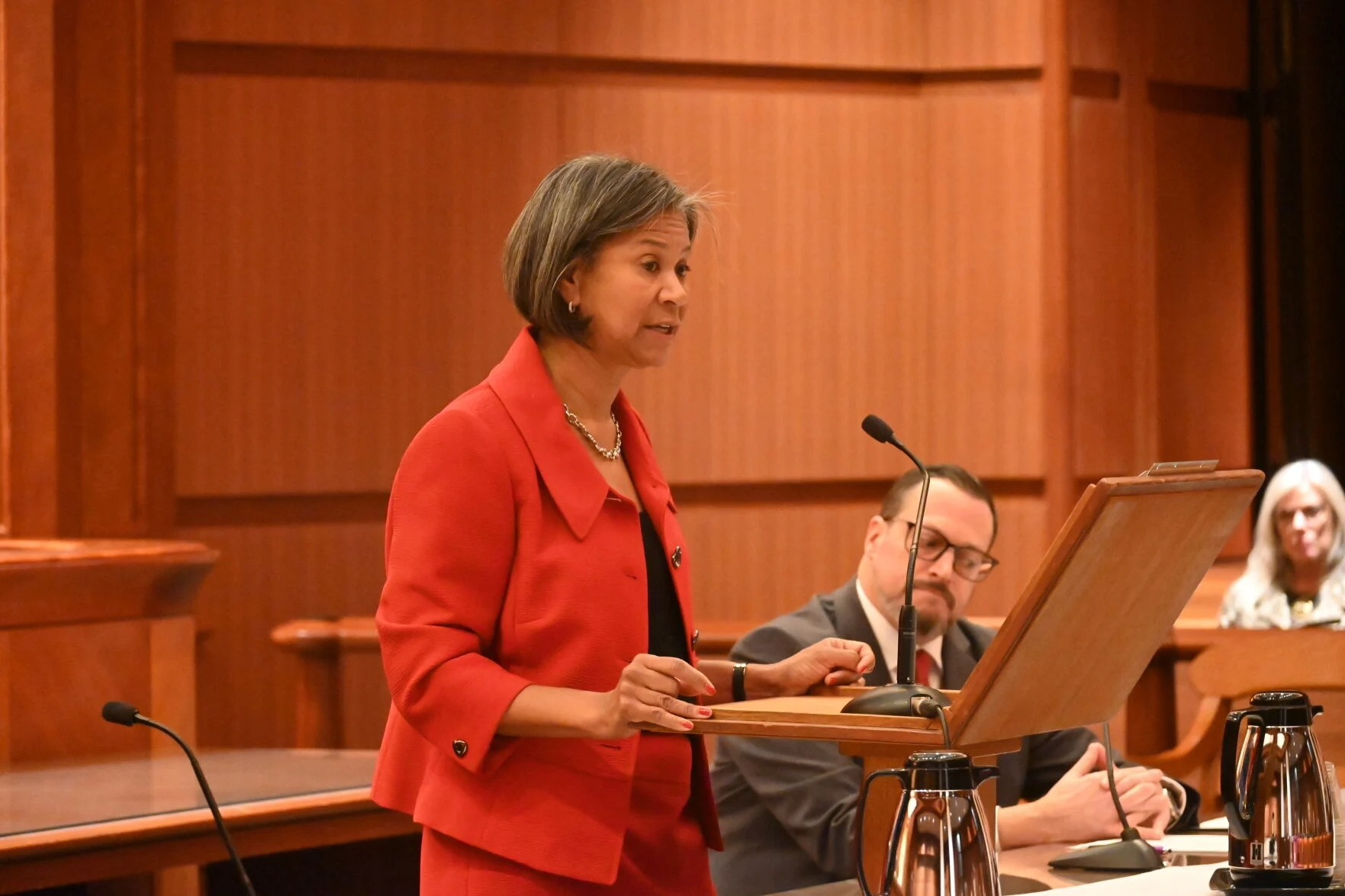
During her State of the Judiciary address, Supreme Judicial Court Chief Justice Kimberly Budd underscored the growing importance of GenAI in the legal domain. “Discussions about technology these days invariably lead to the topic of generative artificial intelligence, or GenAI,” Budd stated. She acknowledged that while GenAI holds significant promise for optimizing various judicial processes, it also raises numerous questions at this nascent stage of development.
Budd highlighted key concerns linked to the use of GenAI, primarily surrounding its reliability, confidentiality, and financial implications. While the courts remain open to integrating this technology, Budd emphasized the necessity of a cautious approach. “On a more fundamental level, we must ensure that GenAI does not adversely impact judicial independence and undermine public confidence in the administration of justice,” she added.
To navigate these challenges, the judiciary has sought guidance from the Standing Advisory Committee on the Rules of Professional Conduct regarding the potential need for amendments to existing rules pertaining to attorney use of GenAI. Although the committee did not propose any immediate changes, revised recommendations could emerge as the technology continues to evolve.
In tandem with these considerations, the Supreme Judicial Court has laid out interim guidelines governing how judges and court personnel can employ GenAI. Currently, its application is limited to administrative roles, and any information processed must be public, with strict guidelines in place to prevent the retention or use of entered data for training purposes.
Budd described these guidelines as a “modest first step,” necessary for establishing a framework that will likely undergo adjustments as the judicial system gains more insights into GenAI’s implications.
The judiciary also recognizes the potential of GenAI to bridge gaps for those lacking legal representation. The Access to Justice Commission is actively investigating ways to utilize GenAI to enhance equitable access to legal services while addressing cost disparities.
Across the United States, the adoption of AI within court systems is progressing at a slower pace than in the private sector. According to a report from the Thomson Reuters Institute and the National Center for State Courts AI Policy Consortium for Law and Courts, just 34% of surveyed courts indicated that they have implemented or plan to implement GenAI solutions within the next year. Concerns about over-reliance on technology and the potential for malicious uses, such as the fabrication of evidence, were prevalent among respondents. Nevertheless, many acknowledged that AI could enhance efficiency, with some estimating potential time savings of up to three hours weekly in the coming year.
“Whatever improvements new technologies, including artificial intelligence, may bring, I want to stress that our legal system is, and will remain, centered on human intelligence, understanding and judgment,” Budd concluded, reiterating that the essence of justice ultimately relies on the individuals within the system.
As the Massachusetts judiciary navigates this complex landscape, its cautious yet open approach to integrating GenAI reflects a broader trend among courts across the nation, aiming to leverage technology while safeguarding the integrity of the judicial process.
For more information on the implications of AI in the legal field, visit the National Center for State Courts and the Thomson Reuters websites.
See also Authors Seek to Amend Meta AI Copyright Suit After Discovery of Torrent Evidence
 US Businesses Must Act Now on AI Compliance as State Laws Gain Momentum
 DeepSeek AI Reveals 2025 Price Projections for XRP, Solana, and Dogecoin Amid Market Recovery
 AI-Enhanced Theorem Proving Accelerates Mathematical Discovery and Rigor in Research
 Trump’s Executive Order Centralizes AI Regulation, Sparks Controversy Over Safety and Innovation