A recent incident involving a black bear caught on a home surveillance camera highlights the rising concern over the authenticity of wildlife videos online. The unexpected encounter, which took place in December 2025, depicted a bear startled by an animatronic Halloween decoration, leading to a comedic yet chaotic moment when the animal collided with the homeowner’s pickup truck. This clip, shared widely on social media, was later revealed to be an AI-generated hoax, contributing to a growing trend of digitally fabricated wildlife videos that are blurring the lines between reality and fiction.
The phenomenon of AI wildlife videos has rapidly gained traction. Initially characterized by clumsy animations and noticeable flaws, advancements in artificial intelligence have significantly improved the quality of these clips. Newer models, such as OpenAI’s Sora 2 and Google’s Veo 3, have made it increasingly difficult for viewers to distinguish between genuine and artificially created footage. AI expert Ben Colman remarked, “A year ago, I could have told you all the things you can look for to discern an AI video. But now it’s gotten so good that even the PhDs on our team can’t tell the differences themselves.”
Colman is the CEO and co-founder of Reality Defender, a cybersecurity firm dedicated to identifying harmful AI-generated content. Their challenges underscore a larger issue facing both casual viewers and professionals alike: the proliferation of realistic AI-generated videos has outpaced the tools to verify their authenticity. As Francesco Cavalli, co-founder of Sensity AI, noted, it is nearly impossible for the average internet user to discern whether content is AI-generated without specialized assistance.
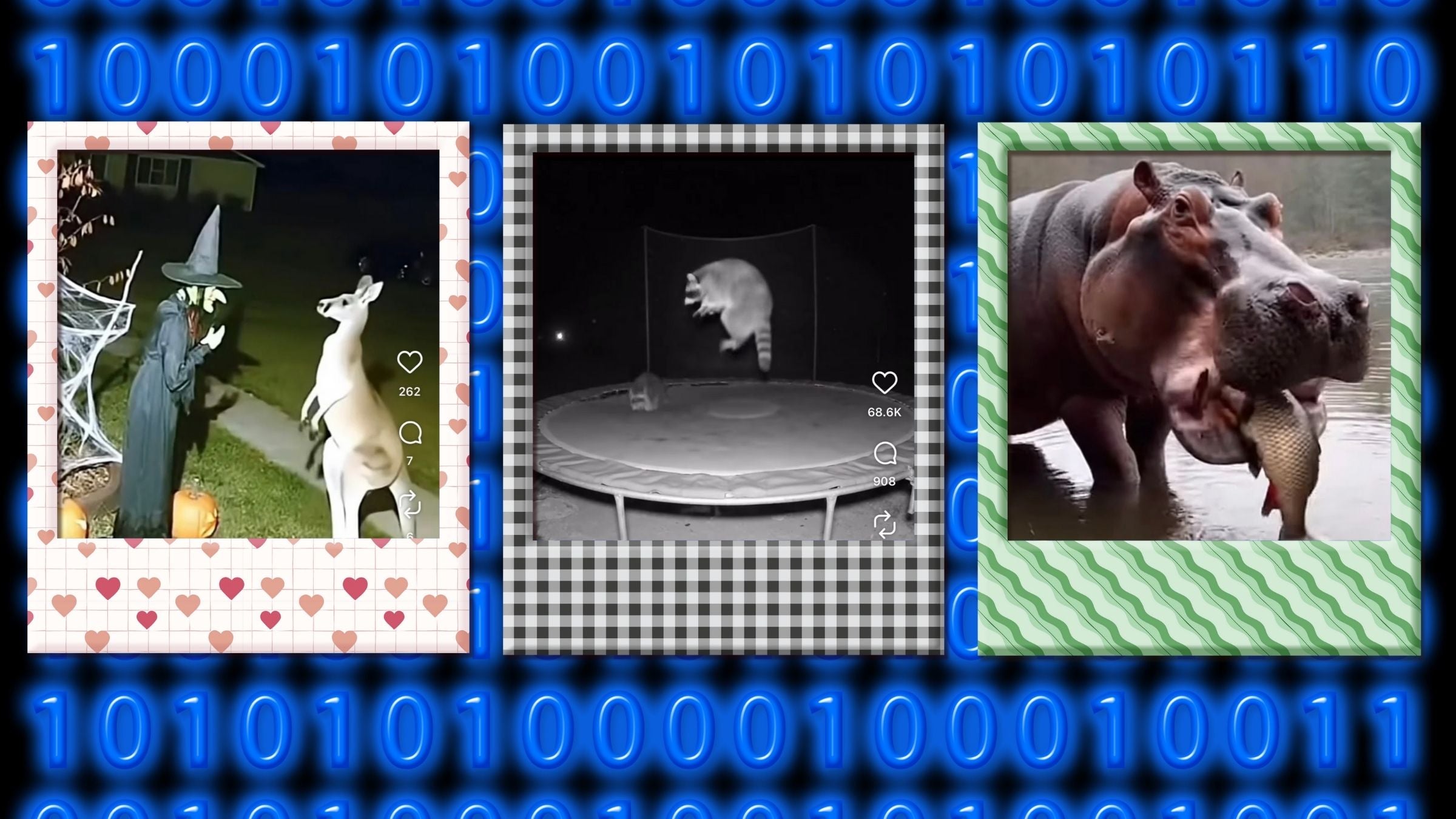
This was particularly evident when an eight-second video of rabbits joyfully bouncing on a trampoline went viral, racking up over 240 million views before it was exposed as fake. This clip inspired a series of copycat videos featuring various animals engaging in similarly absurd antics. The accessibility of AI tools has made it possible to create these whimsical scenarios at little to no cost, allowing for widespread dissemination across social media platforms.
Omar, an Egypt-based creator behind the Instagram account @Wildencountermoments, explained his work, which involves crafting hyper-realistic animal encounters using generative AI. He studies authentic wildlife footage to inspire his concepts, feeding these ideas into AI models to generate initial clips, which he then refines with professional editing software. “I want to recreate that adrenaline rush—the feeling of being defenseless in the wild—safely, using technology,” he stated, drawing parallels between his efforts and traditional filmmaking techniques.
Despite the creative intent behind these videos, the question of authenticity looms large. Colman suggests viewers be cautious, noting that clips released in collaboration with official entities, such as national parks, may be more trustworthy. For those seeking genuine wildlife footage, he recommends live camera feeds, as the technology for real-time deepfakes is still prohibitively expensive.
As generative AI continues to evolve, the implications for wildlife video content could be profound. While AI-generated clips may offer entertainment, they also challenge viewers’ ability to engage with the natural world authentically. The allure of genuine wildlife videos lies in their capacity to capture spontaneous, unpredictable moments that reflect the beauty and unpredictability of nature—qualities that AI, for all its advancements, cannot replicate.
This tension between technology and authenticity raises important questions for future content creators and consumers alike. As the digital landscape becomes increasingly saturated with AI-generated imagery, the challenge will be navigating a world where not everything seen online is as it appears. For now, the fascination with wildlife may remain intact, but the methods of capturing it are likely to continue evolving in ways that blur the lines between reality and digital art.
See also AI Trade Retreats: Broadcom, SanDisk, and Oracle Face Significant Midday Losses Amid Margin Concerns
 Microsoft Integrates GPT-5.2 in Copilot Amid £2.1B UK Legal Challenge
 AMD’s Revenue Soars 36% to $9.2B Amid AI Surge; Stock Targets Reach $284 for 2026
 India’s AI Copyright Proposal Sparks Controversy, Threatens Startup Ecosystem Amid Global Tensions
 OpenAI Launches GPT-5.2, Outperforming Google’s Gemini in AI Race for Businesses