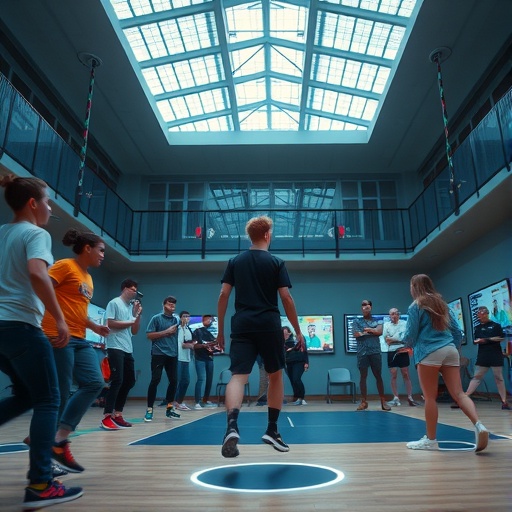
In a pioneering investigation, researchers Zhou and Wu examine the integration of artificial intelligence (AI) in physical education at universities, outlining a crucial need for reform in traditional educational models. Their study, documented in “Discov Artif Intell,” posits that AI can significantly transform the physical education landscape, enhancing teaching methodologies and improving learning outcomes.
As educational institutions face increasing challenges with conventional teaching methods, Zhou and Wu advocate for the embrace of AI solutions to modernize physical education. Their research represents a substantial shift from dated paradigms to a more interactive, data-driven approach. Central to their findings is the identification of limitations within traditional physical education, which often fails to address the diverse needs of students. By leveraging AI capabilities, universities can create inclusive environments that cater to various skill levels and learning preferences.
A key aspect of this reform is the deployment of AI algorithms to personalize training programs. By analyzing individual performance metrics—such as heart rate, stamina, and skill levels—AI systems can develop tailored workout regimens that align with each student’s unique requirements. This personalized approach not only enhances engagement but also significantly improves physical outcomes. The authors emphasize that AI’s predictive capabilities enable instructors to preemptively identify challenges students may face, allowing for dynamic adjustments to curricula that provide optimal learning experiences.
Moreover, Zhou and Wu highlight the importance of data collection in refining educational practices. AI facilitates the real-time gathering and analysis of extensive data sets that offer insights into student performance and engagement. Higher education institutions can leverage this data to continuously enhance their physical education programs. The establishment of continuous feedback loops, where instructors receive immediate updates on student performance, fosters an agile educational framework that allows for timely interventions when students encounter difficulties.
The environmental implications of physical education also feature prominently in their study. The integration of AI technologies can encourage eco-friendly practices within physical education programs. By employing predictive analytics, universities can optimize scheduling and resource allocation, thereby minimizing waste and ensuring efficient facility usage. Additionally, sustainability in sports equipment and facility management can be bolstered through AI insights, aligning physical education with broader institutional goals of environmental responsibility.
An equally critical element addressed by Zhou and Wu is the mental health impact of physical education. AI-enhanced educational platforms can support students’ mental well-being during physical activities. Wearable devices equipped with stress-monitoring capabilities, processed by AI, can provide real-time insights into students’ emotional states. Such technologies promote a healthier balance between physical exertion and mental relaxation, an essential consideration in today’s fast-paced academic environment.
Furthermore, the researchers illustrate how gamification—an AI-rooted principle—has the potential to revolutionize traditional physical education methods. By gamifying workout sessions, universities can create competitive environments that increase student motivation. AI can track progress, facilitate competitions, and deliver real-time feedback in engaging formats, transforming student interactions with physical education.
The impact of AI extends beyond the enhancement of student experiences; it also influences instructor dynamics, promoting more efficient class management and organization. AI systems can assist educators in designing lesson plans that effectively integrate both traditional and digital resources. With a heightened focus on outcomes and objectives, educators can benefit from data-driven insights, leading to more effective teaching strategies.
However, Zhou and Wu raise essential questions about equity and accessibility in the context of AI-led reform in physical education. While AI technologies offer the potential to democratize access to educational resources, disparities may arise. Institutions must actively address these challenges to ensure equitable access to technology, preventing a digital divide where some students benefit from AI-enhanced education while others are left behind.
To facilitate the successful implementation of AI in physical education, Zhou and Wu call for comprehensive training programs for educators. They argue that for this technological shift to be effective, instructors need proficiency in utilizing AI tools. Training should encompass not only the technical skills required for effective tool usage but also a deep understanding of the foundational theories of intelligent education practices. Ongoing professional development is crucial for equipping educators to navigate the evolving landscape of teaching and learning.
The findings of this study have implications that extend beyond individual institutions, suggesting that a collaborative approach among universities could lead to significant advancements in physical education. By sharing best practices, pooling resources, and fostering partnerships, higher education institutions can catalyze innovation in teaching methodologies across campuses. This collaborative spirit is vital for maximizing the effectiveness of AI technologies in education.
In conclusion, the research by Zhou and Wu signifies a pivotal transformation in how physical education can be restructured for improved learning outcomes through AI. This call to action requires a concerted effort from educators, administrators, and technology developers to embrace a future where technology and traditional educational practices coexist. If harnessed effectively, AI has the potential to revolutionize physical education, setting a precedent for reimagining other academic disciplines. The possibilities are extensive, with potential benefits that reach beyond the classroom to promote healthier lifestyles and communities at large.
Subject of Research: Reforms in university physical education through artificial intelligence.
Article Title: Reforming university physical education with artificial intelligence for enhanced teaching and learning.
Article References:
Zhou, J., Wu, W. Reforming university physical education with artificial intelligence for enhanced teaching and learning.
Discov Artif Intell (2025). https://doi.org/10.1007/s44163-025-00531-2
Keywords: Artificial Intelligence, Physical Education, Education Reform, Data Analysis, Personalized Learning, Mental Health, Gamification, Equity in Education.
Tags: addressing student diversity in sports, AI algorithms in fitness, AI in physical education, artificial intelligence and academia, data-driven education solutions, enhancing learning outcomes in PE, future of educational methodologies, interactive learning in universities, personalized training programs, reforming physical education, technology in physical training, university teaching methods.
See also Purdue University Mandates AI Competency for All Undergraduates Starting 2026
 Allentown School District Launches Podcast on AI in Education, Highlights Student Innovations
 AI Study Reveals 75% Growth in Language Education Applications and Ethical Concerns
 AI Homeless Man Prank Sparks Outcry, Exposing Moral Crisis in Digital Education
 Disney and OpenAI Reach $1B Licensing Deal for AI Video Creation on Sora