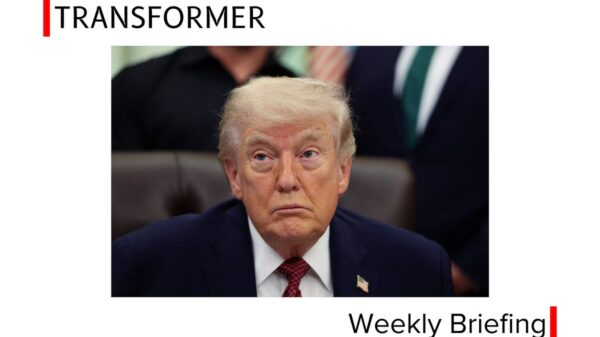
Last week, President Donald Trump signed an executive order aimed at prohibiting state-level regulations on artificial intelligence (AI). This move, as reported by PYMNTS, is particularly significant for banks, payments firms, and FinTechs that utilize AI for applications such as fraud detection, credit decisioning, and customer service chatbots. The White House’s objective is clear: to establish a unified federal framework rather than a fragmented system of varying state requirements.
However, implementing this order may encounter substantial legal and political hurdles. As noted by Reuters, states seeking authority over AI governance may challenge the order, leading to potential conflicts. Trump’s directive instructs federal agencies to initiate lawsuits and withhold funding from states whose AI regulations are deemed problematic by the administration, marking a notable victory for technology companies. These firms have contended that inconsistent state regulations hinder the U.S. competitive edge against countries like China.
Experts are skeptical about the administration’s ability to effectively enforce the executive order. Joel Thayer, head of the Digital Progress Institute, stated, “There is not a lot of legal authority that the administration can rely on to enforce a significant portion of the order.” One of the primary enforcement strategies involves the Commerce Department restricting states with stringent AI regulations from accessing the $42 billion Broadband Equity, Access, and Deployment program (BEAD), which is essential for enhancing internet access in rural areas.
Rural voters are a critical demographic for Trump, who won this group by a substantial margin in the previous election. Dean Ball, a former White House official who contributed to the administration’s AI Action Plan, expressed uncertainty regarding the funding tie to AI laws. “I think the administration has a 30 to 35% chance of this working legally,” Ball remarked.
The divide between federal and state perspectives on AI regulation has grown increasingly pronounced. Lawmakers across various states have introduced hundreds of bills tackling a wide array of AI-related concerns. Earlier this month, Florida Governor Ron DeSantis, a potential candidate for the 2028 presidential election, unveiled a legislative package aimed at protecting residents’ personal data from AI misuse and imposing restrictions on data center development. During a news conference, DeSantis cautioned that without adequate safeguards, AI could lead to “an age of darkness and deceit.”
The implications of Trump’s executive order extend beyond the immediate landscape of AI governance. The potential for legal confrontations highlights the ongoing debate over the balance of power between state and federal authorities in regulating emerging technologies. As both sides prepare for what could be a protracted struggle over AI oversight, the direction of future policy will likely shape how AI evolves in the U.S. and its role in the global technology arena.
See also China’s AI Sector Gains Confidence Amid US Restrictions, Says GSR Capital’s Zhou Qi
 AI Stock Sell-Off Erases Months of Gains for Top Australian Tech Funds Amid Valuation Fears
 AI Transforms Telecoms Channel: Enhancing Enterprise Value and Streamlining Procurement Processes
 AI Set to Drive Entry-Level Hiring Surge by 67% in 2026, CEOs Report