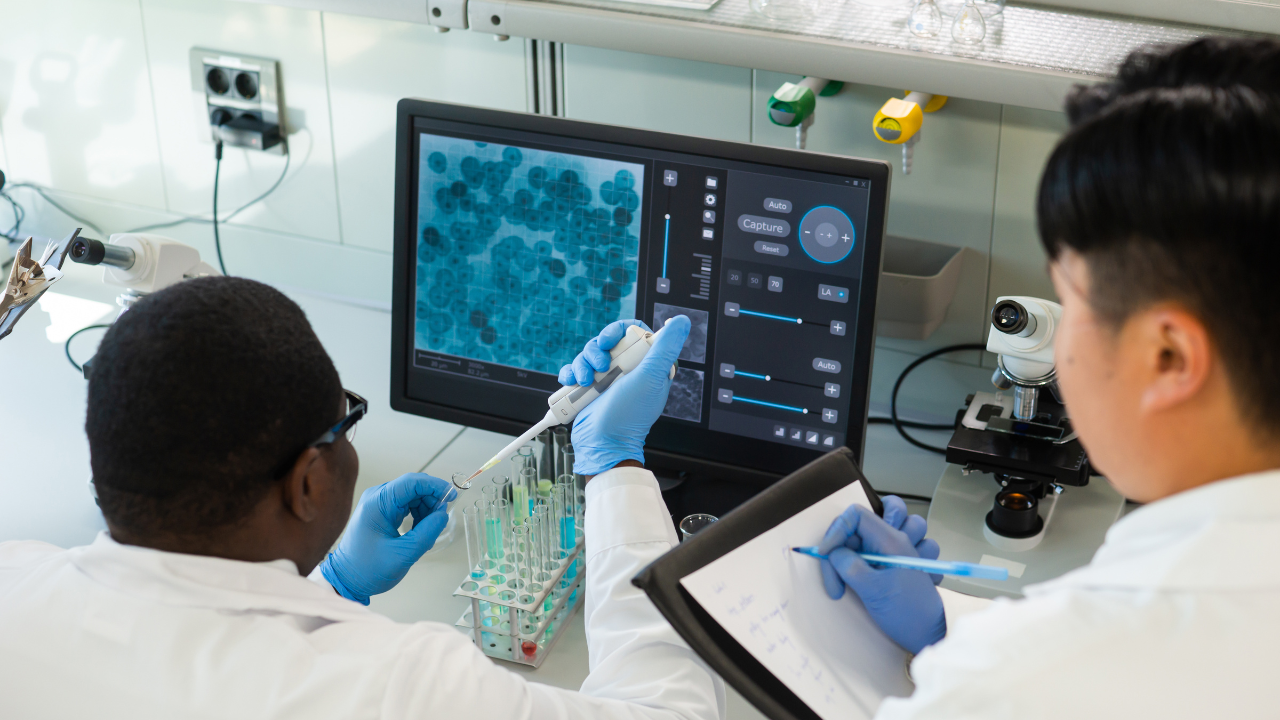
Lunit has entered into a collaboration with Daiichi Sankyo aimed at enhancing biomarker discovery and optimizing translational research. This partnership involves the integration of multiple AI-powered Lunit SCOPE digital pathology products across two of Daiichi Sankyo’s oncology pipeline programs. The announcement comes shortly after the FDA approved Daiichi Sankyo’s Enhertu combined with Perjeta for the first-line treatment of adults with unresectable or metastatic HER2-positive breast cancer, marking a significant advancement in treatment options for this patient population.
Brandon Suh, CEO of Lunit, noted, “Lunit SCOPE was built to unlock hidden insights from pathology slides—quantifying the tumor microenvironment, predicting molecular profiles, and generating data-rich features to inform trial design.” He emphasized that the SCOPE uIHC technology enables next-generation IHC-based biomarkers, stating the collaboration with Daiichi Sankyo will embed these capabilities into translational and clinical research. This integration is expected to facilitate faster biomarker discovery and enhanced patient stratification, ultimately leading to more efficient trials and improved therapeutic outcomes for patients.
As part of this collaboration, Daiichi Sankyo plans to utilize various Lunit SCOPE solutions, including SCOPE uIHC for quantitative Immunohistochemistry (IHC) analysis and SCOPE IO for immune phenotyping and spatial analysis. These technologies are intended to explore novel biomarkers, enriching clinical trials and supporting precision patient stratification within selected oncology pipeline programs.
The Lunit SCOPE uIHC is an advanced AI-driven digital pathology image analysis software specifically designed to streamline IHC biomarker analysis across a range of cancer types. It has been trained on over 18 IHC stains from more than 20 primary tumor origins, facilitating companion diagnostics (CDx) development for next-generation biomarkers. This product reveals drug target insights with high membrane and tumor specificity, driving further translational research.
The key capabilities of Lunit SCOPE uIHC include continuous staining intensity quantification for each cell and subcellular component, subcellular localization of target expression, cell type identification, and advanced biomarker analysis. This analysis integrates quantitative intensity measurement, spatial profiling, and pattern recognition, allowing for comprehensive insights into tumor biology.
Lunit SCOPE IO is another critical tool in the partnership, enabling biopharmaceutical companies to identify tumor-agnostic, H&E-based immune biomarkers with precision and scale. This capability streamlines the biomarker development process and enhances immunotherapy trials without necessitating additional stains or assays. The system has been trained on upwards of 50,000 whole-slide images and over 10 million cell annotations provided by hundreds of pathologists globally, allowing it to analyze tumor microenvironments through quantitative immune phenotyping and assessment of the immune landscape.
Furthermore, the collaboration is expected to encompass exploratory research projects and analyses across two oncology assets, covering various cancer types. This initiative aims to inform future trial designs, biomarker strategies, and clinical development plans, indicating a significant step forward in the integration of AI in oncology research.
As the landscape of cancer treatment evolves with AI technologies, the collaboration between Lunit and Daiichi Sankyo highlights the potential for more personalized medicine approaches. By harnessing the capabilities of AI-driven biomarker discovery, both companies aim to improve clinical outcomes and accelerate the development of precision therapies for patients.
For more information on Lunit’s technology, visit Lunit SCOPE uIHC and Lunit SCOPE IO.
Explore Daiichi Sankyo’s innovations at Daiichi Sankyo.
See also AWS Unveils AI Risk Intelligence Solution to Enhance Responsible AI Governance
 News Anchor’s AI-Altered Photo Sparks Urgency Over Digital Privacy Risks
 Oracle’s AI World Tour 2026 Boosts Stock Confidence as Shares Near $400 Target
 Anthropic, Block, OpenAI Launch Agentic AI Foundation for Open-Source Collaboration
 Textara.ai Unveils 97% Accurate AI Content Detector, Analyzes 100K Characters in Under a Minute