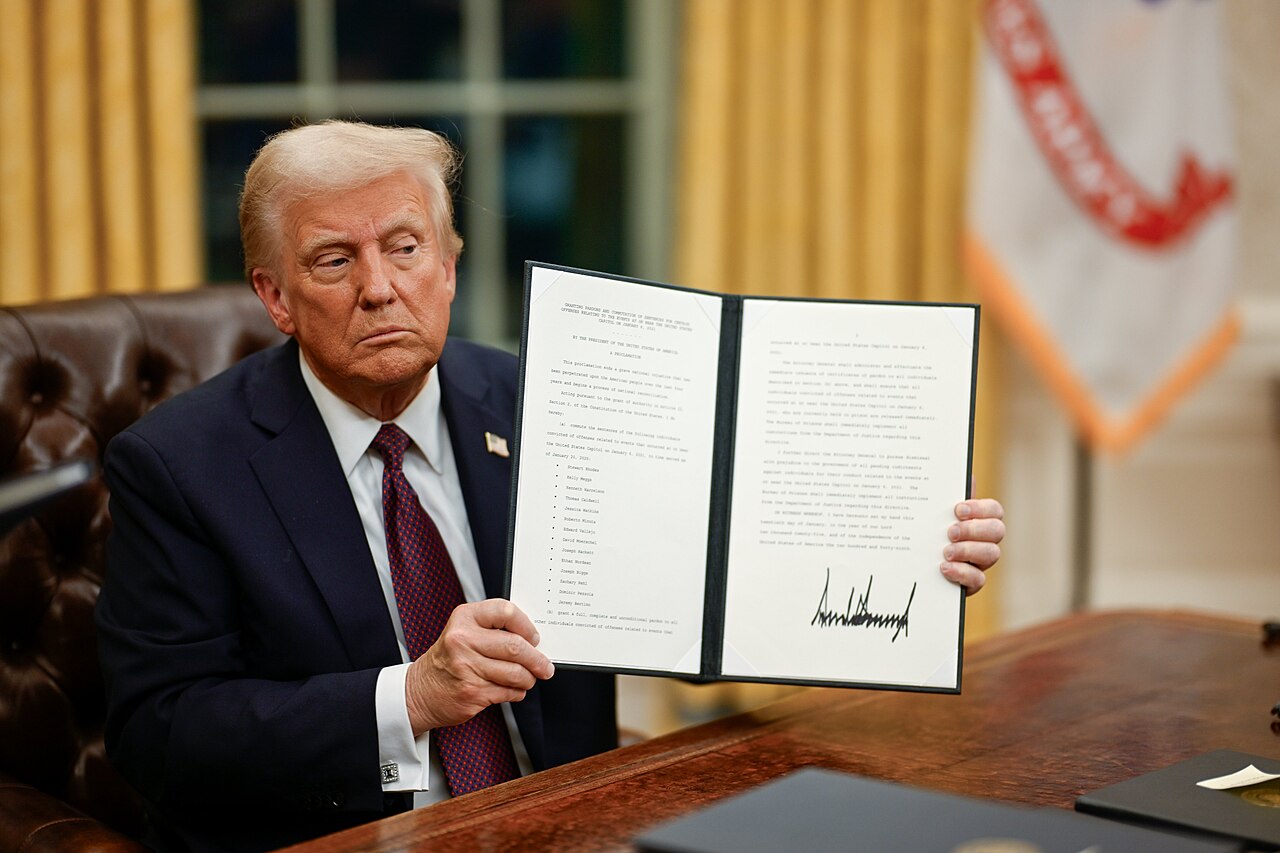
In a significant move, US President Donald Trump has barred states from enacting their own artificial intelligence regulations, a decision that could reshape the landscape of AI governance across the nation. The executive order, signed on December 14, 2025, arrives as states like New York are advancing stringent safety and transparency measures, underscoring growing concerns that without federal oversight, the public may face heightened risks from unregulated AI technologies.
Political analysts suggest this executive action escalates the ongoing tension between federal and state authorities regarding AI development. The White House has characterized the prohibition as essential for safeguarding innovation and ensuring the United States remains competitive in the global tech arena. Tech leaders, including Google CEO Sundar Pichai, have supported the move, arguing it will facilitate expansion for US companies in international markets.
Over the past two years, numerous states have attempted to address the regulatory vacuum left by Congress, with New York’s proposed RAISE Act standing out as particularly ambitious. The legislation mandates that advanced AI developers disclose safety plans, report major incidents, and pause releases if their systems fail internal safety evaluations. Proponents maintain that these requirements are minimal, essentially formalizing existing voluntary safety commitments made by leading AI firms, with a focus on high-stakes models that, if mishandled, could lead to catastrophic outcomes.
While Trump’s order does not explicitly overturn these state laws, it signals potential legal challenges from the Department of Justice, creating a scenario in which states may find themselves in prolonged legal battles to assert their right to regulate technology risks for public safety. Legal experts predict that states will contend their regulatory efforts are vital for protecting citizens from the dangers posed by AI.
This federal action raises alarm bells about the implications for consumer protection. Experts argue that while US leadership in technology is crucial, it should not come at the expense of safeguarding public interests. The executive order effectively undermines New York’s regulations concerning AI failures, including issues related to data breaches or the generation of harmful content. Critics warn that with fewer disclosure requirements, oversight mechanisms will be weakened, leaving consumers more vulnerable if AI technologies malfunction.
For tech companies, the executive order represents a significant advantage. By curtailing state-level regulations, firms face reduced compliance burdens and potential penalties, which could accelerate AI development at the cost of robust safety measures. Although companies are still subject to some legal obligations, the restrictions are less rigorous than those anticipated under state laws, effectively allowing for more agile, less regulated innovation.
Opponents of the order contend that the push for US competitiveness against rivals, particularly China, disproportionately impacts the American public, who may now be left to navigate the risks posed by AI without sufficient protections. They argue that rather than preemptively addressing AI-related hazards, the focus has shifted to managing crises only after they occur, potentially leading to dire consequences.
Implications for AI Safety Standards
The diminishing of state regulatory power could place technology firms in a dominant position regarding AI safety. In practical terms, these companies will have the authority to determine their testing protocols, decide which risks to disclose, and ascertain when their systems are ready for release. While many organizations may still opt to use internal review boards, conduct red-teaming exercises, or adhere to voluntary reporting frameworks, the lack of legal obligations means these measures rely heavily on corporate integrity.
The absence of external oversight raises significant concerns. As commercial interests take precedence, the potential for prioritizing speed over safety in AI development becomes more pronounced. This scenario may foster an environment where the responsibility for AI safety is primarily placed on the shoulders of companies, with little accountability to the public they serve.
As the debate over AI regulation unfolds, the balance between innovation and safety remains precarious. The future of AI governance is now likely to hinge on ongoing legal battles between state and federal authorities, as well as on the ethical considerations of technology companies left largely to self-regulate. The implications of this conflict will be felt not just in the tech industry but across American society at large, as the risks associated with advanced AI continue to grow.
See also UK Entrepreneurs Demand Clearer AI Rules as 73% Face Digital Trust Challenges
 China’s Open-Source AI Models Match US Giants, Urges Collaborative Engagement: Stanford Report
 Pennsylvania AG Defends State AI Laws Amid Federal Executive Order Overhaul
 Manufacturers Must Tackle 4 Key Priorities to Safely Deploy AI Amid Cyber Threats
 State Laws Surge as Trump’s AI Order Exempts Data Center Regulations