






















































By Whitney Downard | Pennsylvania Capital-Star
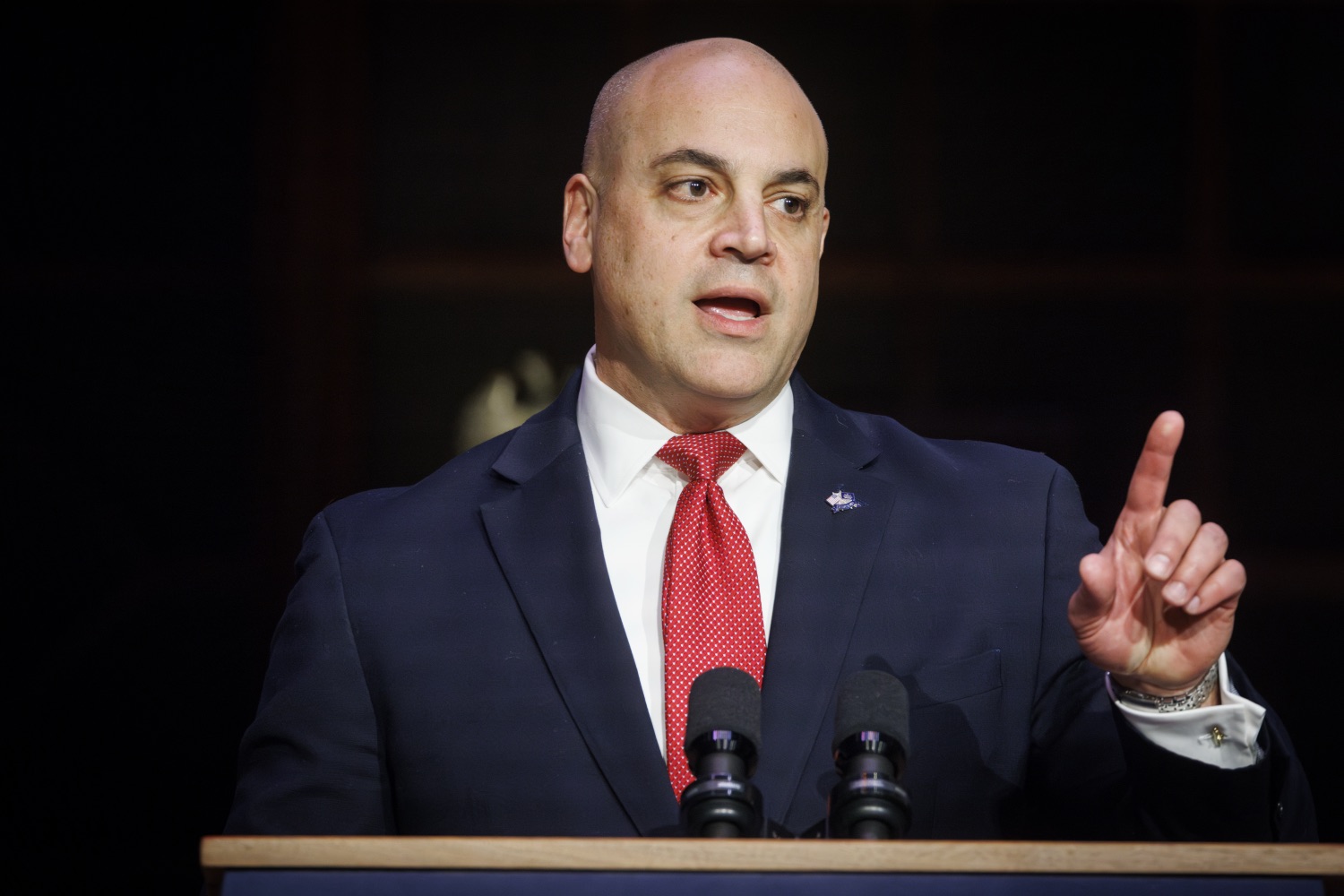
In response to a recent executive order from the Trump administration that seeks to curb state-level regulations on artificial intelligence (AI), Pennsylvania Attorney General Dave Sunday Jr. reaffirmed on Monday the state’s commitment to enforce its laws regarding AI to protect its residents. “The reality is, the executive order is kind of vague… We’re going to have to kind of sit back and watch and wait and see what that actually turns into in Pennsylvania,” Sunday stated.
The executive order aims to create a unified national policy for AI oversight, which could challenge existing state regulations. Sunday expressed concerns about the potential preemption of state laws, declaring, “obviously, we disagree with preempting state regulations.” He emphasized that if any statute is deemed unconstitutional, his office would vigorously defend it.
As the chief legal officer for Pennsylvania, Sunday is responsible for upholding the state’s laws, which include new legislation related to AI. Among the initiatives under consideration is a bill that seeks to enhance notification protocols regarding AI use, particularly in sensitive areas such as criminal offenses. This includes proposals to broaden the definition of child sexual abuse materials to encompass AI-generated images, an area that Sunday stressed must continue to be prosecuted regardless of federal directives.
“We think it’s critical that we have the ability to prosecute people that use this tool for terrible, horrific things that hurt people,” Sunday remarked, emphasizing the importance of holding offenders accountable for misuse of AI technologies, such as “deepfakes” used in pornography.
President Trump’s executive order, signed last week, aims to establish a singular national framework for AI regulation, arguing that companies require a consistent set of rules rather than facing “50 different sources.” While Sunday acknowledged the rationale behind this approach, he firmly stated, “I’m the Pennsylvania attorney general, and my job is to do everything I can to protect citizens.”
Earlier this month, Sunday led a bipartisan coalition of 42 attorneys general urging major AI firms to implement safeguards to mitigate issues like AI sycophancy—behavior where AI systems excessively seek human approval—and related delusions. In a letter sent to these companies, the coalition referenced alarming incidents, including fatalities and severe mental health complications linked to AI usage, and requested responses by January 16.
“AI can do amazing things as well, and we have to embrace that,” Sunday noted, underscoring the potential benefits of AI while advocating for proactive measures to ensure its safe application.
In the state legislature, lawmakers are also addressing concerns over the lack of federal regulation in AI. A bill sponsored by Representative Arvind Venkat (D-Allegheny) would mandate healthcare providers and insurers to inform customers about their use of AI. Venkat highlighted the challenges presented by AI’s “black box” nature, which can lead to inconsistencies in clinical decision-making due to proprietary algorithms.
Venkat’s House Bill 1925 garnered support from various stakeholders, including representatives from Sunday’s office, consumer advocates, and healthcare providers advocating for increased human oversight in AI applications.
Dr. David Vega of WellSpan Health emphasized that while AI offers significant opportunities to enhance patient care, the implementation must be carefully managed to avoid reducing healthcare interactions to mere data entry. “What I see as the successful implementation of AI… it has the promise to turn our focus back to the patients,” he said.
Industry representatives like Jonathan Greer, President and CEO of the Insurance Federation of Pennsylvania, have pointed out that varying state regulations could create friction within the industry. Greer argued for the necessity of federal intervention, stating that without a national framework, insurers face challenges in navigating disparate state requirements.
Committee chair Rep. Joe Ciresi (D-Montgomery) concluded a recent meeting on the proposed bill without a vote but noted that federal oversight is lagging. “Congress has fallen behind… sometimes the states need to move first and make the federal government wake up and do something,” he remarked, highlighting the urgency for legislative action.
As Pennsylvania grapples with the implications of both state and federal regulatory frameworks for AI, the ongoing dialogue between lawmakers, the attorney general’s office, and industry stakeholders will be vital in shaping a cohesive approach to this complex technology that continues to evolve rapidly.
See also Manufacturers Must Tackle 4 Key Priorities to Safely Deploy AI Amid Cyber Threats
 State Laws Surge as Trump’s AI Order Exempts Data Center Regulations
 Dr. Adaeze Oreh Transforms Rivers State Healthcare with $5.1M Funding, 134% Contraceptive Visit Increase
 MHRA Launches Call for Evidence on AI Regulation Amid Healthcare Transformation
 Trump Announces AI Executive Order to Ensure US Global Dominance and Minimize State Regulations






