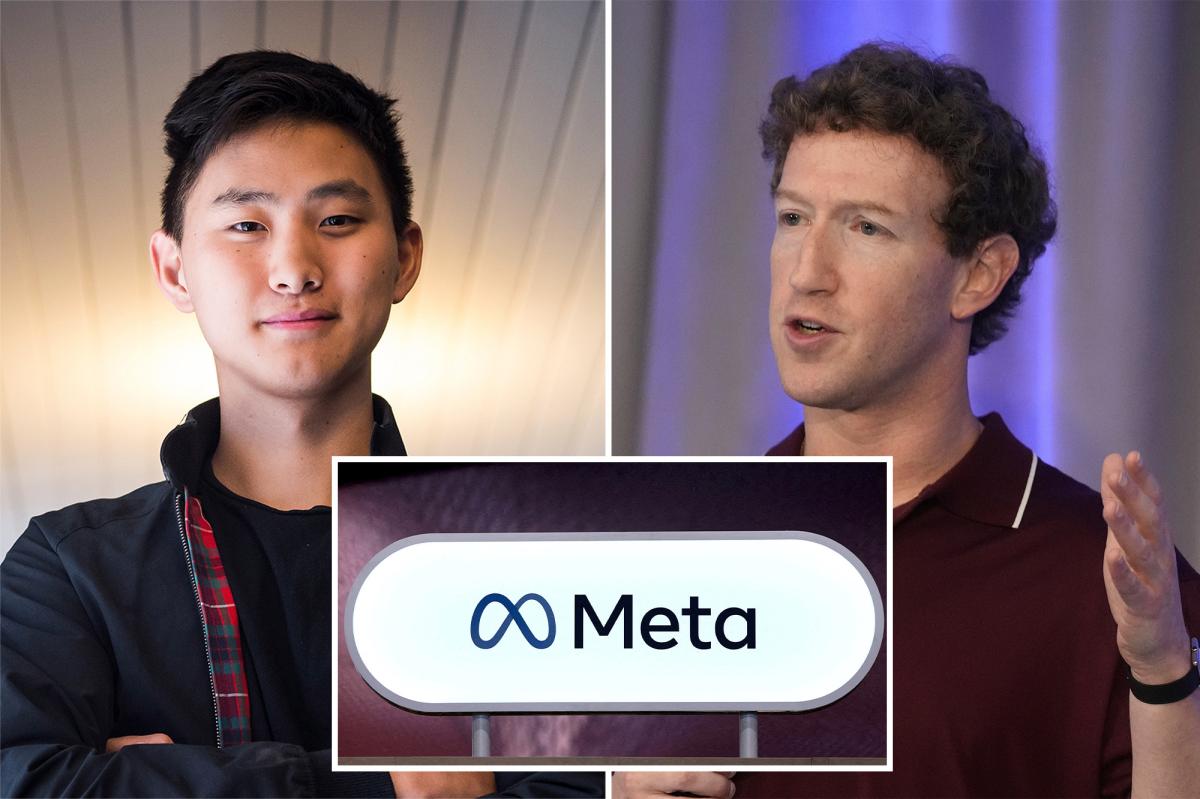
Meta Platforms Inc. is facing internal turmoil as the company’s ambitious artificial intelligence initiatives are reportedly being stifled by CEO Mark Zuckerberg’s micromanagement, according to a recent report from the Financial Times. Alexandr Wang, the 28-year-old founder of Scale AI, was brought on board after Meta invested over $14 billion for a 49% stake in his startup earlier this year. Wang’s appointment was seen as a cornerstone of Zuckerberg’s AI strategy, yet he has expressed frustrations about the CEO’s tight control over the AI division.
Wang’s discontent reflects broader issues at Meta, which has been grappling with layoffs, executive departures, and rapid AI rollouts, raising concerns about the company’s direction and employee morale. The situation has intensified following the botched launch of Meta’s anticipated AI model, Llama 4, which failed to meet performance benchmarks in key areas like coding and complex reasoning. Insiders have reported that the company attempted to manipulate AI leaderboards by submitting modified versions of models for evaluation, further heightening the sense of crisis.
“Our tools and products became fragmented because so many teams were rooting for their own products that no one was really thinking about how they worked together,” a Meta insider noted. Despite this feedback, Zuckerberg has pushed ahead with aggressive hiring strategies, offering compensation packages as high as $100 million and committing tens of billions to AI infrastructure. Wang, who also leads the TBD Lab focused on a new flagship AI model codenamed “Avocado,” was expected to be pivotal in this effort.
However, skepticism about Wang’s capabilities to manage extensive research teams has surfaced among Meta employees, some of whom believe his expertise lies more in AI data services than in developing advanced AI models. Tensions within the company have also been highlighted by the friction between Zuckerberg and Nat Friedman, the former CEO of GitHub, who was tasked with integrating AI models into Meta’s products. Friedman’s team has reportedly faced pressure for quick deliverables, leading to frustration over rushed projects, such as the expedited rollout of “Vibes,” an AI-generated video feed aimed at keeping pace with competitors like OpenAI.
As these leadership strains have deepened, several high-profile executives have departed, including Jennifer Newstead, Meta’s longtime chief legal officer, who recently joined Apple, and John Hegeman, the chief revenue officer, who announced plans to launch a startup. Notably, renowned AI scientist Yann LeCun, a Turing Award winner, is also leaving after reportedly objecting to his reporting structure under Wang and observing reductions in his research priorities.
The exodus of senior talent has compounded the challenges facing Meta. In addition to recent layoffs affecting 600 workers from AI teams, the company continues to see significant turnover among key hires, including Clara Shih, who left within a year of her recruitment from Salesforce to lead business AI.
This internal strife is unfolding against a backdrop of staggering financial commitments, with Meta’s AI capital expenditures set to reach at least $70 billion this year, and Zuckerberg signaling that costs could exceed $100 billion annually. The aggressive spending strategy has alarmed investors, leading to a sharp decline in Meta’s stock price as concerns mount over the sustainability of its cash flow amid soaring costs.
In response to the report, Meta has disputed various aspects, asserting that it routinely experiments with different AI model variants and arguing that public leaderboards can be misleading and “easily gameable.” The company also pointed to previous statements refuting claims of internal turmoil while defending its AI strategy against recent criticisms regarding chatbot policies. As Meta navigates these challenges, the future of its AI ambitions—and the company’s overall direction—remains uncertain.
See also Agentic AI Revolutionizes Brand Marketing: Unlocking $609B Growth by 2028
 Hut 8, Anthropic, and Fluidstack Partner to Deploy 2,295 MW of AI Infrastructure
 India’s AI Surge: 38,000 GPUs Ignite Innovation Amidst 11,000 Startup Closures
 OpenAI Discusses $10B Investment from Amazon, Potential AI Chip Partnership