McDonald’s has pulled an AI-generated Christmas advertisement after facing backlash for its portrayal of holiday stress. The ad, produced for the Netherlands, was criticized for its insensitivity, prompting the company to retract it shortly after release. A statement from McDonald’s Netherlands acknowledged the ad’s intent to reflect the pressures of the holiday season but emphasized its commitment to ensuring a joyful experience for its customers.
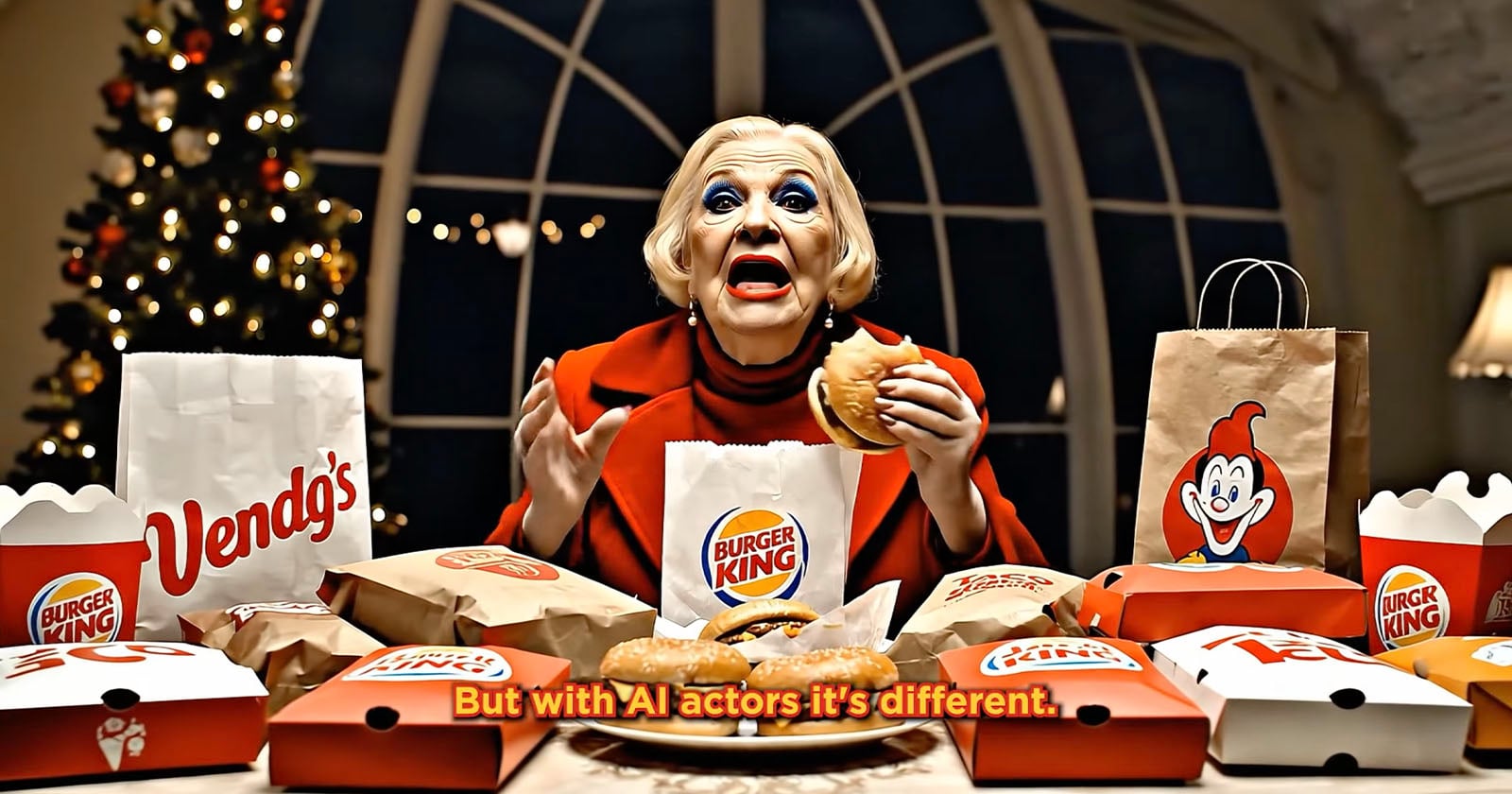
The original ad featured a character, a digitally created woman styled in an eye-catching red outfit, holding a burger amidst a table overflowing with fast food from various competitors. In the wake of the ad’s removal, creative agency All Trades Co. has repurposed this AI character in a new video that critiques the very concept of using AI in advertising.
In the follow-up video, the AI character humorously addresses the evolving landscape of commercial advertising, stating, “Commercials used to use real actors.” The character highlights the contractual obligations of human actors, who, unlike AI creations, are typically bound by agreements that prevent them from endorsing rival brands. “Those real actors used to be under contract buyouts. That meant they couldn’t turn around and support a competitor,” she observes while nonchalantly dipping into a Burger King bag.
The satirical nature of the video underscores a significant concern regarding AI in advertising: the lack of control companies have over AI-generated characters once they are released to the public. Unlike well-established mascots like Ronald McDonald, which enjoy robust trademark protections, AI-generated characters present a unique challenge in terms of copyright registration. The U.S. Copyright Office has generally been skeptical of entirely AI-generated works, complicating matters further for companies that wish to safeguard their digital creations.
The AI character adds, “It almost seems like we should value human labor, craft, and creativity. But what do I know? I’m just AI. I’ll say and do anything.” This line draws attention to the broader implications of relying on artificial intelligence in creative fields, raising questions about the value of human artistry versus technologically produced content.
As the video concludes, All Trades Co. delivers a clear message: “We work with humans. Unless we’re making a video about how AI videos are bad.” This statement not only reaffirms the agency’s commitment to human creativity but also critiques the limitations and risks associated with AI-generated content.
The incident serves as a cautionary tale for brands venturing into the realm of AI-based marketing. As companies explore the potential efficiencies and innovations of AI, they must also grapple with the unpredictability of these tools and their consequences on brand identity and customer perception. The McDonald’s ad debacle underscores the need for careful consideration when integrating AI into advertising strategies, as the technology continues to evolve and reshape the landscape of creative expression.
See also Top 7 AI Writing Generators Revolutionizing Marketing Efficiency in 2023
 McDonald’s Withdraws AI-Generated Christmas Ad After Severe Public Backlash
 netpulse AG Launches AI-Driven SEO Solutions, Transforming Swiss Digital Marketing Efficiency
 AI-Powered Customer Experience Orchestration Achieves 78% Personalization Demand by 2025
 FBI Warns of AI-Driven Holiday Scams Targeting Consumers with Fake Ads