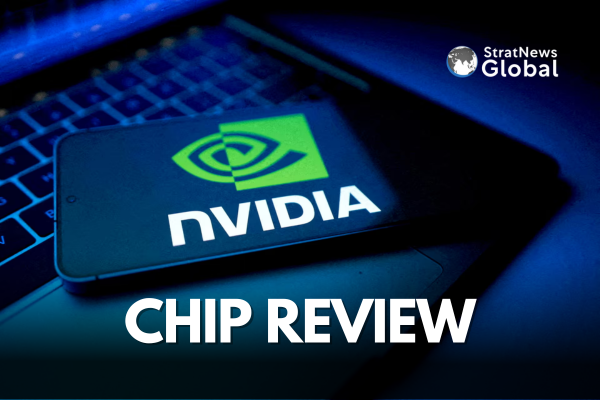
The Trump administration has initiated a formal review that may greenlight the first shipments of Nvidia’s H200 artificial intelligence chips to China. This development comes in the wake of President Donald Trump’s recent announcement, which suggests a willingness to allow these controversial sales under strict oversight and a 25% government fee. Five sources familiar with the matter indicated that the U.S. Commerce Department has submitted Nvidia’s export license applications to the Departments of State, Energy, and Defense for evaluation.
Trump’s endorsement of the sales aims to bolster U.S. leadership in advanced semiconductors while reducing dependence on Chinese-manufactured chips. However, the decision has drawn sharp criticism from lawmakers across the political spectrum, who argue that such exports could enhance Beijing’s military capabilities and jeopardize America’s technological superiority.
Each agency involved in the evaluation process has 30 days to submit its recommendations, as per export control regulations. An administration official emphasized that this review will be thorough, stating, “This is not some perfunctory box we are checking.” Ultimately, the final decision will rest with President Trump.
Neither Nvidia nor the Commerce Department provided comments regarding the review, and the White House declined to share specifics. However, it reiterated its commitment to maintaining U.S. dominance in the “American tech stack” while ensuring national security is not compromised.
Shift from Biden-Era Policy
The potential approval of these exports marks a notable shift from the stringent export restrictions implemented during the Biden administration, which prohibited the sale of advanced AI chips to China and neighboring countries viewed as potential transshipment hubs. These curbs were introduced amid concerns that advanced chips could bolster China’s military and surveillance capabilities.
During his first term, Trump had also adopted a hardline stance on technology transfers to China, accusing the nation of intellectual property theft and military misuse of civilian technologies, claims that China has consistently denied. This current approach signals a significant policy reversal for the Trump administration.
Experts are divided on the implications of this potential shift. Critics argue that the proposed exports could undermine U.S. strategic advantages in artificial intelligence. Chris McGuire, a former National Security Council official under Biden and a senior fellow at the Council on Foreign Relations, called the move “a significant strategic mistake.” He expressed skepticism about how agencies could conclude that exporting the H200 chips would serve U.S. national security interests, asserting, “The H200 chips are the one thing holding China back in AI.”
Conversely, some Trump officials, including White House AI adviser David Sacks, contend that limited exports might deter Chinese firms like Huawei from hastening efforts to close the technology gap. They argue that carefully managed sales would not only sustain American commercial dominance but also keep Chinese innovation reliant on U.S. suppliers.
Nvidia is reportedly considering increasing production of the H200 due to strong demand from Chinese clients, whose preliminary orders have already surpassed current capacity. While the H200 is less powerful than Nvidia’s latest Blackwell model, it remains crucial for global AI development and has never before been authorized for sale in China. Trump had initially proposed allowing exports of a less advanced version of the Blackwell chips but later shifted focus to the H200, characterizing the decision as a balanced approach between commercial interests and security concerns.
The forthcoming outcome of the inter-agency review is poised to set a significant precedent for U.S.-China technology trade relations and will likely have lasting implications for the future of global AI competition. As the geopolitical landscape continues to evolve, the implications of this review could resonate far beyond the semiconductor industry, influencing the broader dynamics of international technology relations.
See also Google DeepMind and DOE Launch Genesis Mission to Transform U.S. Scientific Research with AI
 AI Annotation Market to Surge to $28.31B by 2033, Driven by AI Expansion in Key Sectors
 Trump Administration Reviews Nvidia’s H200 AI Chip Sales to China Amid Policy Shift
 Global Dialogue on Journalism in AI Era Culminates in Berlin: Experts Forge Future Roadmap
 MMA Announces 2025 SMARTIES™ X Global Winners: 83 Campaigns Driving Marketing Innovation and Impact